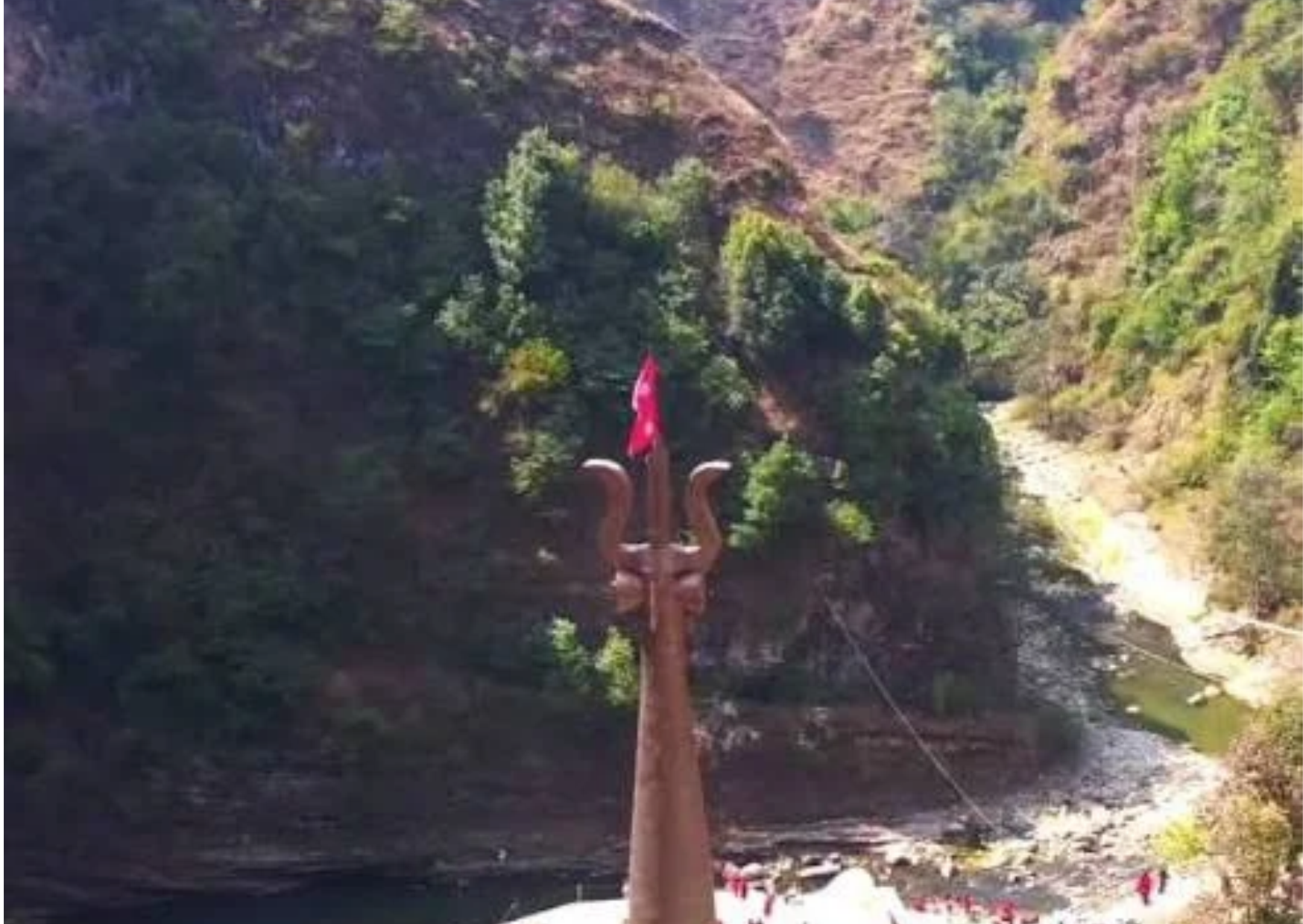
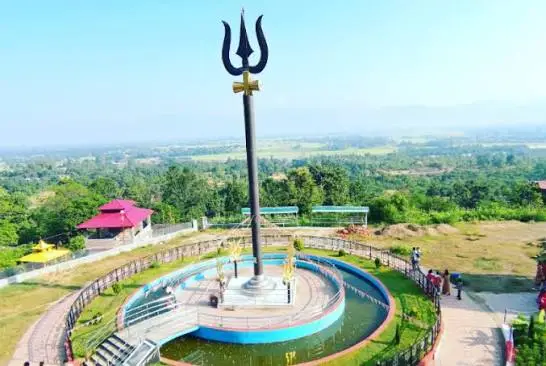
Nestled amid the green hills and rural landscapes of Kavrepalanchok, Ladkeshwor Mahadev Temple is a Hindu pilgrimage site that combines religious significance with the natural and cultural attractions of Nepal’s countryside. Located in the Balthali area of Bagmati Province, the temple is dedicated to Lord Shiva and is particularly known for its striking 108-foot-tall Trishul. The towering trident has become the most recognizable landmark of the site, drawing pilgrims, domestic visitors and travellers interested in Nepal’s religious heritage.
Surrounded by forests, terraced farmland, streams, and traditional settlements, Ladkeshwor Mahadev offers an experience that extends beyond temple worship. Visitors can explore the temple complex, observe local religious practices, visit the 108 dhara, walk through nearby rural trails, and experience the lifestyle of communities around Balthali and Panauti. The destination can also be incorporated into a wider itinerary covering Balthali, Panauti and Namobuddha, making it suitable for travellers looking for a combination of spirituality, culture, nature and rural tourism.
A Peaceful Temple in the Balthali Landscape
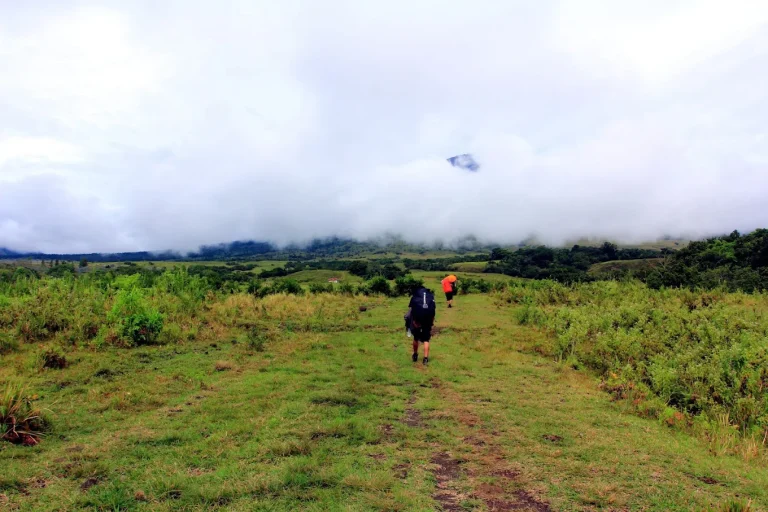
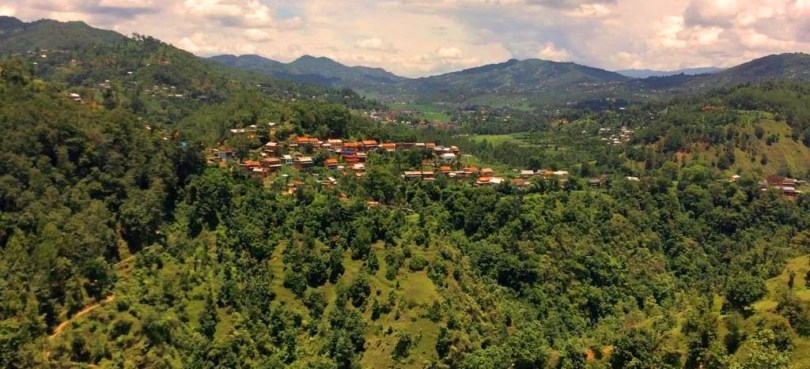
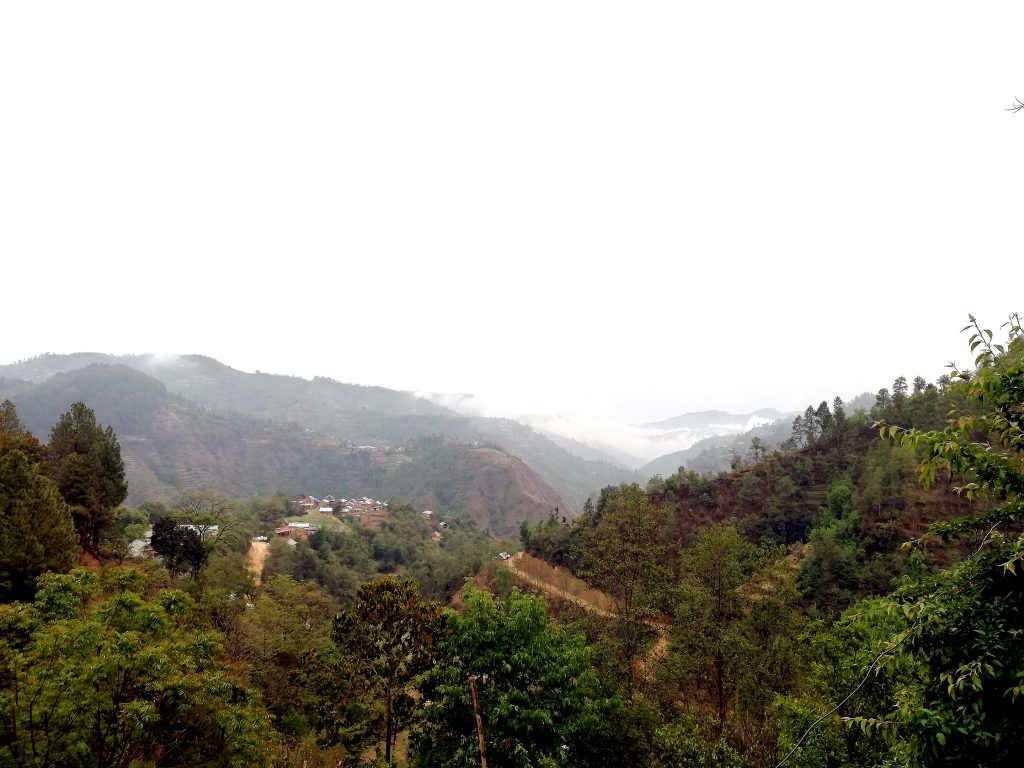
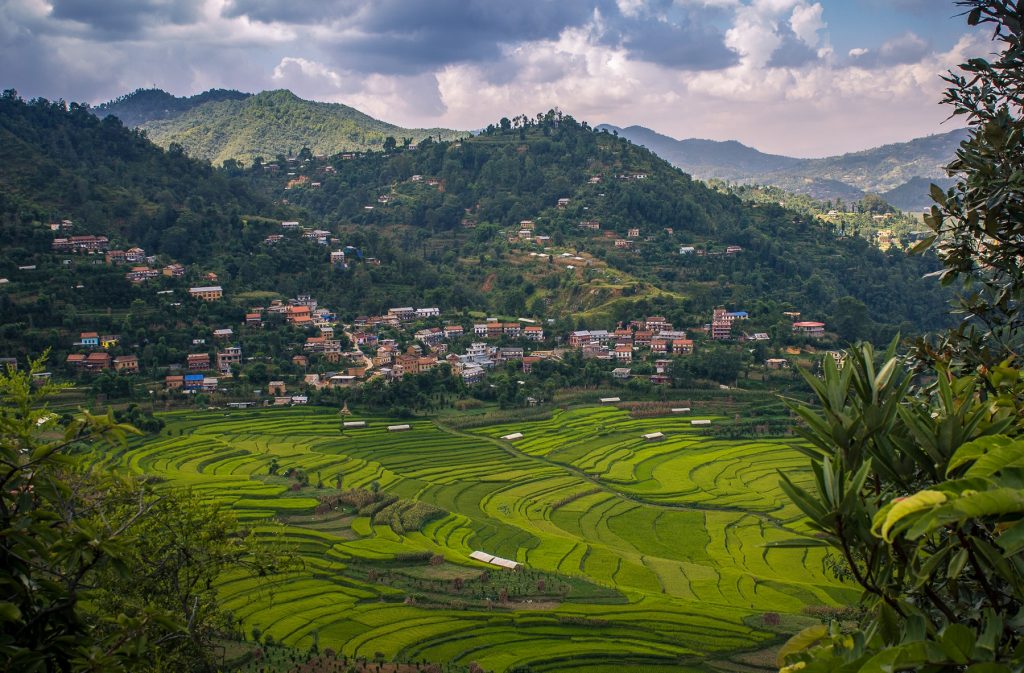
Ladkeshwor Mahadev lies in the wider Balthali region of Kavrepalanchok, southeast of Kathmandu. The area is characterized by forested hills, agricultural terraces, small streams and traditional villages. Unlike heavily urbanized tourist destinations, the surroundings retain a distinctly rural atmosphere. The landscape provides opportunities for visitors to combine a religious visit with walking, hiking, photography and observation of local life.
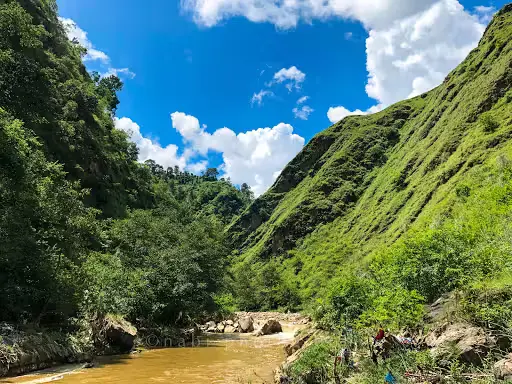
The temple’s location also makes it suitable for short trips from Kathmandu. Travellers can visit the shrine and return on the same day or stay overnight in the Balthali and Panauti areas to explore the wider destination. For visitors interested in rural tourism, the journey itself becomes part of the experience, with roads and trails passing through hills, villages and agricultural landscapes.
Religious and Historical Heritage
Ladkeshwor Mahadev is primarily a shrine dedicated to Lord Shiva, one of the principal deities in Hinduism. Local devotees have traditionally visited the temple to pray, make offerings, and participate in religious ceremonies. The temple’s early history is not extensively documented in widely available historical records. However, local traditions associate the site with the Malla period, when temple construction, religious art and Hindu and Buddhist cultural traditions flourished in Nepal.
Local accounts also associate King Bhupatindra Malla with the construction or renovation of the temple. The exact date and nature of the original construction, however, require further historical documentation and should be understood in the context of local oral traditions. Regardless of the limited documentation concerning its earliest history, the temple has retained its religious importance through generations of community worship and festivals. The continued participation of local communities has helped preserve the shrine as a place of religious practice and cultural continuity.
The 108-Foot Trishul: The Temple’s Defining Landmark
The most prominent feature of Ladkeshwor Mahadev is its 108-foot Trishul. The Trishul, or trident, is closely associated with Lord Shiva and is one of the most recognizable symbols of Shaivite tradition. Tridents are commonly placed in Shiva temples across Nepal and other parts of South Asia. At Ladkeshwor Mahadev, the extraordinary scale of the Trishul gives the temple a distinctive identity and makes it an important visual attraction for visitors.
The number 108 also carries religious significance in Hindu and Buddhist traditions and is frequently associated with prayer, meditation and spiritual practice. The combination of the 108-foot Trishul and the temple’s 108 dhara gives the site a strong symbolic identity centred on traditional religious beliefs.
108 Dhara and Traditional Water Practices
Another important feature of the temple is the 108 dhara, referring to traditional water spouts or sources associated with religious purification. Water holds an important place in Hindu pilgrimage and worship. Devotees may use water as part of traditional purification practices and religious offerings. For visitors, the 108 dhara provides an opportunity to observe a living religious tradition rather than simply viewing a historical structure. Travellers visiting the site should respect local customs, particularly when devotees are performing religious rituals or using the water sources for worship.
Maha Shivaratri Brings the Temple to Life
Although devotees visit Ladkeshwor Mahadev throughout the year, religious activity increases significantly during major Hindu festivals. Maha Shivaratri, the major festival dedicated to Lord Shiva, is one of the most important occasions at the temple. Devotees gather to offer prayers and traditional offerings, light lamps, and participate in rituals. The holy month of Shrawan is another important period for Shiva worship. Across Nepal, devotees visit Shiva temples during Shrawan and offer water and milk to Shiva as part of their religious practices. Visiting Ladkeshwor Mahadev during these periods allows travellers to observe the cultural dimension of Hindu pilgrimage. However, festival periods can also be considerably busier, requiring visitors to be patient and respectful of worshippers.
Beyond Pilgrimage: A Rural Tourism Experience
One of the distinctive aspects of Ladkeshwor Mahadev is its setting. The destination can be experienced not only as a religious site but also as part of the broader rural tourism landscape of Kavrepalanchok. The hills surrounding Balthali provide opportunities for walking and short hikes. Visitors can pass through forests, agricultural terraces, and villages while observing traditional houses and everyday farming activities. The countryside also provides opportunities for landscape and cultural photography. For travellers interested in slow tourism, an overnight stay can provide more time to explore the surroundings rather than treating the temple as a quick stop on a day trip.
Local Food Adds to the Experience
A visit to Ladkeshwor Mahadev can also introduce travellers to the food culture of the Balthali and Kavrepalanchok region. Traditional Nepali meals such as dal bhat tarkari, dhido, gundruk, achar, sel roti, momo and seasonal vegetables are commonly associated with rural Nepali food culture. Visitors staying at local homestays can experience freshly prepared meals and traditional hospitality. During religious occasions, devotees may also prepare or offer fruits, milk, sweets and vegetarian foods as part of their religious practices. For tourists, local food is an important part of experiencing the destination because it connects the journey with the everyday lifestyle of the surrounding communities.
How to Reach Ladkeshwor Mahadev
Ladkeshwor Mahadev can generally be accessed by road from Kathmandu through the Bhaktapur–Banepa–Panauti corridor before continuing toward the Balthali/Khopasi area. The journey time varies according to traffic, road conditions and the specific starting point and route.
By Private Vehicle
Private cars, jeeps and motorcycles offer the greatest flexibility for visiting the area. Travellers can drive from Kathmandu toward Bhaktapur and Banepa before continuing to Panauti and onward toward the Balthali area. A private vehicle also makes it easier to stop at viewpoints, villages and other attractions along the route.
By Public Transportation
Budget travellers can take public transportation from Kathmandu toward Banepa or Panauti and then use local transportation to continue toward the Balthali/Khopasi area. Depending on the final access point, travellers may need to walk part of the route. Because local transport schedules and road conditions can vary, visitors are advised to check the latest local information before beginning the journey.
By Taxi or Hired Vehicle
Hiring a taxi or private vehicle provides a more direct option, particularly for families, groups or visitors travelling with elderly people. The total cost depends on the vehicle, distance, waiting time and whether the vehicle is hired for a one-way or return journey.
By Air
There is no airport directly serving Ladkeshwor Mahadev. International visitors normally arrive at Tribhuvan International Airport in Kathmandu and continue the journey by road. The same applies to domestic visitors arriving in Kathmandu by air.
By Hiking
The Balthali and Panauti region is well suited to walking and hiking. Visitors can combine their temple visit with trails through forests, villages and terraced agricultural land. Walking provides a closer look at rural life, including traditional houses, farming activities and local landscapes.
Nearby Destinations to Include in the Itinerary
Ladkeshwor Mahadev can be combined with several destinations in the wider Kavrepalanchok region. Balthali offers rural scenery, hiking routes, forests and village experiences. Panauti is known for its historic settlement, temples, traditional architecture, and Newar cultural heritage. Namobuddha provides an opportunity to visit an important Buddhist pilgrimage destination, and can add a different religious, and cultural dimension to the journey. Combining these locations can turn a temple visit into a broader cultural and nature-based tour of the region.
What Visitors Can Do
A visit to Ladkeshwor Mahadev can include several activities beyond worship. Visitors can explore the temple and its religious architecture, observe the 108-foot Trishul, learn about the significance of the 108 dhara and observe traditional Hindu practices. The surrounding landscape is suitable for short hikes, village walks, nature observation, landscape photography and cultural photography. Those staying overnight can explore Balthali at a slower pace and interact with local communities through homestays and locally operated tourism services.
Suggested Travel Duration
Ladkeshwor Mahadev can be visited as a day trip from Kathmandu, but a longer stay allows travellers to experience more of the surrounding region. A one-day itinerary is suitable for visitors who primarily want to visit the temple, see the 108-foot Trishul and 108 dhara, and return to Kathmandu. A two-day, one-night trip provides more time for Balthali village, hiking, local food and countryside exploration. A three-day itinerary can incorporate Ladkeshwor Mahadev, Balthali, Panauti and Namobuddha, creating a broader cultural and nature-focused journey.
Best Time to Visit
The best time depends on the type of experience visitors are seeking. October to March generally offers favourable conditions for sightseeing, hiking and photography, particularly when skies are clear. March to May brings warmer weather and spring greenery, making the surrounding hills attractive for outdoor activities. The June to September monsoon season can make roads and trails wet and difficult, although the landscape becomes particularly green. For those interested primarily in religious experiences, Maha Shivaratri and Shrawan are significant periods to visit. However, visitors should expect larger crowds during major festivals.
Accommodation Around Balthali
Travellers can find homestays, guesthouses, hotels and resorts in the wider Balthali and Panauti areas. Homestays provide an opportunity to experience local food, hospitality and rural lifestyles. Resorts and hotels offer more conventional accommodation for visitors seeking additional comfort. Staying overnight also allows travellers to explore nearby trails without having to rush back to Kathmandu on the same day.
A Destination Connecting Faith, Nature and Community
Ladkeshwor Mahadev represents a form of tourism in which religious heritage and rural landscapes complement each other. The temple’s 108-foot Trishul provides a powerful visual symbol, while the 108 dhara, Shiva worship and festival traditions give the destination its spiritual character. At the same time, the surrounding Balthali landscape provides opportunities for hiking, village tourism, photography and interaction with local communities. The destination can therefore form part of a broader tourism circuit linking religious and cultural attractions with nature-based experiences in Kavrepalanchok.
For domestic visitors, it offers an accessible pilgrimage and countryside escape from Kathmandu. For international travellers, it provides an opportunity to encounter a less urbanized side of Nepal and observe religious practices within their local community setting. With its combination of spirituality, cultural heritage, rural life and natural scenery, Ladkeshwor Mahadev offers a distinctive experience in the Balthali region.
A visit to the temple can be kept short for a pilgrimage-focused trip or expanded into a multi-day journey covering Balthali, Panauti, Namobuddha and surrounding hiking trails. As interest in cultural, spiritual and rural tourism continues to grow, destinations such as Ladkeshwor Mahadev provide an opportunity to connect tourism with local heritage and community experiences while exploring the quieter landscapes beyond Nepal’s major tourist centres.