Nepal has earned Rs 24.72 crore from mountaineering royalties during the autumn 2026 climbing season as 788 climbers from 70 countries gained permits to scale 31 Himalayan peaks. According to the Department of Tourism, 91 climbing expedition teams have received permits for various mountains in Nepal this autumn. Among the 788 climbers who have applied for permits, 582 are men while 206 are women.
The Department of Tourism has received Rs 24 crore 72 lakh 7 thousand 601 or US$1.63 million from the issued climbing permits of this season so far. The figures represent an extensive range of peaks that have drawn international climbers to Nepal this autumn, with Mount Manaslu accounting for the largest share of both climbers and royalty payments.

Manaslu Dominates the Autumn Climbing Season in Nepal
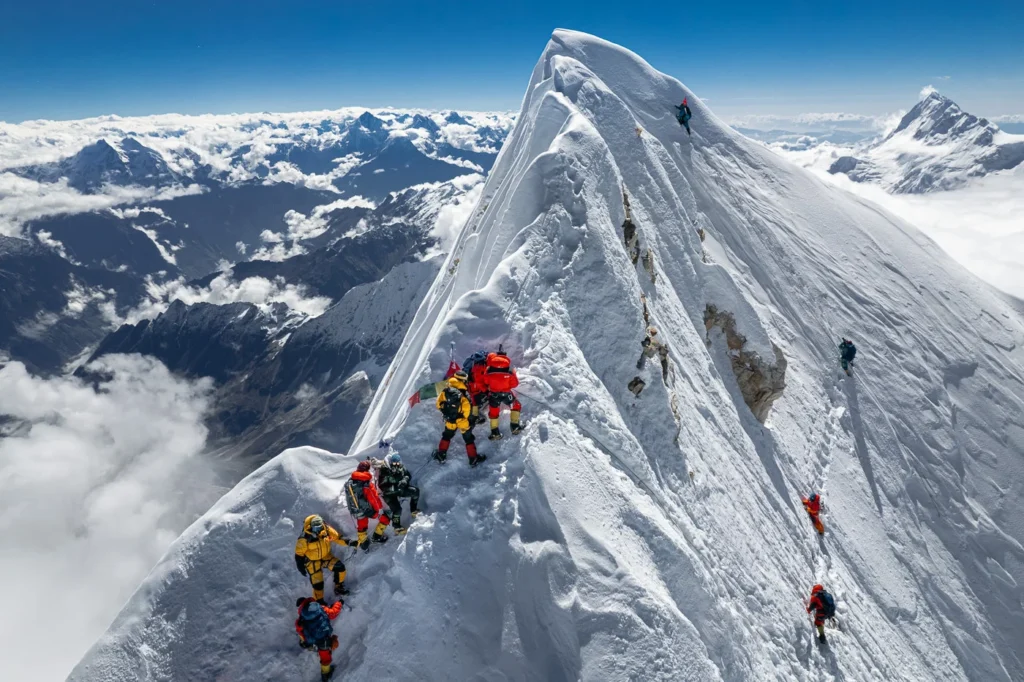
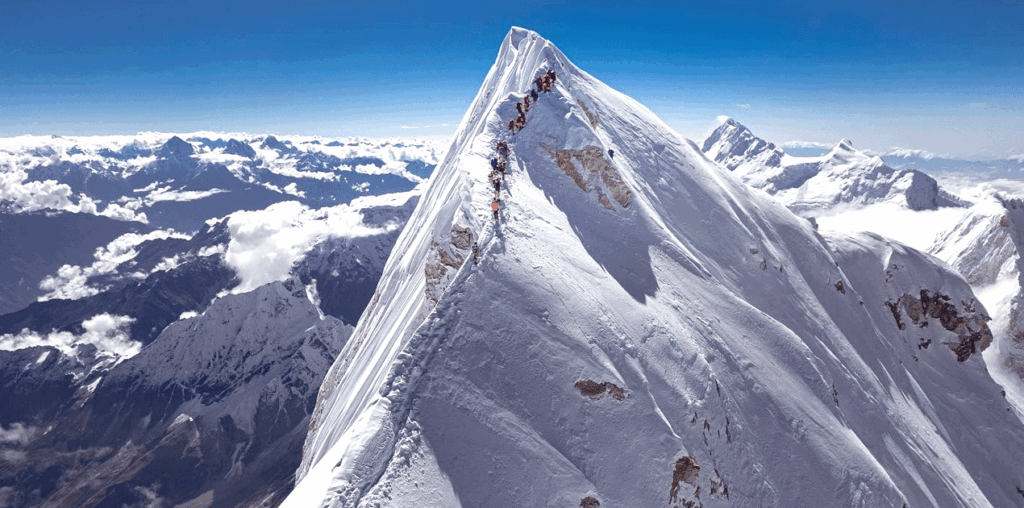
Mount Manaslu has attracted the largest number of climbers so far this autumn, with 500 mountaineers planning to tackle the 8,163-meter peak from 43 expedition teams. The number of climbers who have applied for permits for Manaslu far exceeds those of other peaks in the latest Department of Tourism report. As a result, the mountain has seen the largest share of Nepal’s climbing royalties this season. The Department of Tourism has received Rs 22 crore 58 lakh 57 thousand 189 from the 500 climbing permits issued for Manaslu.
Thus, the mountain has contributed to more than Rs 22.58 crore of the total Rs 24.72 crore in royalties earned by Nepal from mountaineering during the autumn season so far. In addition, Manaslu has remained one of the preferred peaks for climbers in Nepal’s post-monsoon period.
The number of climbers who applied for Manaslu permits also reflects its popularity among mountain climbing enthusiasts, as compared to other summits in Nepal mentioned in the Department of Tourism’s report. For instance, this autumn has witnessed a severe avalanche on Himlung Himal, claiming the lives of 15 Nepali workers and leaving another person missing.
Dhaulagiri-I, Himlung and Ama Dablam Also Attract Expeditions
Dhaulagiri-I has seen the second-highest number of climbers this autumn in Nepal, with 36 mountaineers from five expedition teams receiving permits to climb the 8,167-meter peak. The Department of Tourism has gained Rs 82 lakh 42 thousand 50 from the climbing permits issued for Dhaulagiri-I. Moreover, 34 climbers from three expedition teams have applied for permits for Himlung Himal. The mountain, which stands at 7,126 meters, has gained significant popularity among international climbers during the autumn season. However, this season has also marked a severe tragedy on Himlung Himal, as an avalanche claimed the lives of 15 Nepali workers and left one person missing.
On the other hand, 19 climbers from two expedition teams have received permits for Ama Dablam. The Department of Tourism has gained Rs 29 lakh 12 thousand from the climbing permits issued for Ama Dablam. Besides being one of the most recognized Himalayan peaks, Ama Dablam also remains among the most climbed mountains in Nepal’s mountaineering portfolio. This 6,650-meter peak has drawn climbers throughout the autumn expedition season.
Department of Tourism Issues Permits for a Wide Range of Mountains
The Department of Tourism has issued permits for a wide range of mountains during the autumn season, with the focus not solely on the highest summits that have gained the largest number of climbers. In particular, the Department has allowed climbing expeditions for Putha Hiunchuli, Danga Hiunchuli, Baruntse, Makalu, Gangapurna West (Langchenel), Thorong Peak, Norbu Khang, Annapurna IV, Chamlang, Lamjung Himal, Pumori, Saribung, Thapa Peak (Dhampus), Pokhar Khang, Ardang and Peri, among others.
While Manaslu has attracted the largest number of climbers, the permits also cover a large range of Nepalese mountains for climbing expeditions. Hence, the Department of Tourism’s latest report suggests that the autumn climbing season involves a wide range of mountains, with Manaslu dominating in terms of the number of climbers.
On the other hand, permits have also been issued for several other summits, which offers climbing options for various levels of climbing skill and different climbing objectives for those who wish to explore the Himalayas. The Department of Tourism’s latest report also indicates that the autumn season has seen a high level of adventure tourism activity, despite the fact that most of the climbers are drawn to a limited number of mountains. In particular, the Department has received applications from as many as 91 expedition teams, which also suggests that there is a high level of interest in climbing expeditions in Nepal.
Autumn Mountaineering Season Sees Participation from 70 Different Countries
The autumn climbing season has witnessed a remarkable number of international participants, with mountaineers from 70 different countries applying for permits so far. In particular, a significant number of climbers have come from Asian, European and American countries. China has had the largest representation so far this season, with 118 Chinese nationals receiving permits for climbing expeditions. Russia has seen the second-largest number of climbers, with 65 Russian nationals applying for permits. Other countries with a considerable number of climbers include France (60), the USA (52) and the UK (45).
Notably, a considerable number of climbers have come from European and American countries, as well as neighboring Asian nations.In addition, the Department has received permits from 25 Polish and Japanese climbers each, while Italy and Nepal each saw 23 climbers. India has seen 18 climbers, while Switzerland and Spain each reported 16 permitted mountaineers. Overall, the Department of Tourism has seen a remarkable number of climbers from a wide range of countries that have applied for permits during the autumn climbing season in Nepal.
Tourism Department Benefits from Significant Share of Mountaineering Royalties
The significant sum of money earned by the Department of Tourism from climbing permits showcases the popularity of mountaineering among international adventure sports enthusiasts. In particular, the Rs 24.72 crore earned from royalty payments demonstrates the extent to which the Nepalese authorities benefit from the popularity of hiking and climbing in the Himalayas.
Notably, the Department of Tourism does not receive all the proceeds from climbing activities, as the mountain climbing industry involves guides, high-altitude workers, porters, accommodation and other services. As far as the government is concerned, the Department of Tourism sets the royalty rates for climbing permits, which vary for different mountains, depending on their altitude and the time of the year. For instance, the Department sets different climbing permit fees for the autumn season, which are applied to different categories of mountains.

In addition to the government’s share of the profits from climbing activities, the mountain climbing industry also benefits various private businesses that contribute to the success of climbing expeditions. From that perspective, the popularity of climbing in Nepal also serves to promote Nepal as a premier hiking and mountaineering destination. The recent avalanche that has triggered a number of disruptions to climbing activities in Nepal also indicates that Nepal’s mountainous terrain involves significant risks at high altitudes. In particular, the avalanche on Himlung Himal resulted in the deaths of 15 Nepali workers and left one person missing.
Nepal’s Autumn Season Sees High Level of International Adventure Sports Participation
Despite the dangers associated with climbing at high altitudes, the number of permits issued during Nepal’s autumn climbing season indicates the international community’s interest in mountaineering in Nepal. In particular, the Department of Tourism has gained Rs 24.72 crore from the climbing permits issued to 788 climbers from 70 countries who wish to scale 31 Himalayan peaks. The 500 climbers who applied for Manaslu permits have contributed to more than Rs 22.58 crore in proceeds for the Department of Tourism. With hundreds of climbers applying for permits to scale Nepal’s highest summits, the latest autumn climbing season statistics suggest that Nepal’s adventure tourism industry continues to thrive.
Source_Rss