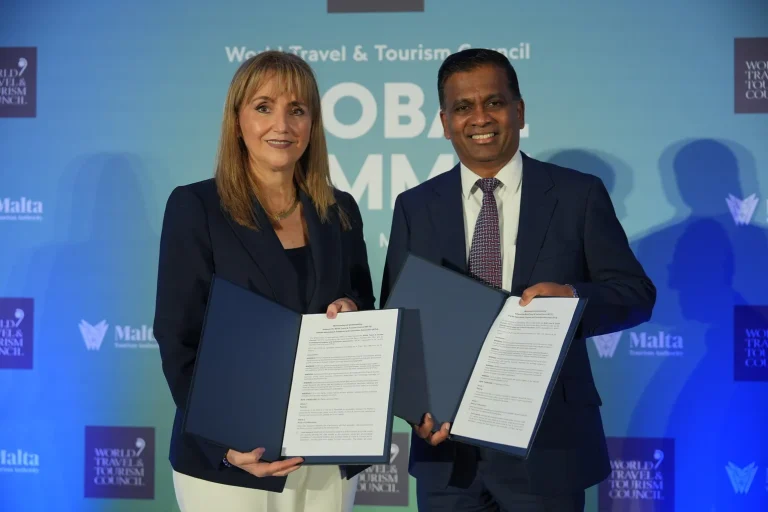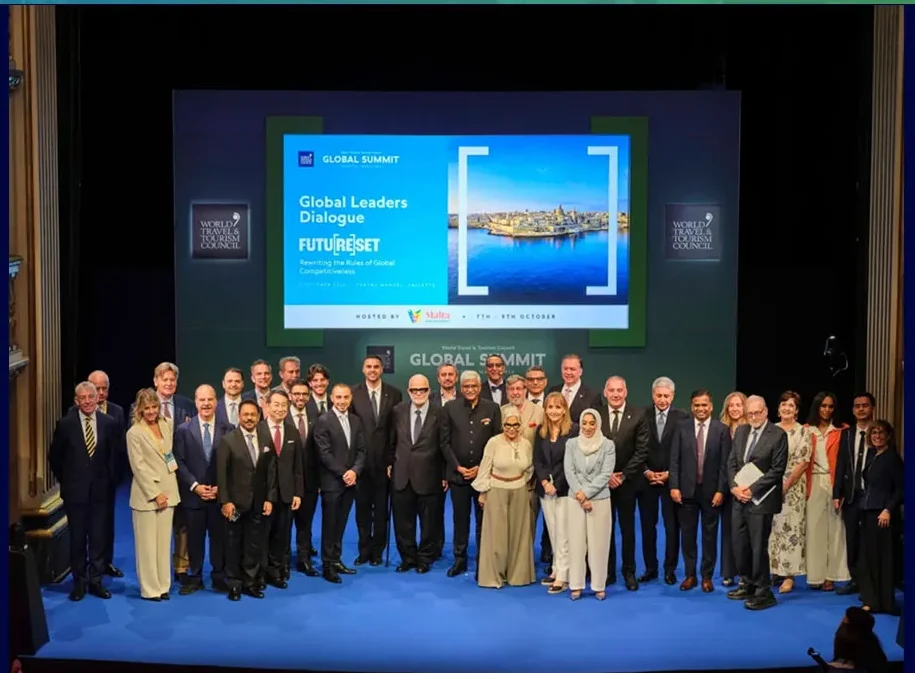
The World Travel & Tourism Council (WTTC) has brought together tourism ministers and senior business leaders from 24 countries in Valletta for a high-level Global Leaders Dialogue focused on strengthening destination competitiveness and shaping the future of global Travel & Tourism. Held as part of the 26th WTTC Global Summit, the dialogue highlighted the growing importance of cooperation between governments and the private sector in making destinations more attractive to travellers, investors and businesses.
Under the theme “Rewriting the Rules of Global Competitiveness,” the Global Leaders Dialogue examined how destinations can strengthen their competitiveness to attract visitors and investment in an increasingly competitive global tourism market. Discussions focused on connectivity, ease of travel, investment opportunities, regulatory efficiency and public-private collaboration as key factors influencing the decisions of travellers, businesses and investors. Participants also emphasised the need for stronger cooperation between governments and businesses to support the long-term growth and resilience of the Travel & Tourism sector.

Public-Private Cooperation Emerges as Key to Tourism Growth by WTTC
WTTC President and CEO Gloria Guevara highlighted the importance of stronger cooperation between the public and private sectors to improve investment readiness, encourage innovation, strengthen connectivity and support tourism growth. The discussions of WTTC emphasised that governments and industry need to work together to maintain destination competitiveness as countries and regions increasingly compete for both international visitors and private investment. Public-private partnerships were identified as an important means of addressing challenges across the tourism value chain and creating conditions that support long-term tourism development.
Global Leaders Examine the Future of Seamless Travel
The first session of the Global Leaders Dialogue, titled “Seamless Travel: Where Government and Industry Meet,” examined the complete traveller journey, covering visas, border procedures, transportation, technology, hospitality and other elements of international travel. Ministers and industry leaders discussed how technology can make visa applications and border procedures more secure, simple and efficient.
The session of WTTC also explored the potential of biometric border systems and artificial intelligence to improve both security and the efficiency of international travel. Participants stressed that providing a seamless and convenient travel experience requires coordination across the entire tourism value chain. Efficient immigration and visa systems alone are not sufficient if other parts of the journey, including transportation, airport connectivity, hospitality and tourism supply chains, remain inefficient.
Destinations Compete for Global Tourism Investment
The second session, “Winning the Race for Global Investment,” focused on growing competition among destinations to attract private capital and examined how governments can become more investment-ready. Participants discussed the importance of infrastructure, connectivity, regulatory frameworks, incentives and policy decisions in attracting tourism investment. They also considered whether traditional investment incentives such as tax breaks, golden visas and special economic zones remain effective at a time when investors are placing greater emphasis on regulatory efficiency, transparency and predictability.
Government and business representatives stressed that investment readiness can significantly influence decisions about where businesses choose to invest. Clear, transparent and predictable regulations can provide greater confidence to investors considering tourism infrastructure, accommodation, mobility and other tourism-related projects. The discussion therefore highlighted the importance of policy development and institutional efficiency in creating an environment capable of attracting and retaining private investment in tourism.
Tourism Ministers and Global Business Leaders Participate in WTTC
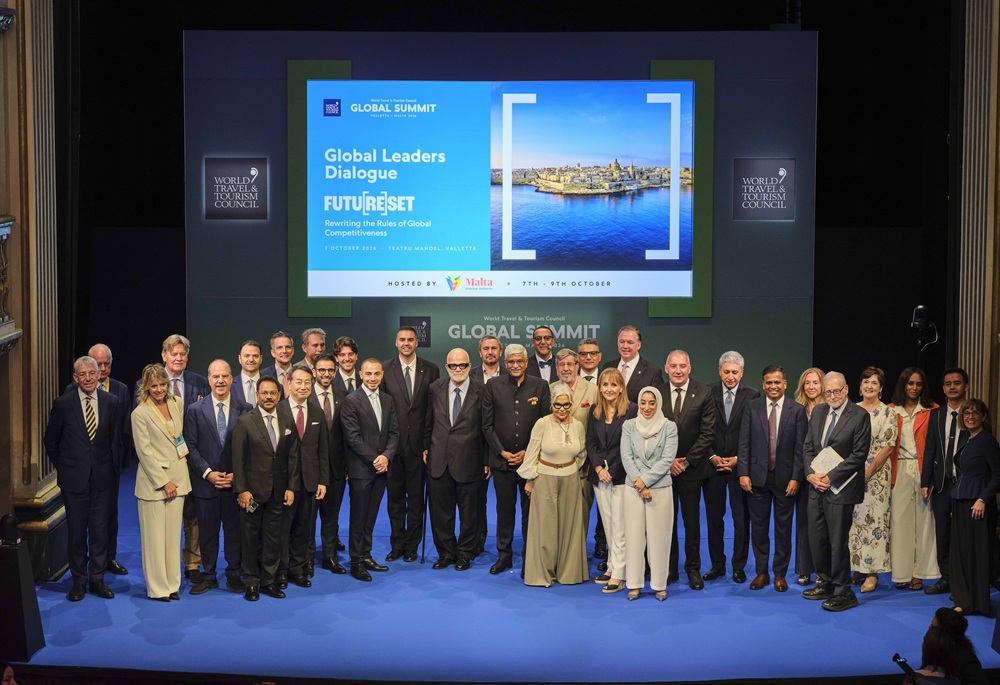
The Global Leaders Dialogue brought together senior policymakers and business executives from across the international tourism and travel industry. Government representatives included Sherif Fathy, Minister of Tourism and Antiquities of Egypt; Rosario Sánchez Grau, Secretary of State for Tourism of Spain; Fatima bint Jaafar Al Sairafi, Minister of Tourism of Bahrain; Jo Etienne Abela, Minister for Tourism of Malta; Robert O’Leary of the U.S. Department of Commerce; and H.E. Gajendra Singh Shekhawat, among other senior officials.
The private sector was represented by global executives including William Heinecke, Founder and Chairman of Minor International; Eijiro Yamakita, Chairperson of JTB Corp; Zubin Karkaria, Founder and CEO of VFS Global; Maher Koubaa, President EMEA of Amadeus; Paolo Barletta, CEO of Arsenale; Senthil Gopinath, CEO of ICCA; and Laura Sileo Pavat, Global Brand Homes Director at Pernod Ricard.
Travel & Tourism Continues to Strengthen Economic Contribution
The discussions took place against a backdrop of the growing economic importance of Travel & Tourism across global economies. According to the latest WTTC research, the sector contributed approximately US$3 trillion to Europe’s economy in 2025 and supported 40.7 million jobs across the continent. International visitors also spent approximately US$835 billion in Europe during the year, highlighting the importance of maintaining international visitor flows and strengthening destination competitiveness in WTTC.
As tourism’s economic contribution continues to expand, destinations face increasing pressure to attract visitors, investment and business activity. Efficient transportation networks, convenient visa procedures, modern border infrastructure, investment-friendly regulations and effective public-private cooperation are becoming increasingly important factors in determining where travellers and businesses choose to go.

Connectivity and Investment Shape Future Destination Competitiveness
The discussions in Valletta highlighted an evolving approach to tourism destination competitiveness. While government policy and public investment remain important, there is growing emphasis on closer cooperation between governments and the private sector across multiple areas of destination development.
Connectivity and investment are emerging as increasingly important components of global tourism competitiveness. The Global Leaders Dialogue provided a platform for policymakers and business leaders to examine how government policy, infrastructure, technology and private-sector investment can work together to build more competitive destinations and support the future growth of Travel & Tourism.