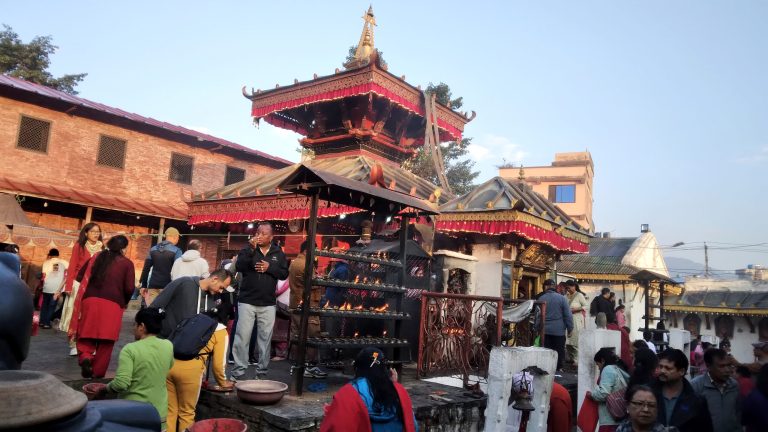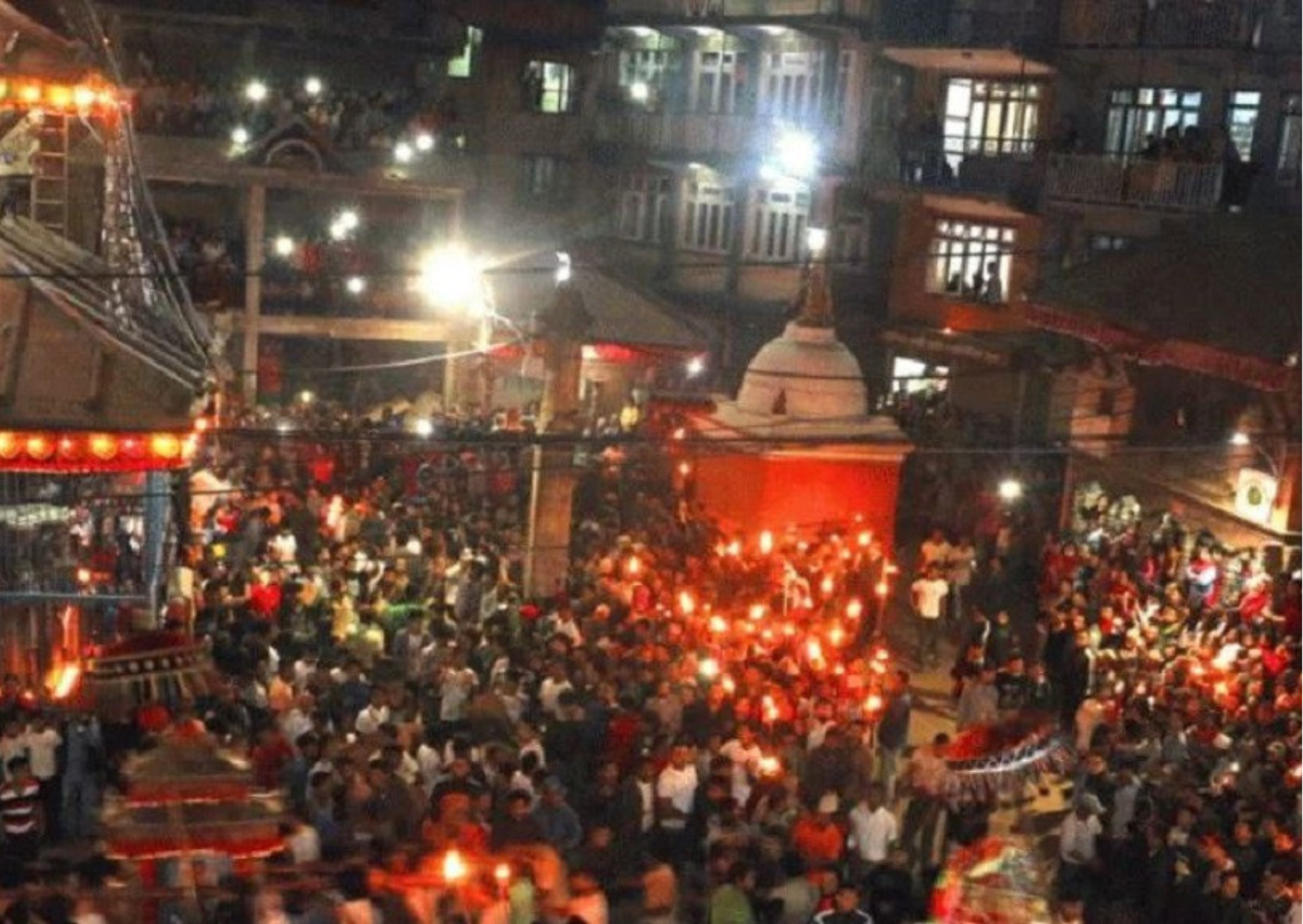
The traditional nine-day Navaratri festival has officially opened in nine Shakti shrines across Bhaktapur. As the city gears up for the largest Hindu festival of Dashain, devotees gathered for a nighttime ritual, marking the beginning of the celebration with the performance of traditional music and a century-old religious practice. Bhaktapur’s people gathered at Brahmayani Temple for the first-ever night of the Navaratri festival that is dedicated to the Goddess Durga.
The worship lasts nine consecutive nights and days, during which residents traditionally visit any of the nine Shakti shrines in Bhaktapur. As the festival is community-oriented, people from different localities gather and play traditional Nepali instruments like the flute and Dhime drums. The nine-day Navaratri festival, which is part of the larger Dashain holiday, will be concluded with another gathering at Brahmayani.

Navaratri’s Nights Dedicated to Shakti Worship
The festival’s rituals that began on the evening of Ghatasthapana, the first day of Dashain, will continue until the 10th day and night known as Vijayadashami. On each of the festival nights, the people of Bhaktapur are dedicated to worshipping one of the nine forms of the Hindu goddess Durga.
Accordingly, the first night of Navaratri was dedicated to the deity at Brahmayani Temple. On the second night, the focus was on Maheshwari, followed by Kumari on the third, Bhadrakali on the fourth and Barahi on the fifth day. On the sixth night, people paid homage to Indrayani, and on the seventh night – to Mahakali. The eighth day was dedicated to Mahalakshmi, and the last day of the festival – to Tripurasundari.
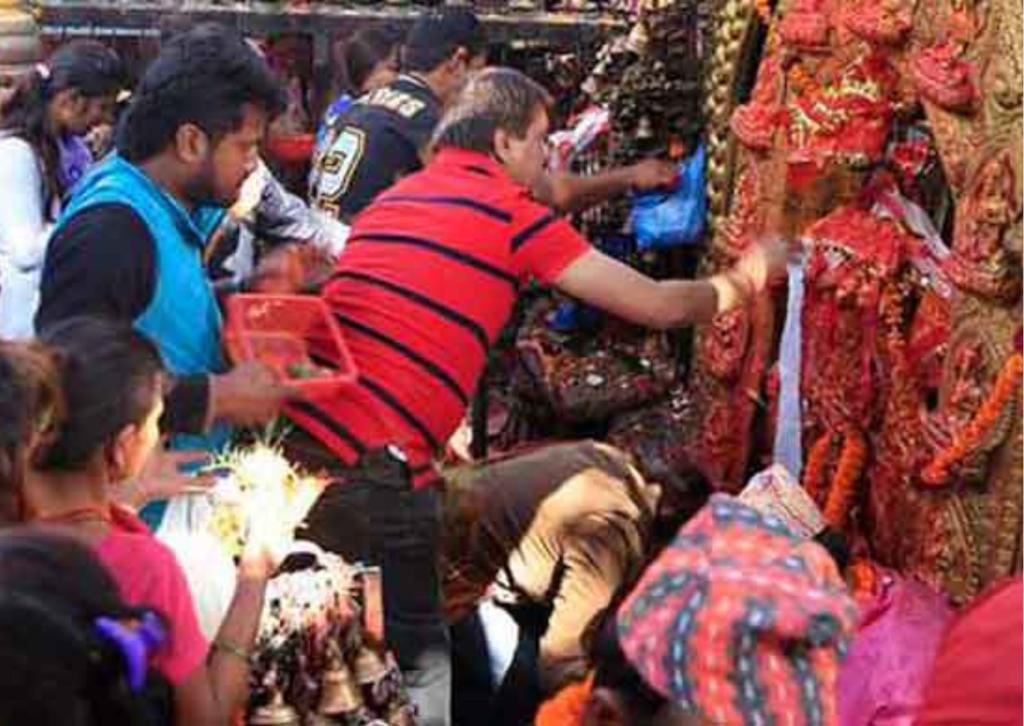
According to Bhaktapur-based cultural history researcher Prakash Chandra Dhaubadel, the people of Bhaktapur gather again on the morning of Vijayadashami Day at Brahmayani Temple. Throughout the festival, the residents of Bhaktapur observe the centuries-old custom of gathering in their locality and marching to the assigned temple, where they worship the deity with traditional instruments. The tradition allows the community to pass on its cultural heritage and keep alive the religious beliefs for future generations.
Khamey Jatra on the Navaratri’s Ninth Night
The highlight of the ninth day of Navaratri is the Khamey Jatra, the most popular and spectacular ritual of the festival. The day is dedicated to the worship of a sacred buffalo, Khamey, which is believed to represent the demon Mahishasura. During the ritual, the locals perform arts and traditional music.
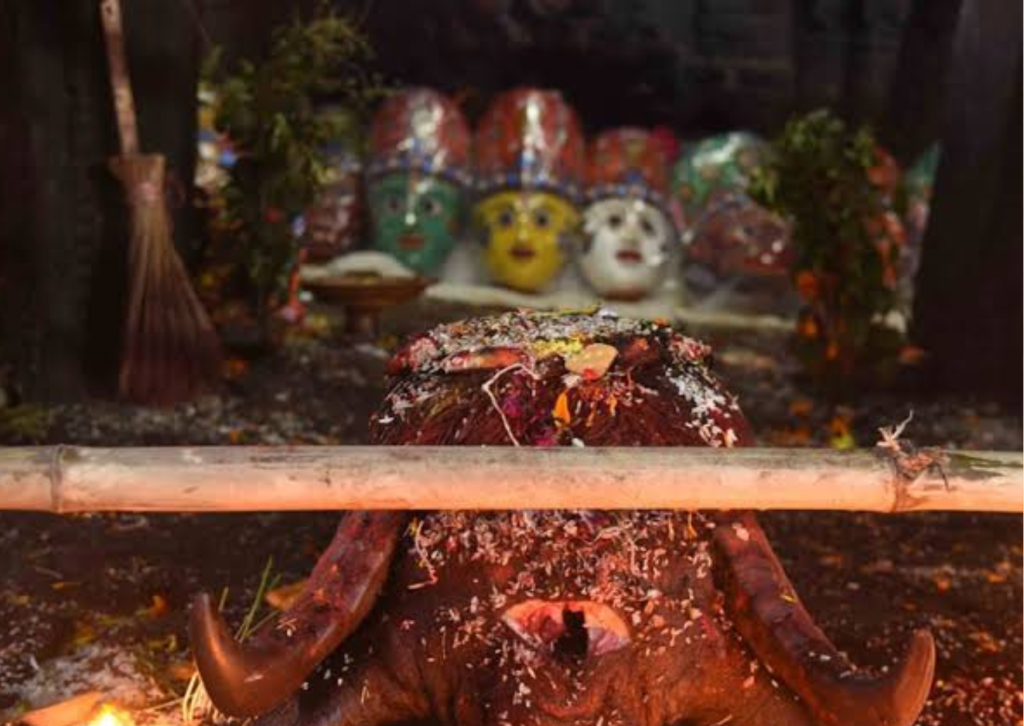
The event gathers thousands of people inside Brahmayani Temple, where the sacred animal is worshipped and later sacrificed. It is said that Khamey Jatra’s procession carries the power to fulfil wishes and desires. The large number of locals and tourists makes it the most spectacular of all Dashain celebrations. On the last day of the festival, on Vijayadashami night and day, thousands of people gather at Brahmayani Temple for the final event of Navaratri.
Payo Jatra Begins after the Dashain Holidays
Payo Jatra, also called Khadga Jatra, is an event that begins on the night after Vijayadashami Day. The festival begins when the white horse from Taleju Bhawani’s temple in Bhaktapur’s Durbar Square is brought on a procession tour for the day. Locals call it Payo Nhyaakegu Jatra. The event’s goal is to pay homage to the horse associated with Bhaktapur’s guardian goddess, who, according to legend, blessed the Malla kings and their soldiers.

Payo Jatra is an integral part of Bhaktapur’s Dashain traditions. The festival is closely intertwined with the legend of the goddess’s power and the revival of the power of Navadurga. As Dhaubadel notes, “the nine manifestations of Goddess Durga are considered real in the tradition of Bhaktapur.” In fact, it is said that the goddesses, whose images were destroyed by the evil forces, gain new powers on the day of Dashain.
Outside of its immediate ritual and mythological context, Navaratri is a symbol of triumph, good over evil, and truth over lies. With its rich legacy of rites and festivals, Bhaktapur has preserved Navadurga’s tradition through the centuries. The locals actively pass on their cultural heritage and the religious significance of the goddess through various events, including the worship of Shakti, her nine manifestations, and the traditions related to the city’s cultural history.
Source-RSS