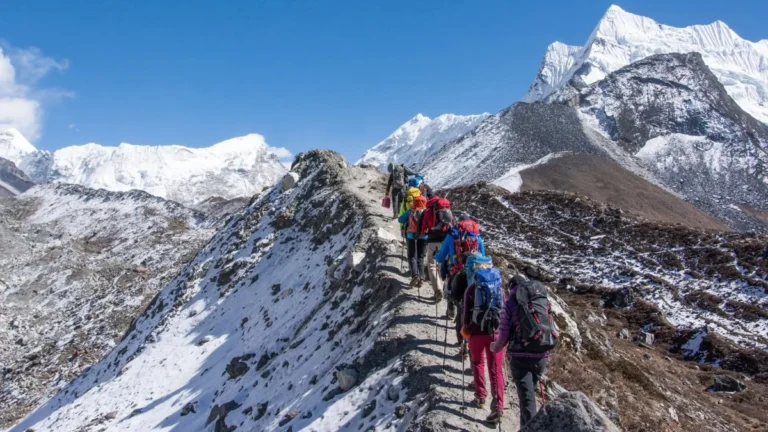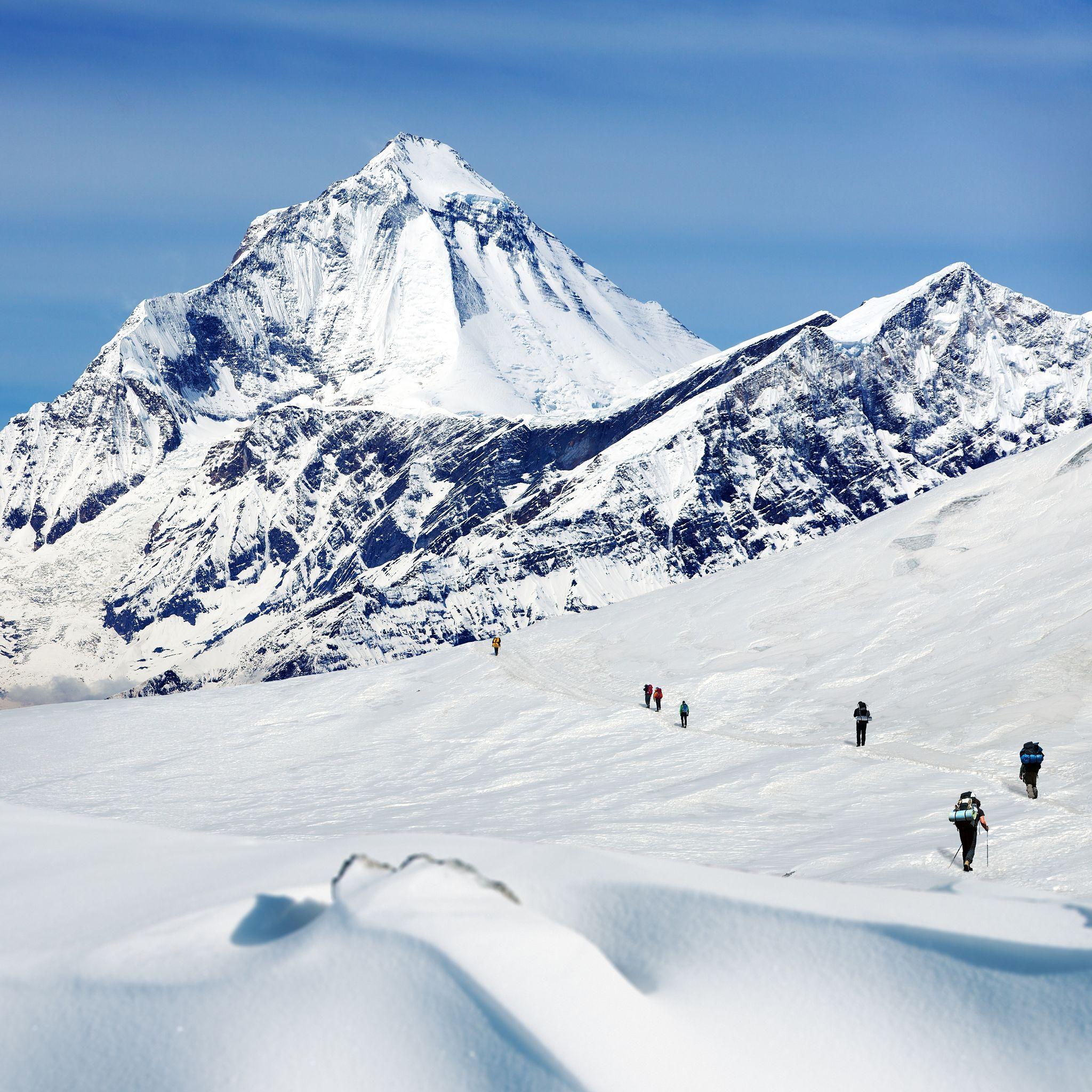
A group of Nepali climbers has had to call off their final attempt to summit Dhaulagiri due to extreme snowfall, high winds, and freezing temperatures. This comes at the end of the autumn climbing season on the world’s seventh-highest peak. The rope-fixing team, led by renowned climber Lakpa Sherpa, also known as Makalu Lakpa, had decided to give up their attempt after being unable to get past Camp III. The team returned to the mountain for their final try after several other groups had given up their efforts.
Heavy Snowfall and Strong Winds Put Off Summit Bid
It was reported by Makalu Lakpa that the poor weather conditions contributed to the decision to call off the expedition. In addition to the snowfall on October 7th and 8th, there was also extreme cold and powerful gusts of wind that made it impossible to continue climbing. Furthermore, the snowfall that occurred in Dhaulagiri in late September added to the difficulties presented by the harsh weather. It was noted that up to three meters of snow could be found in places on the mountain, which covered the camps as well as certain parts of the route.

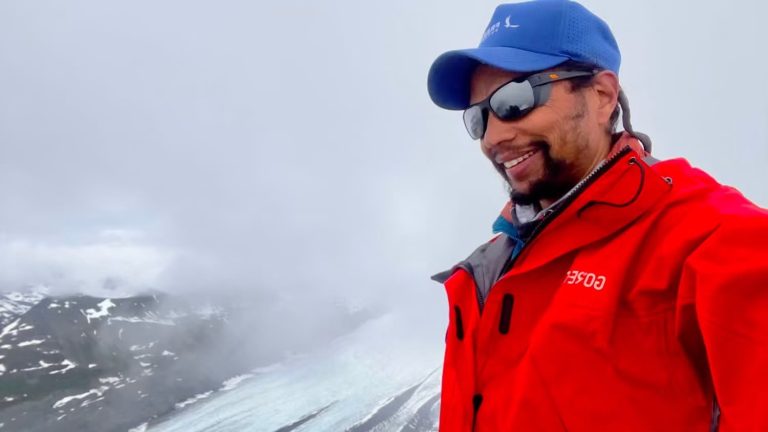
The team had initially made good progress, but they quickly found themselves dealing with even more hazardous conditions. According to Makalu Lakpa, who climbed to around 6,700 meters to check the snow situation and speak with his team, the conditions were among the worst he had ever encountered throughout his climbing career.
He stated that the decision to abandon the mission was a responsible one considering the risks it would have taken for the climbers. In addition, Makalu Lakpa noted that the primary cause of their poor fortune was the unfavorable weather, which impacted the mountain’s natural formations as well as the team’s own equipment.
Short Weather Window Spells More Trouble
Another factor that contributed to the postponement of the expedition was the limited time frame in which the team would have been able to complete their climb successfully. According to Makalu Lakpa, it was anticipated that October 11 and 12 would provide the team with two days of relatively good weather. However, in order to accomplish such a dangerous climb on an 8,000-meter peak, the team would have needed more time.
In addition, the team would have had to spend a night on the mountain in order to reach the summit during the two-day window. Given the extremely low temperatures that come with the high altitudes, the team would have been in grave danger of suffering from frostbite. Makalu Lakpa stated that the high winds posed an even greater threat than the snowfall in the given circumstances. Furthermore, the team decided that it was not worth risking their lives in the face of such powerful gusts of wind.
Most Dhaulagiri Expeditions Cancelled Following Heavy Snowfall
Most of the Dhaulagiri expeditions had been canceled due to the severe snowfall that occurred in late September. More experienced climbers had expressed concerns regarding the deep snowdrifts as well as the worsening conditions in the lower regions of the mountain. Nevertheless, the rope-fixing team returned to the mountain in an effort to make one last attempt at reaching the summit before the season came to a close.
The expeditions to Manaslu, one of the mountains located near Dhaulagiri that is also taller than 8,000 meters, were also canceled for similar reasons. Seven Summit Treks was the first organization to call off the Manaslu expedition because of the impending storm and the heavy snowfall that was predicted to occur in the area. The other companies followed their lead after observing the deep snow covering the base camp as well as the surrounding region.

Dhaulagiri: One of the Highest Peaks in the World
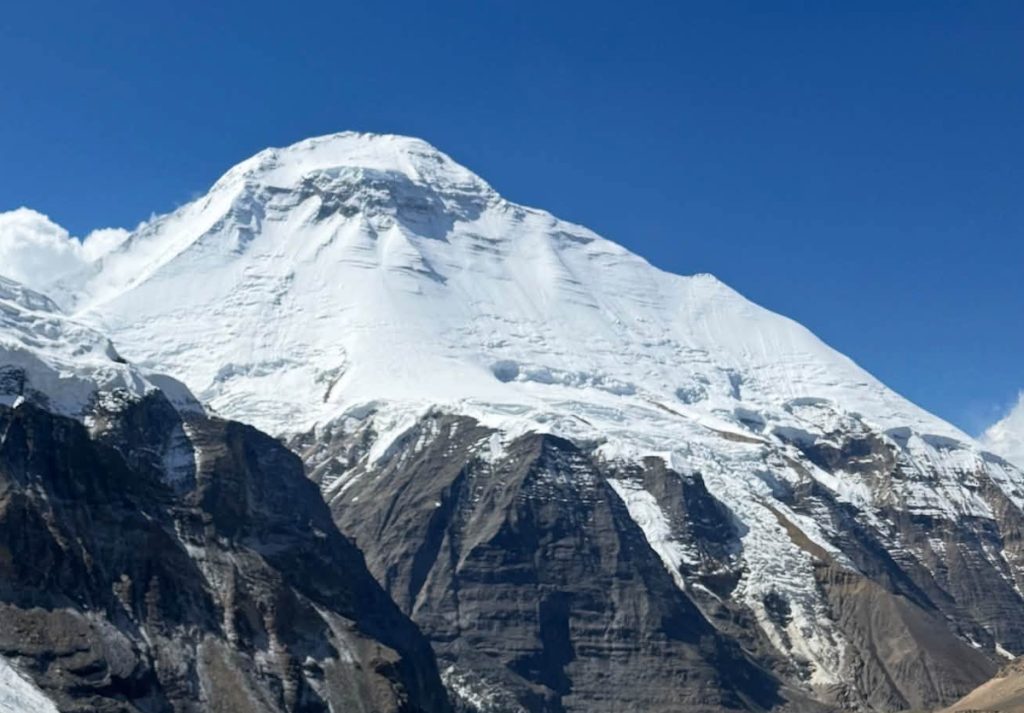
With a height of 8,167 meters, Dhaulagiri is among the tallest peaks in the world that can be climbed by amateurs. The most recent turn of events further emphasizes the significance of conducting the appropriate risk analysis, having enough time to complete the climb, and making responsible decisions regarding high-altitude mountaineering. There has also been an increase in worries about the dangers posed by climbing after a deadly avalanche that occurred in Himlung Himal base camp in late September.
According to the reports, the tragedy claimed the lives of 15 individuals, including two climbing guides and 13 kitchen staff. One person is still unaccounted for, and it is believed that he or she may still be trapped beneath the snow. Under these conditions, the decision to cancel the Dhaulagiri expedition highlights the potential for unpredictable, severe snowfall as well as strong winds to put hikers and their support teams in peril.