
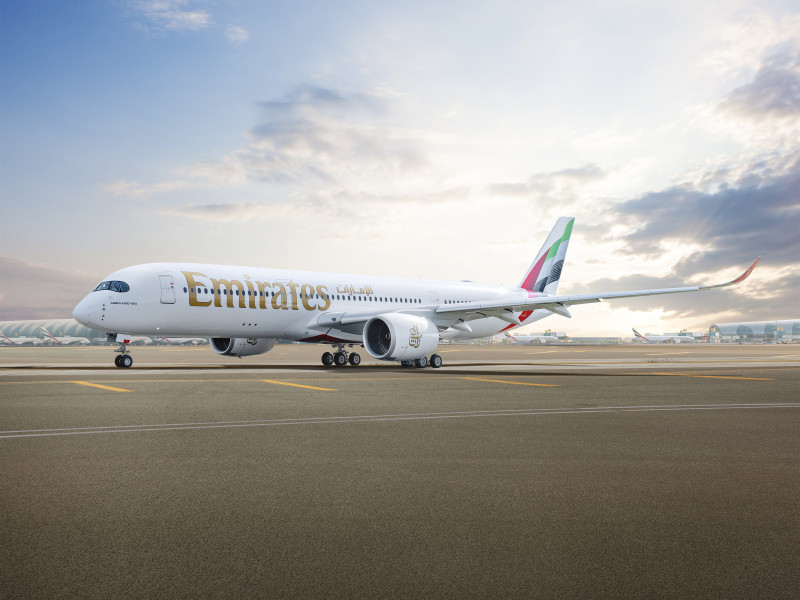
The Emirates Group has reported a profit before tax of AED 4.1 billion (US$1.1 billion) for the first half of its 2026–27 financial year, maintaining profitability despite significant operational disruptions caused by regional conflict and a sharp increase in global fuel prices. The Group’s financial performance for the six months ended September 30, 2026, reflects the impact of geopolitical uncertainty, higher operating expenses and reduced business volumes in some markets.
Revenue declined by 12% to AED 66.2 billion (US$18 billion), compared with AED 75.4 billion (US$20.6 billion) during the corresponding period last year. Profit after tax stood at AED 3.6 billion (US$1 billion), representing a 66% decrease year-on-year. Despite the challenging operating environment, the Group maintained a substantial cash position and continued investing in its fleet, products, services and future business capabilities.

Emirates Group Maintains Profitability Amid Rising Costs
The Group recorded earnings before interest, taxes, depreciation and amortisation (EBITDA) of AED 12.5 billion (US$3.4 billion) during the first half of 2026–27, down 41% from AED 21.1 billion (US$5.7 billion) in the same period last year. The previous year had marked record financial performance for the Group.
As of September 30, 2026, the Group held cash reserves of AED 54.1 billion (US$14.7 billion), compared with AED 59.6 billion (US$16.2 billion) on March 31, 2026. These reserves have supported operational requirements, aircraft pre-delivery payments and existing debt obligations. The Group also completed the payment of the remaining AED 2 billion (US$545 million) dividend to its owner, the Investment Corporation of Dubai (ICD), as part of the AED 3.5 billion (US$953 million) dividend declared for the 2025–26 financial year.
Emirates Airline Reports AED 3.7 Billion Profit
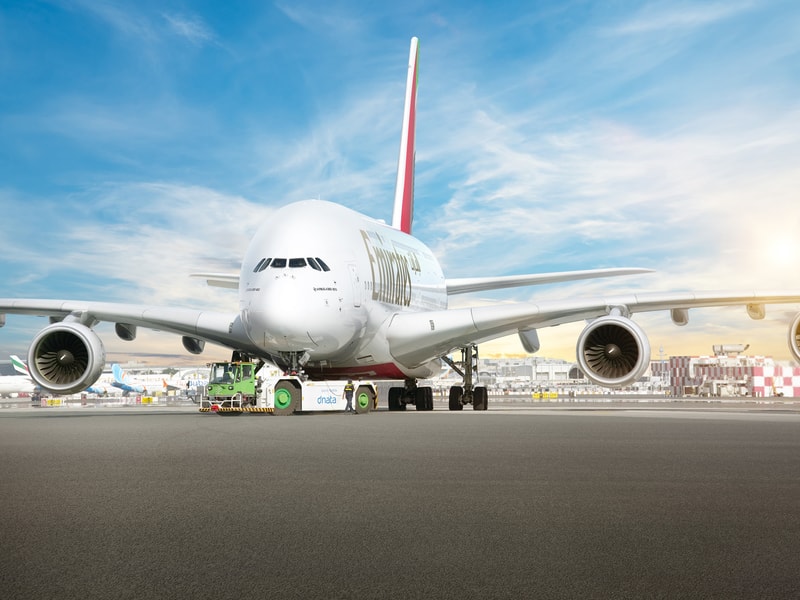
Emirates Airline recorded a profit before tax of AED 3.7 billion (US$1 billion) for the six-month period, down 68% compared with the corresponding period last year. Its revenue reached AED 56.9 billion (US$15.5 billion), a 13% decline year-on-year. Strong cargo operations provided important support to the airline’s revenue performance, while significantly higher fuel expenses placed pressure on profitability. Global jet fuel prices doubled compared with the same period last year, increasing operating costs amid regional disruptions.
Despite these challenges, Emirates continued focusing on its passenger services, cargo operations and long-term fleet development. The airline’s ongoing investment programme is aimed at strengthening its operational capabilities and maintaining its position in the international aviation market.
dnata Records AED 410 Million Half-Year Profit
dnata, the Group’s global air and travel services provider, reported a profit before tax of AED 410 million (US$112 million) for the first half of 2026–27, down 51% compared with the same period last year. Its revenue declined by 7% to AED 11 billion (US$3 billion), reflecting reduced business volumes in some operations in the UAE and the United Kingdom. The performance highlights the wider impact of regional instability and changing operating conditions across parts of the aviation and travel services sector. Despite the decline, dnata continues to support the Group’s broader aviation operations through its ground handling, cargo, catering and travel services businesses.

Group Continues Investment and Recruitment Plans
Commenting on the results, Emirates Group Chairman and Chief Executive Sheikh Ahmed bin Saeed Al Maktoum said the first six months had been demanding, but the Group’s business model and employees had helped it maintain profitability despite regional challenges and high fuel prices. He credited the UAE government for its coordinated response and efforts to enable the safe and smooth resumption of air transport activities following military activity across the Gulf region. He also noted that the easing of travel advisories to and through the UAE had helped the Group restore operations with confidence and continue serving customers.
Sheikh Ahmed said the Group had not paused its investments during the challenging period and remained committed to expanding its fleet, improving products and services, and developing capabilities for future growth. He added that the Group would continue monitoring operating costs and geopolitical developments while prioritising safety, service quality and customer satisfaction. The Group entered the second half of its 2026–27 financial year with measured optimism, supported by its cash reserves and established business foundation.
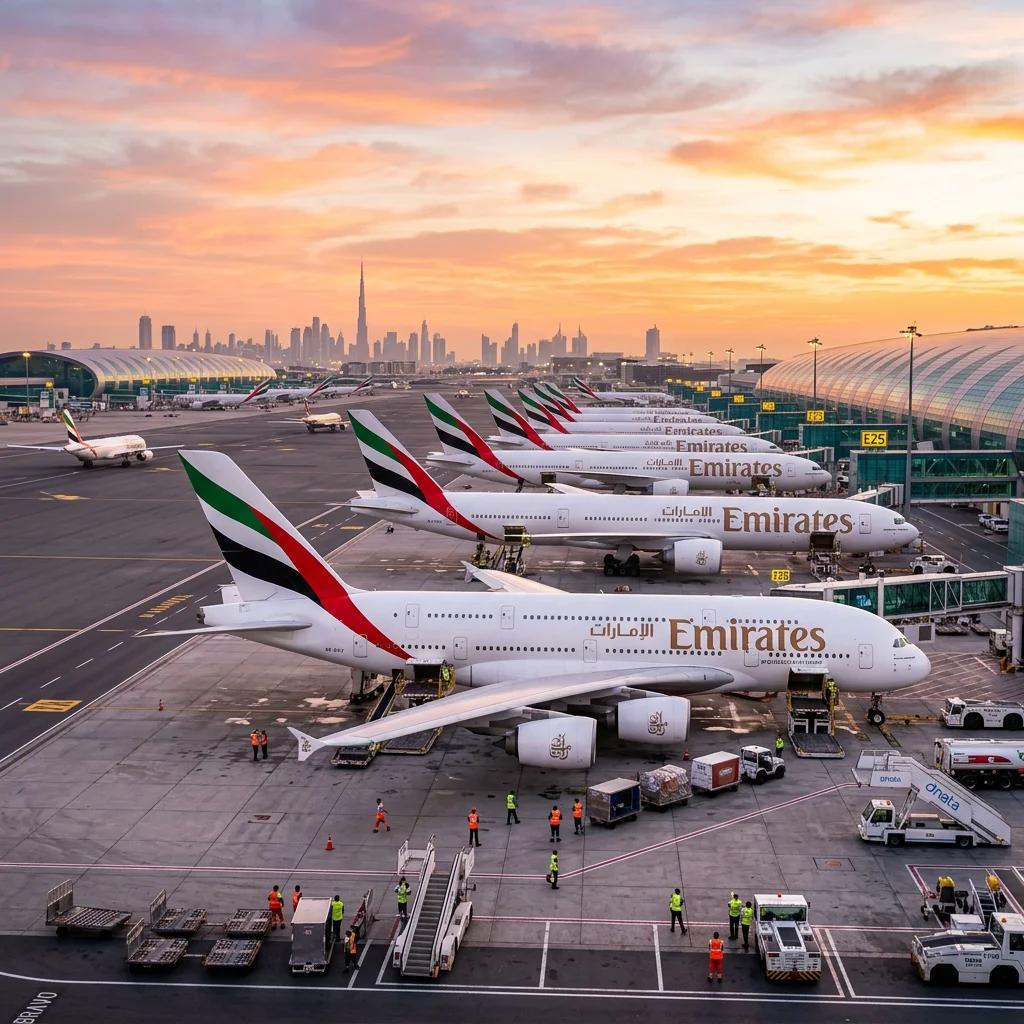
Its total workforce stood at 128,237 employees on September 30, 2026, representing a 2% decline from March 31, 2026. However, both Emirates and dnata continue recruitment activities to meet their operational requirements. With sustained customer demand, strong cargo contributions and continued investment in aviation infrastructure and services, the Emirates Group aims to maintain operational resilience while navigating the challenges of high fuel prices and regional volatility.