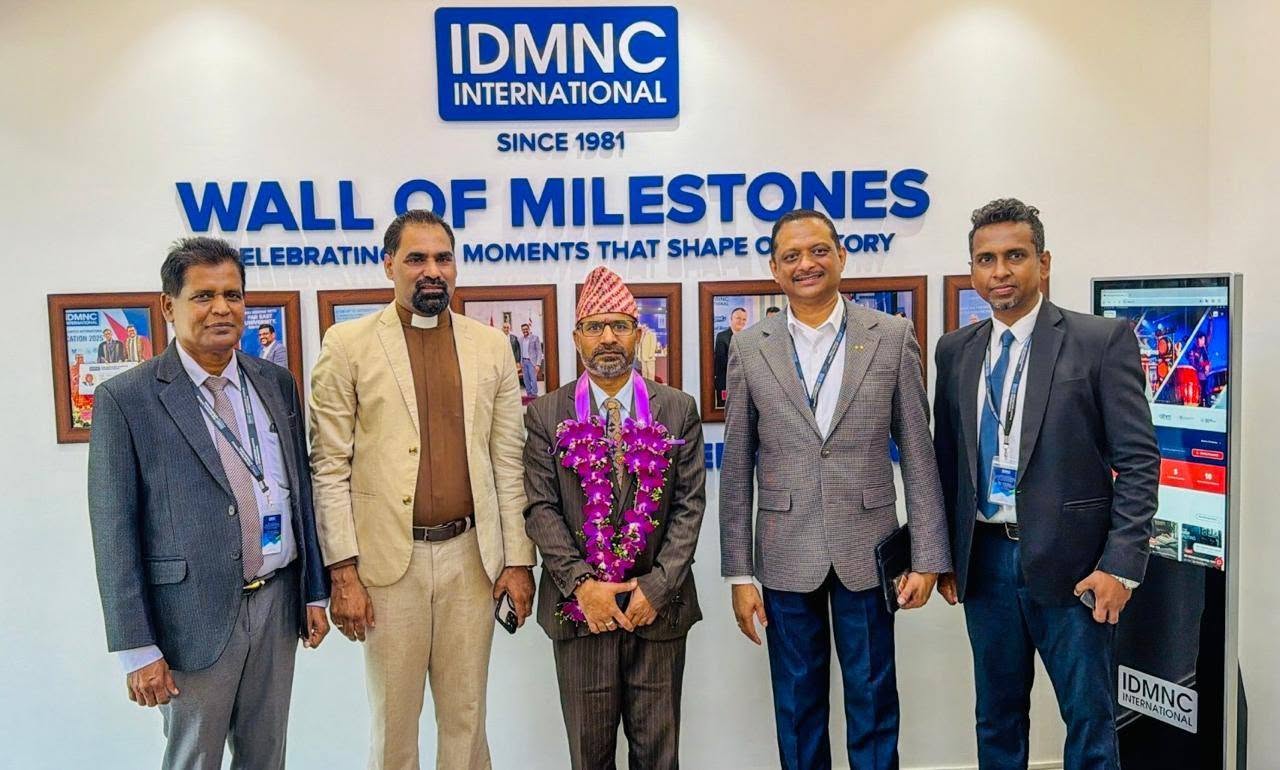
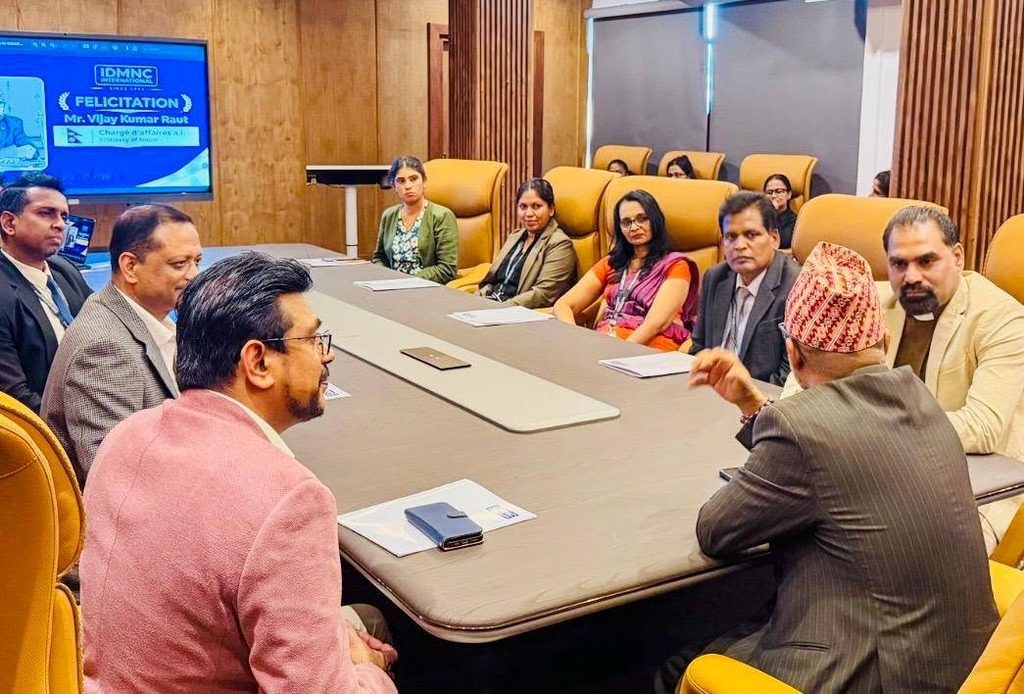
Nepal and Sri Lanka are exploring opportunities to strengthen educational, cultural and people-to-people relations, with a shared Buddhist heritage providing a foundation for deeper cooperation. The initiative gained momentum during a visit by Nepal’s Chargé d’Affaires (CdA), Mr. Vijay Kumar Raut, to IDM Nations Campus International (IDMNC), Gangaramaya City Campus, in Colombo, Sri Lanka.
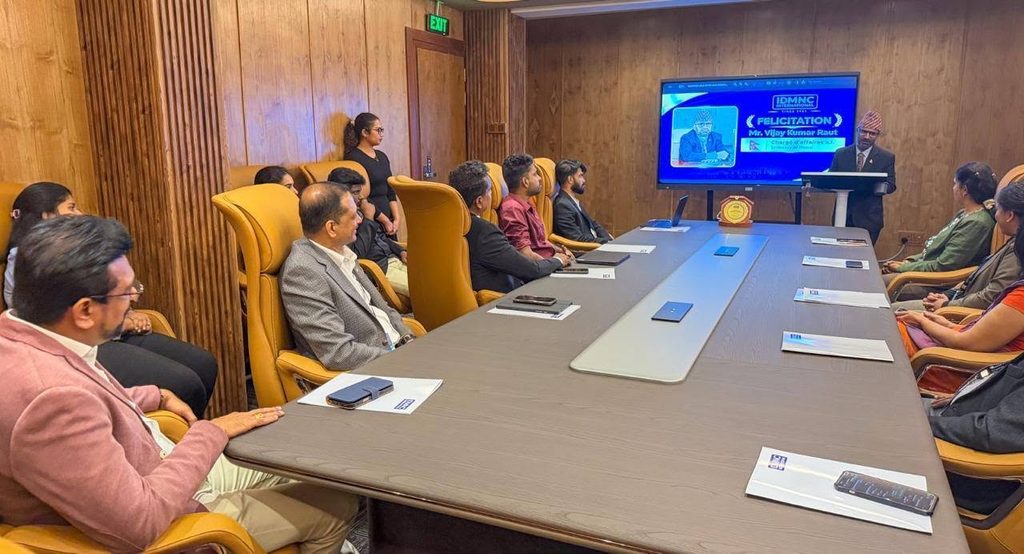
During the visit, Mr. Raut held discussions with the institution’s leadership on expanding academic partnerships, promoting student exchanges and creating opportunities for Nepali students to pursue higher education in Sri Lanka. The discussions also highlighted the importance of strengthening cultural engagement and youth cooperation between the two countries.
Nepal and Sri Lanka Strengthen Ties Through Shared Buddhist Heritage
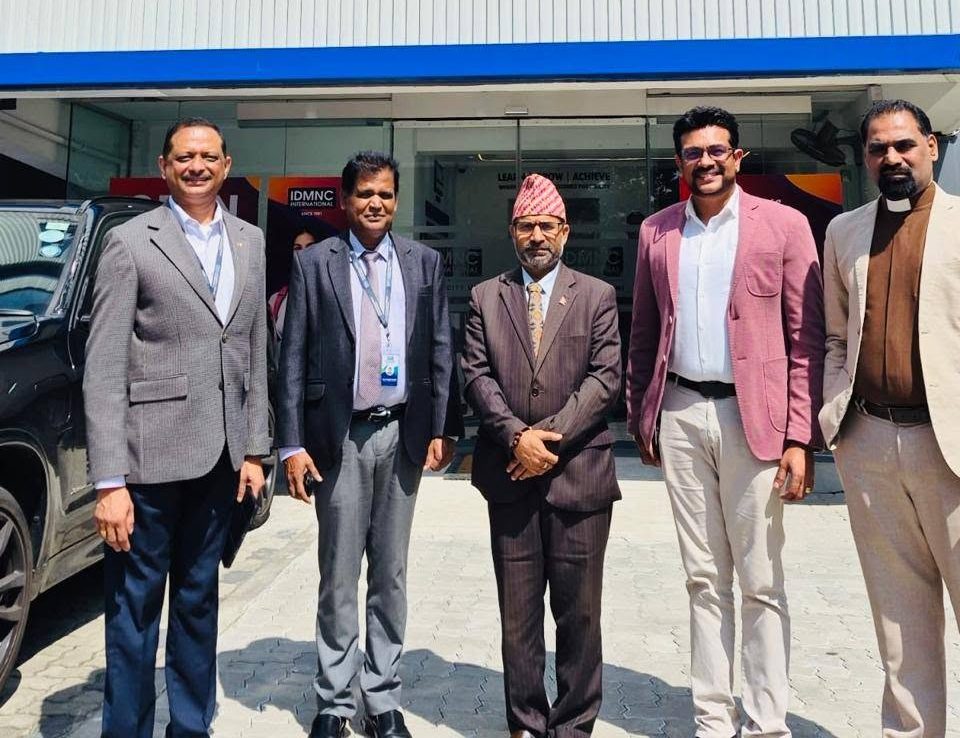
Mr. Raut was warmly welcomed at IDMNC by Rev. Father Chanduru Fernando, Dr. V. Janagan, Chairman and Chief Executive Officer of IDMNC, and Major General Sajith Liyanage USP, nps, psc (Retd), Executive Director, alongside members of the board, faculty and students. During the visit, Mr. Raut expressed his appreciation for the educational vision associated with the Most Venerable Thero, which views a temple not merely as a place of worship but also as a centre for learning, community service and compassion. The Education Hub at Gangaramaya Temple reflects this philosophy by bringing academic education, professional training and human values together.
The visit also carried special significance for Nepal because of the longstanding religious and cultural connections between the two countries. Lumbini, the birthplace of Lord Buddha, is located in Nepal, while Sri Lanka has preserved and promoted Buddhist teachings and traditions for centuries. This shared spiritual heritage continues to serve as an important foundation for strengthening bilateral relations and promoting Buddhist cultural tourism.
Discussions Focus on Academic Exchange and Opportunities for Nepali Students
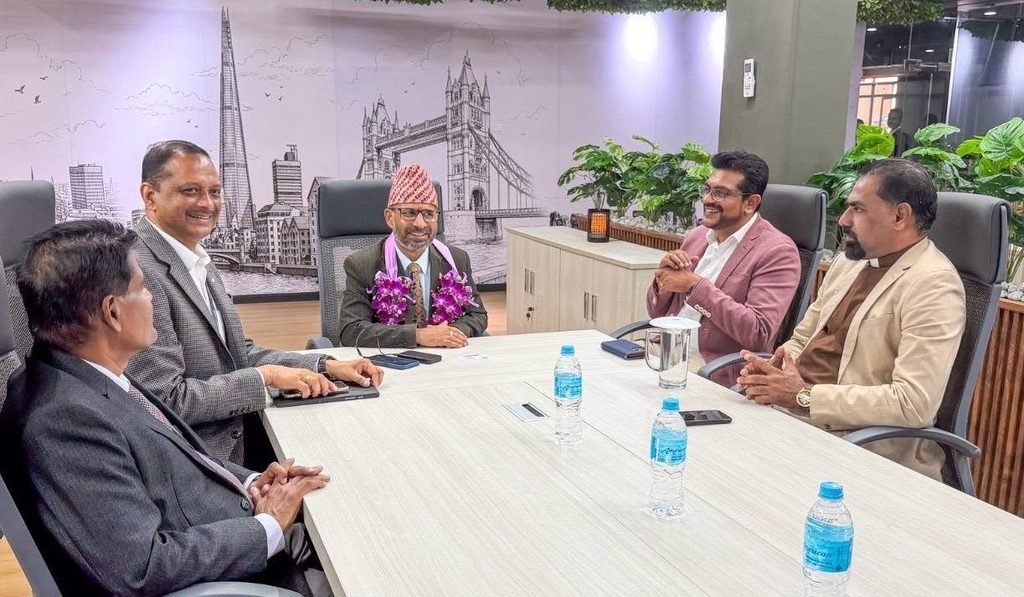
The meeting between Mr. Raut and the IDMNC leadership focused on identifying practical areas of cooperation in education and cultural exchange. Both sides discussed opportunities to establish academic and student exchange programmes, allowing students and educational institutions from Nepal and Sri Lanka to benefit from closer collaboration. The discussions also covered opportunities for Nepali students to pursue higher education in Sri Lanka, joint academic programmes, partnerships between universities and educational institutions, and cultural engagement initiatives.
Youth forums were also identified as a potential platform for encouraging interaction, knowledge-sharing and stronger connections between the younger generations of both countries. Such initiatives could create new opportunities for educational mobility while strengthening people-to-people relations and institutional cooperation between Nepal and Sri Lanka.
IDM Nations Campus International Highlights Its Educational Contribution
Established in 1981, IDM Nations Campus International has developed into one of Sri Lanka’s leading private higher education institutions. The institution offers academic programmes through its Faculties of Legal Studies, Business and Management, Computing and Engineering, and Education. Through its academic programmes and professional training initiatives, IDMNC aims to combine modern education with professional development and human values. Its association with the Gangaramaya City Campus also reflects the traditional role of religious institutions in education and community development in Sri Lanka. The Education Hub at Gangaramaya represents an approach in which educational institutions and cultural heritage can work together to support learning, social responsibility and community engagement.
Visit Expected to Support Nepal–Sri Lanka Cultural and Educational Relations
The visit concluded with an expression of gratitude from the Embassy of Nepal to Rev. Father Chanduru Fernando, Dr. V. Janagan and the entire IDMNC family for their invitation and hospitality. The discussions have highlighted several potential areas for future cooperation, particularly in education, cultural exchange and youth engagement. By building on their longstanding Buddhist connections, Nepal and Sri Lanka have opportunities to expand collaboration beyond religious and cultural relations into academic partnerships and broader people-to-people exchanges.
For Nepal, the connection also presents opportunities to highlight Lumbini and its wider Buddhist heritage while strengthening cultural links with Sri Lanka, a country with a deep-rooted Buddhist tradition. Greater cooperation in these areas could further support cultural understanding and contribute to the development of Buddhist heritage and educational tourism between the two nations.