

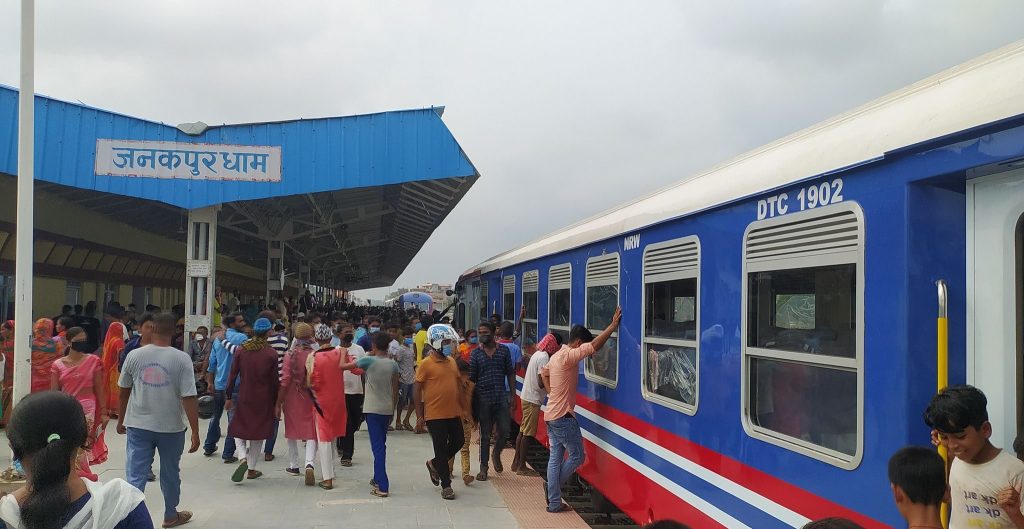
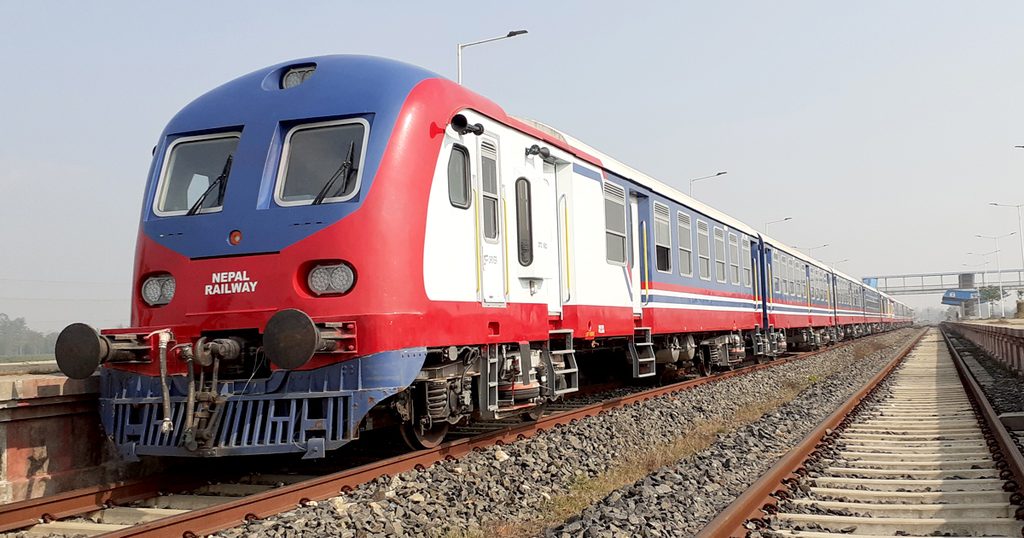
A new railway connection between Janakpur in Nepal and Ayodhya in India is set to improve cross-border travel for pilgrims and tourists, with the timetable for the weekly service between Janakpur Dham and Ayodhya Cantt now made public. The railway connection is expected to facilitate religious tourism between the two destinations, which hold significant importance in the Ramayana tradition, while strengthening travel connectivity between Nepal and India.
According to the published schedule, Train No. 15595 will depart Janakpur Dham on Saturday afternoon and arrive at Ayodhya Cantt on Sunday morning. The return service, Train No. 15596, will leave Ayodhya Cantt on Sunday afternoon and reach Janakpur Dham on Monday evening. The railway service will connect several major cities in India, including Jayanagar, Darbhanga, Samastipur, Muzaffarpur and Gorakhpur, before reaching Ayodhya. The railway connection is expected to create a more convenient travel option for pilgrims visiting Janakpur and Ayodhya, while opening opportunities for cross-border religious tourism, tour packages and longer travel itineraries linking destinations in Nepal and India.
Janakpur–Ayodhya Railway Schedule Announced
The timetable for the Janakpur Dham–Ayodhya Cantt railway service has been published, outlining the departure and arrival schedules for both directions. Train No. 15595 is scheduled to depart Janakpur Dham at 1:10 PM on Saturday and arrive at Ayodhya Cantt at 8:10 AM on Sunday. The journey will connect passengers travelling from Nepal’s Madhesh Province to the prominent religious destination in Uttar Pradesh, India. Similarly, Train No. 15596 will depart Ayodhya Cantt at 12:40 PM on Sunday and arrive at Janakpur Dham at 5:50 PM on Monday.
The return schedule will provide travellers with an organised railway option for journeys between the two religious destinations, allowing pilgrims and tourists to plan their travel in advance. The weekly schedule is expected to support travel between the two destinations, particularly for visitors interested in religious and cultural experiences associated with the Ramayana. The railway connection will also provide an alternative transportation option for cross-border travellers, linking Nepal’s religious tourism destination with India’s railway network.
Railway Route Connects Major Indian Cities
The railway service between Janakpur Dham and Ayodhya Cantt will operate through several important railway stations in India, including Jayanagar, Darbhanga, Samastipur, Muzaffarpur and Gorakhpur. The route will provide connectivity between Janakpur and multiple cities across Bihar and Uttar Pradesh, creating opportunities for passengers to travel between different destinations along the railway corridor.
The connection is particularly significant for tourism as it links two prominent destinations associated with the Ramayana. Janakpur, widely recognised as the birthplace of Goddess Sita, attracts pilgrims from Nepal, India and other countries. Ayodhya, associated with the birthplace of Lord Ram, is among India’s major religious destinations and receives pilgrims throughout the year. The railway route connecting the two destinations is expected to facilitate movement for religious visitors while providing a transportation link for tourists interested in exploring the cultural and historical significance of the Ramayana heritage across Nepal and India.
Janakpur and Ayodhya Strengthen Ramayana Tourism Circuit
Janakpur and Ayodhya hold an important place in the religious and cultural heritage of Nepal and India. The connection between the two cities is closely associated with the Ramayana, which forms a major foundation for religious tourism and cultural exchange between the neighbouring countries. Janakpur is home to the historic Janaki Temple, one of Nepal’s most prominent religious attractions, while Ayodhya is known for the Ram Mandir and other religious sites associated with Lord Ram. The railway service could make it easier for pilgrims to visit both destinations as part of a single religious journey.
Improved connectivity between the cities also creates opportunities for tourism operators to develop cross-border pilgrimage packages, combining visits to religious sites with cultural experiences, local attractions and destinations along the railway route. Such packages could attract domestic tourists, Indian pilgrims and international visitors interested in the Ramayana heritage. The railway connection is expected to contribute to the broader development of the Ramayana tourism circuit, which aims to link destinations associated with the epic across Nepal and India. Greater accessibility between Janakpur and Ayodhya could encourage visitors to extend their trips and explore additional destinations in both countries.

Improved Connectivity Could Expand Cross-Border Tourism Opportunities
The scheduled railway service is expected to strengthen transportation connectivity between Nepal and India and support tourism movement between the two countries. Railway connectivity through major Indian cities will provide travellers with access to a wider transportation network, making journeys between Janakpur and Ayodhya more convenient for pilgrims and tourists. The development also presents opportunities for tourism businesses in both countries, including travel agencies, hotels, tour operators, transport providers and local businesses serving religious visitors. Improved access to major pilgrimage destinations can support tourism-related economic activities and encourage cooperation between tourism stakeholders on both sides of the border.
With Janakpur and Ayodhya sharing strong religious and cultural connections, the railway service could become an important component of cross-border tourism development. The published timetable provides travellers with a structured travel option between the two destinations and supports the potential growth of religious tourism along the Nepal–India corridor. The railway connection is expected to contribute to stronger tourism links between Nepal and India, further highlighting the importance of transportation connectivity in promoting shared religious heritage and cross-border travel.