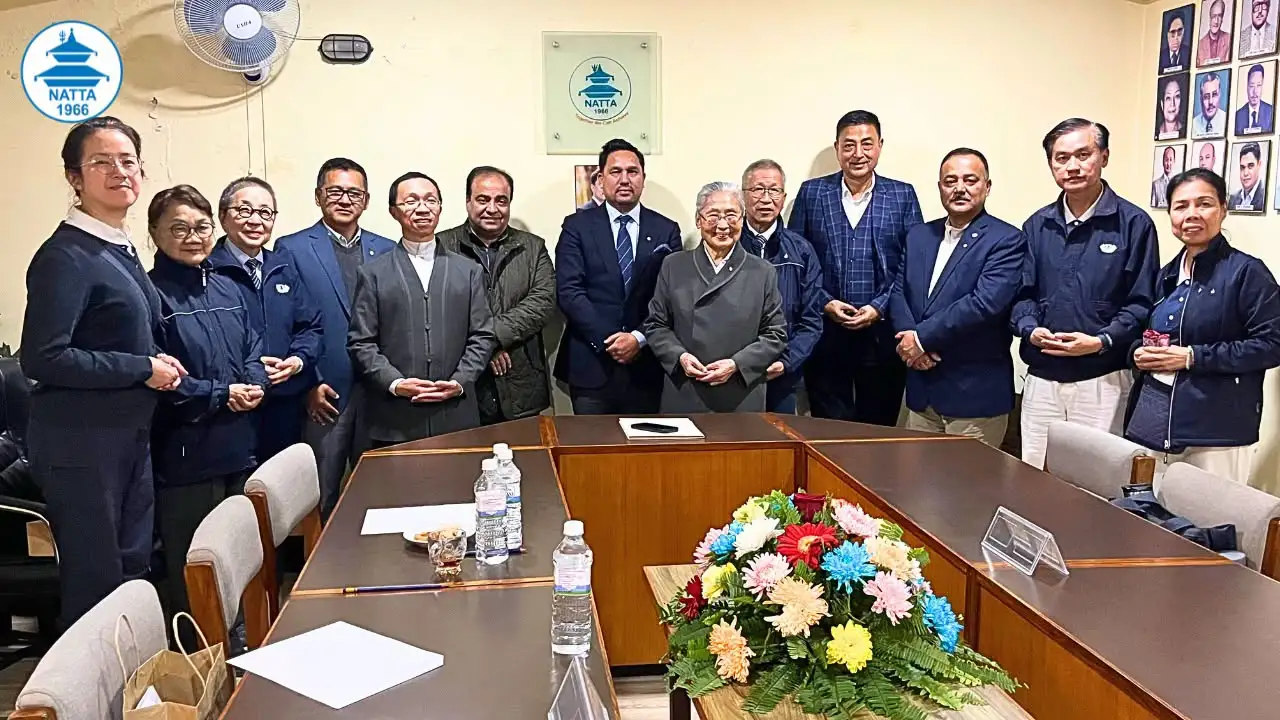
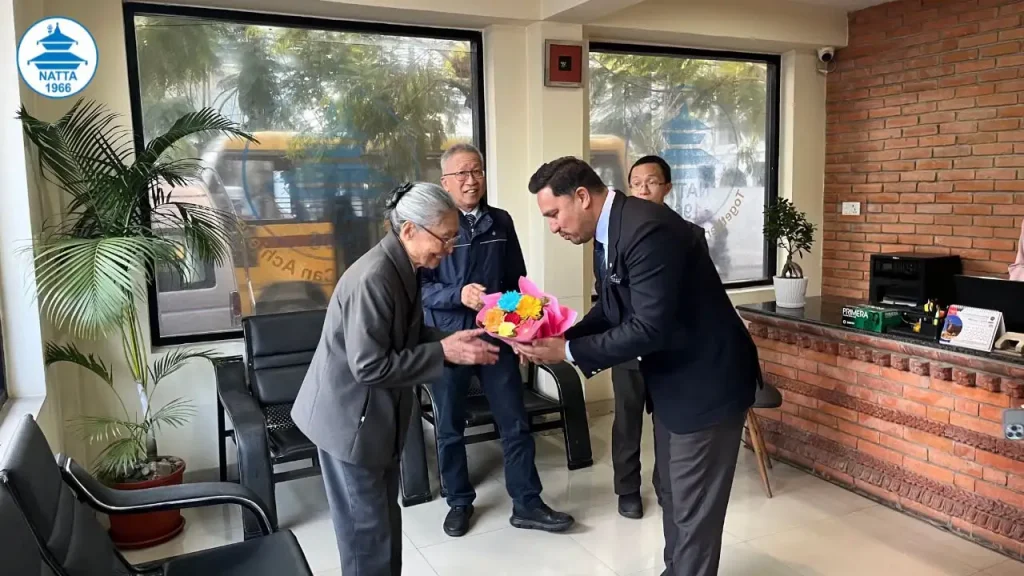
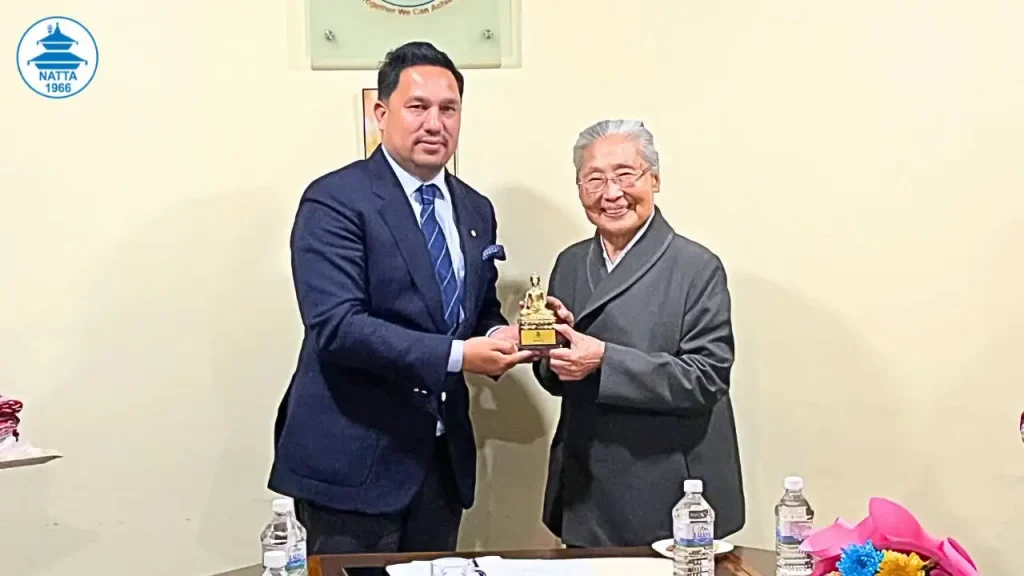
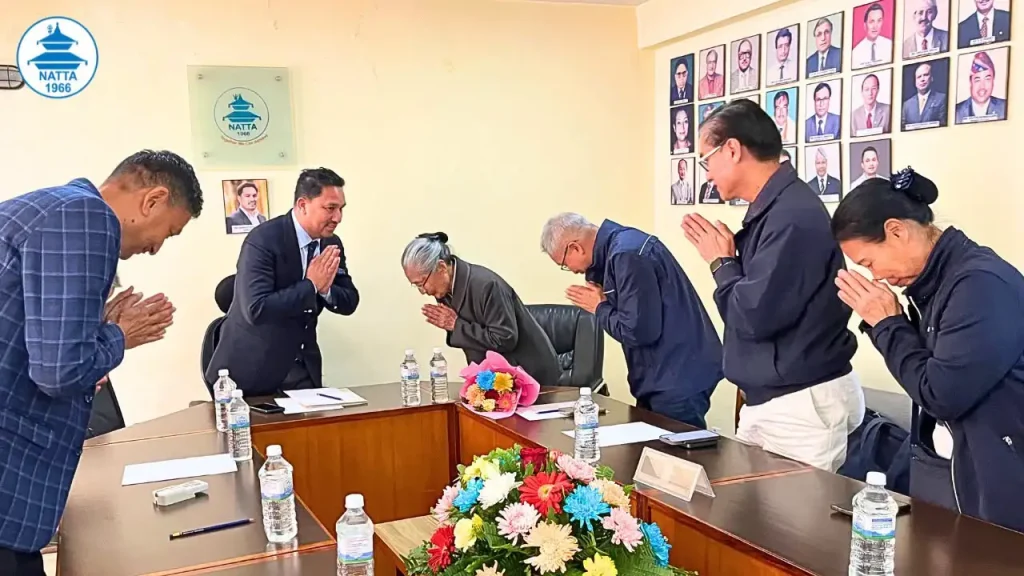
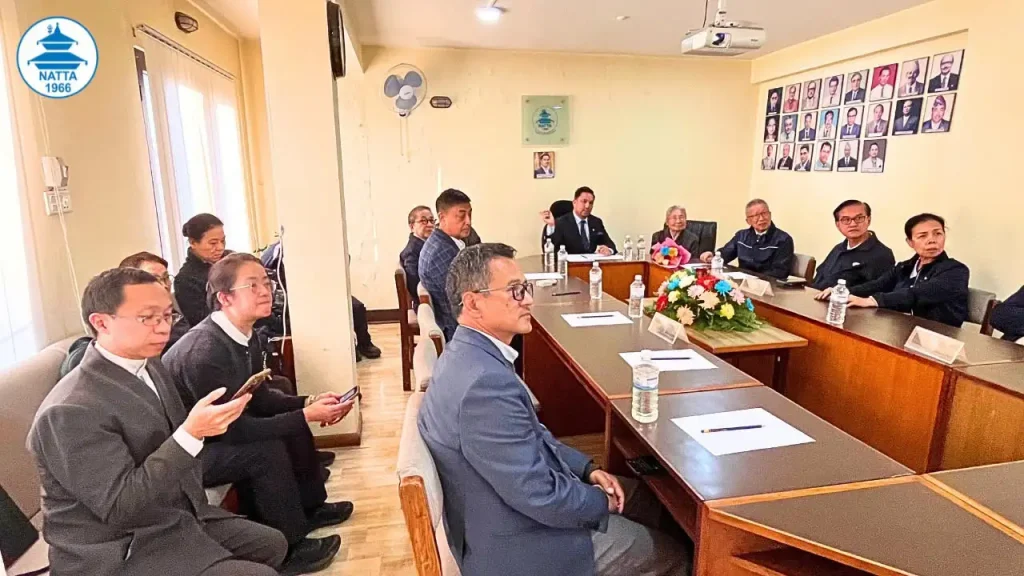
The Nepal Association of Tour & Travel Agents (NATTA) held an interaction with a senior delegation from Taiwan-based Tzu Chi Foundation on November 26, 2026, focusing on opportunities for collaboration in tourism promotion, Buddhist heritage conservation, humanitarian services, social welfare, education and community development. The meeting brought together Tzu Chi Foundation Vice President Lin Jing-Xian, Dr. Tang and other distinguished representatives of the foundation with NATTA President Bharat Jung Pandey and members of the NATTA Board at the association’s secretariat.
Focus on Promoting Nepal as a Global Buddhist Tourism Destination
A major focus of the interaction was the potential to promote Buddhist tourism in Nepal, particularly Lumbini, the birthplace of Gautama Buddha, as a globally recognized destination for pilgrimage, spiritual learning and cultural tourism. The participants discussed the need for stronger international cooperation to increase awareness of Nepal’s Buddhist heritage and develop tourism products that connect major Buddhist sites in Nepal with important destinations across the wider Buddhist world.
The discussions highlighted the potential to develop integrated tourism circuits linking important Buddhist heritage sites and provide international visitors with a more comprehensive experience of Nepal’s Buddhist history, philosophy, culture and traditions. Participants emphasized that such circuits could help extend visitors’ stays, diversify tourism activities and distribute tourism benefits to communities located beyond the country’s major tourism centres.
Buddhist Heritage Preservation and Integrated Tourism Circuits
The meeting also placed emphasis on preserving Nepal’s rich Buddhist heritage while developing tourism in a sustainable and responsible manner. Participants discussed the importance of protecting historical, archaeological and religious sites while simultaneously creating tourism opportunities that respect the cultural and spiritual significance of those destinations.
According to the discussion, connecting important Buddhist destinations through integrated tourism circuits could provide a stronger platform for promoting Nepal’s Buddhist heritage internationally. Such an approach could bring together pilgrimage, cultural tourism, spiritual learning and educational experiences, allowing visitors to better understand the historical development and contemporary significance of Buddhism in Nepal.
The participants also stressed the importance of raising international awareness of Buddhist philosophy and culture, particularly among visitors seeking spiritual and cultural experiences. Greater promotion of Nepal’s Buddhist heritage was viewed as an opportunity to strengthen the country’s position in the global Buddhist tourism market while supporting heritage conservation and local economic development.
Local Communities to Be Placed at the Centre of Tourism Development
The discussions also highlighted the importance of ensuring that local communities directly benefit from the expansion of Buddhist tourism. NATTA and the Tzu Chi delegation emphasized the need for training, capacity development and tourism-related opportunities to empower communities living around Buddhist heritage destinations.
Local participation could create opportunities in guiding, accommodation, transportation, handicrafts, food services and other tourism-related activities while enabling communities to play a more active role in preserving their cultural heritage. Participants emphasized that tourism development should not be limited to increasing visitor numbers but should also contribute to sustainable livelihoods and broader community development.
The two sides also discussed the potential for tourism to serve as a platform for greater cultural understanding and international exchange. By connecting Buddhist heritage, local communities and international visitors, Nepal could develop tourism experiences that combine economic opportunities with cultural and spiritual values.
NATTA Appreciates Tzu Chi’s Humanitarian Contribution to Nepal
During the interaction, NATTA also expressed appreciation for the Tzu Chi Foundation’s humanitarian contributions to Nepal, particularly its support for communities affected by natural disasters and other emergencies. The association highlighted the foundation’s humanitarian assistance to flood-affected families, earthquake survivors and communities affected during the COVID-19 pandemic, as well as its involvement in other disaster-response and social-support initiatives in Nepal. NATTA recognized these contributions as an important example of international humanitarian cooperation and community support.
The discussion indicated that future collaboration between the two organizations could extend beyond tourism promotion and include areas related to humanitarian services, social welfare, education and community development. Such cooperation could create opportunities to connect tourism with broader social and humanitarian objectives.
Tourism and Humanitarian Values Can Work Together
Both sides shared a vision of using Buddhist tourism as more than a means of attracting international visitors. They emphasized the possibility of developing Buddhist tourism as a platform for heritage preservation, cultural understanding, spiritual learning, humanitarian values and sustainable community development.
The approach reflects the growing interest in tourism models that provide meaningful experiences for visitors while generating tangible benefits for destination communities. In the context of Buddhist tourism, participants noted that the values associated with Buddhism, including compassion, peace, understanding, and service to humanity, could be incorporated into tourism development and international cultural exchange.
Stronger International Buddhist Cultural Exchange
The interaction also opened possibilities for strengthening international Buddhist cultural exchanges between Nepal and organizations and communities connected to the wider Buddhist world. Nepal’s position as the birthplace of Gautama Buddha gives the country a unique opportunity to develop stronger links with Buddhist communities, institutions and travelers from different countries.
Participants discussed the importance of increasing awareness of Nepal’s Buddhist destinations and developing stronger international networks that could support pilgrimage, education, cultural exchange and tourism promotion. Such cooperation could contribute to positioning Lumbini and other Buddhist heritage sites as key destinations within international Buddhist tourism circuits.
NATTA Looks to Build Long-Term Partnership with Tzu Chi
NATTA said it looks forward to developing a meaningful partnership with the Tzu Chi Foundation by bringing together tourism, Buddhist heritage and humanitarian values for the wider benefit of Nepal. The association views collaboration with the foundation as an opportunity to strengthen tourism promotion while also contributing to community empowerment, cultural preservation and international cooperation.
The November 26 interaction has therefore created a platform for further discussions between NATTA and Tzu Chi on possible joint initiatives in tourism, Buddhist heritage, humanitarian services, education and community development. A stronger partnership could support Nepal’s efforts to promote Lumbini and other Buddhist destinations internationally while ensuring that tourism growth contributes to local communities and sustainable development.
For Nepal, the collaboration also carries broader significance as the country seeks to diversify its tourism products and strengthen its position as an international destination for Buddhist pilgrimage, spiritual tourism and cultural exploration. By combining destination promotion with heritage conservation, community participation and humanitarian values, stakeholders believe Buddhist tourism can become a meaningful avenue for both economic development and greater international understanding.