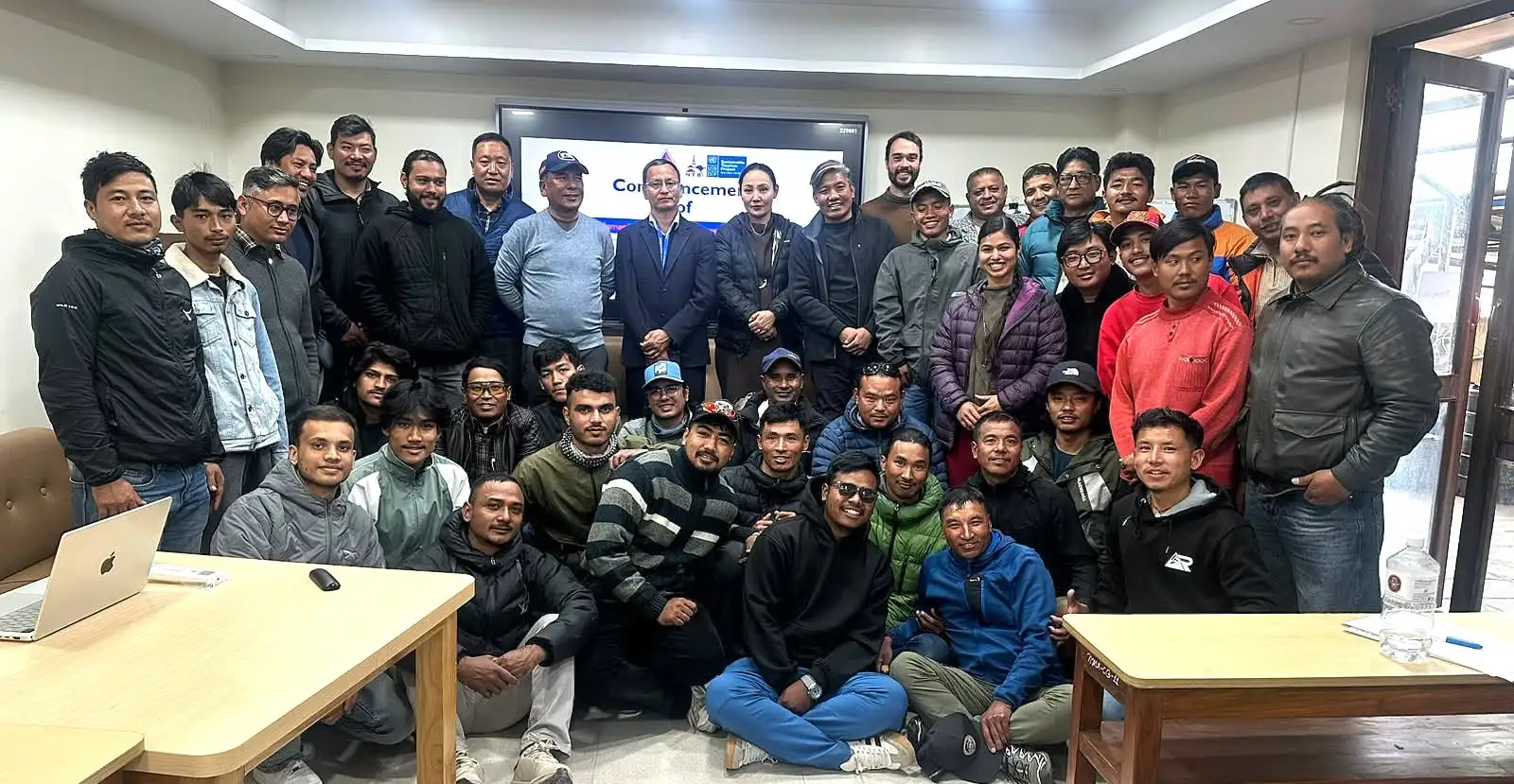
The Nepal Mountaineering Association (NMA) has commenced the sixth edition of its Fundamental Skill for Mountaineering Training, the first component under the Professional Mountain Guide (PMG) Training Program, with the objective of strengthening the technical capabilities, safety awareness and professional competencies of individuals working in Nepal’s mountain tourism sector. The 21-day training officially began at the NMA Training Hall in Nagpokhari, Naxal, Kathmandu, bringing together participants for an intensive programme focused on both theoretical knowledge and practical mountaineering skills.
NMA and STP Join Hands for Professional Guide Training
The training is being jointly organized by the Nepal Mountaineering Association and the Sustainable Tourism Project (STP), a joint initiative of the Nepal Tourism Board (NTB) and the United Nations Development Programme (UNDP). The collaboration is aimed at supporting capacity development within Nepal’s mountain tourism industry by providing aspiring and existing mountain professionals with structured training in essential mountaineering competencies.
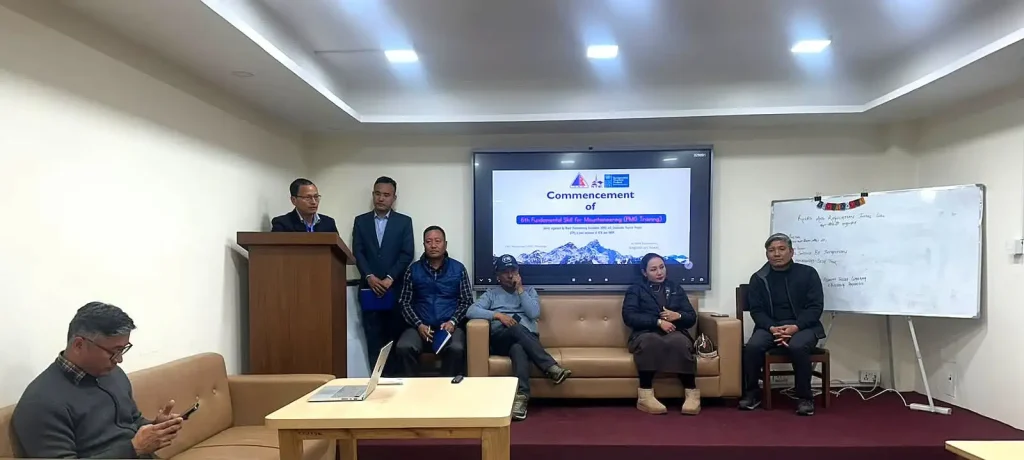
The programme forms the foundational component of the Professional Mountain Guide Training Program, making it an important step toward developing a pool of skilled and safety-conscious professionals capable of operating responsibly in challenging mountain environments. The organizers believe that strengthening foundational skills is essential for improving safety standards and ensuring that Nepal’s mountain tourism sector continues to develop in a professional and sustainable manner.
21-Day Programme to Cover Essential Mountaineering Skills
The comprehensive 21-day training programme has been designed to provide participants with a combination of foundational knowledge and practical skills required for safe and responsible mountain operations. The curriculum covers a broad range of subjects associated with mountaineering and mountain safety, including basic mountaineering techniques, map reading and navigation, first aid, high-altitude rescue techniques and rock climbing.
Participants will also be introduced to other essential competencies required to operate effectively in mountainous environments. The practical orientation of the programme is intended to help trainees develop the confidence and technical understanding necessary to respond to challenges that may arise during mountain activities.
The inclusion of first aid and high-altitude rescue training is particularly significant given the unpredictable and physically demanding nature of Nepal’s mountain environment. Strong knowledge of emergency response and rescue techniques can play a critical role in reducing risks to climbers, trekkers, guides and other mountain workers.
Training Aims to Strengthen Mountain Safety Standards
Speaking at the opening ceremony, NMA President Fur Gelje Sherpa emphasized the importance of developing a strong foundation in mountaineering knowledge and practical skills. He said the training would contribute to establishing a stronger basis for safe, professional and sustainable mountain tourism in Nepal.
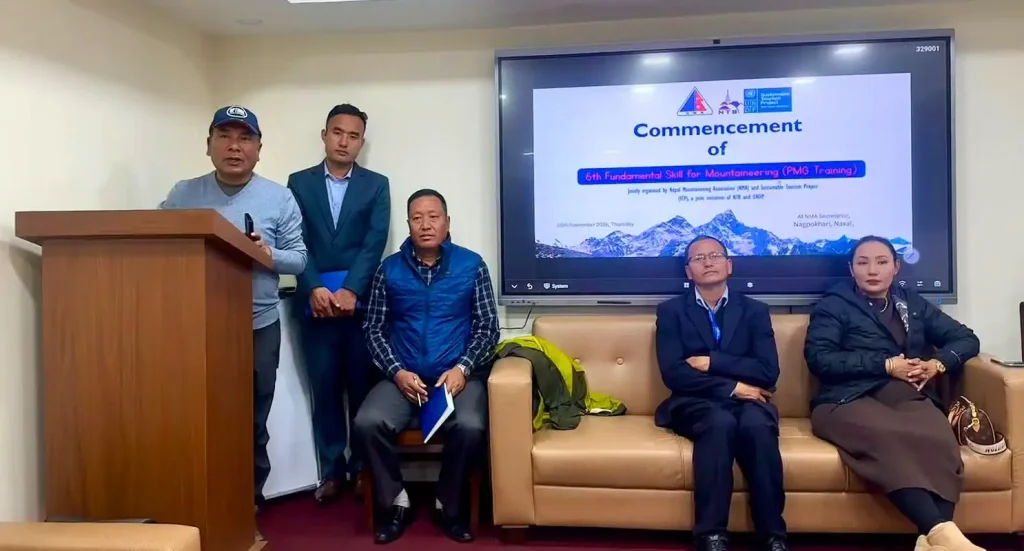
Sherpa stressed that fundamental mountaineering skills are essential for improving safety standards across the mountain tourism sector. According to him, professionals working in the mountains need appropriate technical knowledge and practical competencies to deal with challenging terrain, changing weather conditions, emergencies and other risks associated with mountain activities. The training is therefore expected to contribute not only to the individual professional development of participants but also to broader efforts to improve safety and service standards within Nepal’s mountain tourism industry.
STP Highlights Importance of Capacity Building
K.B. Shah, National Coordinator of the Sustainable Tourism Project, expressed satisfaction with the collaboration between STP and NMA in implementing the training programme. He highlighted the importance of partnerships between tourism institutions and development organizations in strengthening professional competencies within Nepal’s mountain tourism industry.
The collaboration between STP, NMA, NTB and UNDP reflects a broader focus on developing human resources as an important component of sustainable tourism. As Nepal continues to attract international visitors for trekking, mountaineering and adventure tourism, the availability of properly trained professionals remains essential for ensuring visitor safety and maintaining the country’s reputation as a leading mountain destination.
According to the organizers, strengthening the technical capacity of mountain professionals can also support the long-term sustainability and professionalism of Nepal’s tourism industry by ensuring that tourism activities are conducted with greater attention to safety, responsibility and environmental considerations.
Senior NMA Officials Attend Opening Ceremony
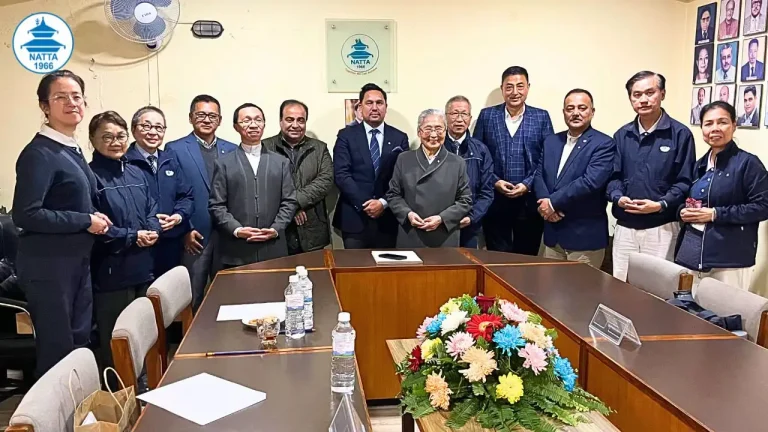
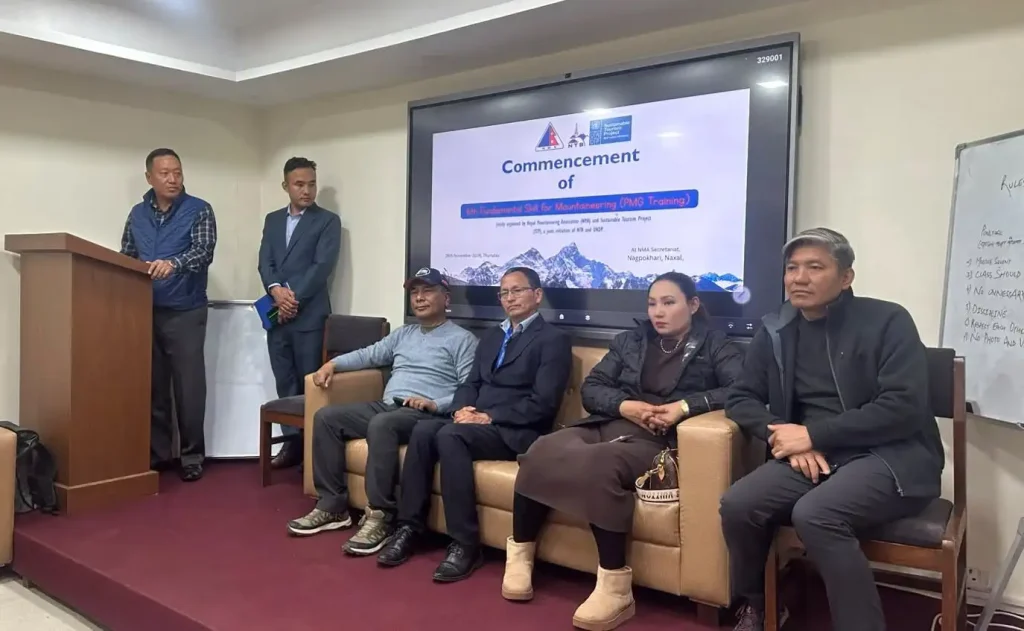
The opening ceremony was attended by senior officials and representatives of the Nepal Mountaineering Association. Among those present were NMA General Secretary Rajendra Bahadur Lama, Secretary Chandan Thapa, Treasurer Sumi Lama, Secretariat Member and Convenor of the NMA Training Committee Furi Geljen Sherpa, Central Executive Board Members Devendra Dangol and Madhav Kumar Dhamala, and Chairman of the NMA Bagmati Province Committee Thakur Prasad Dharel.
The opening programme was chaired by Furi Geljen Sherpa, Convenor of the NMA Training Committee, while NMA President Fur Gelje Sherpa and STP National Coordinator K.B. Shah extended their best wishes to the participants and encouraged them to take full advantage of the training opportunity.
Building a Skilled Workforce for Nepal’s Mountain Tourism
Nepal’s mountain tourism sector relies heavily on the skills and professionalism of guides and other mountain workers who operate in some of the world’s most challenging environments. With the country’s mountains attracting trekkers, climbers and adventure tourists from around the world, technical competence and emergency preparedness are critical to maintaining safety and service quality.
The Professional Mountain Guide Training Program is intended to address these requirements by developing professional competencies through structured training. Beginning the programme with fundamental mountaineering skills provides participants with a basic technical foundation that can be built upon through further specialized training and professional development.
The organizers expect the programme to contribute to the development of better-trained mountain professionals who can provide safer and more responsible services to visitors while also supporting the sustainable development of Nepal’s mountain tourism destinations.
Strengthening Sustainable and Responsible Mountain Tourism
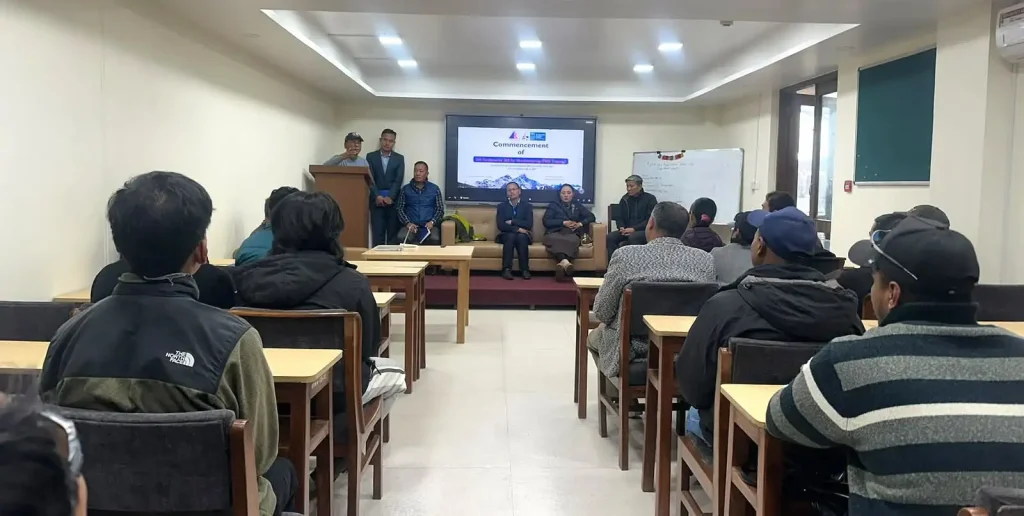
The launch of the sixth Fundamental Skill for Mountaineering Training also reflects the growing emphasis on safety, professionalism and sustainability within Nepal’s adventure tourism sector. Training professionals in navigation, rescue, first aid, climbing techniques and other essential skills can help reduce risks and improve the overall quality of mountain tourism operations. The NMA and its development partners have reaffirmed their commitment to strengthening mountaineering skills and professional capacity through such initiatives. The collaboration is expected to support Nepal’s broader objective of developing a more skilled, responsible and internationally competitive mountain tourism workforce.
The 21-day programme will provide participants with an intensive learning experience combining technical knowledge and practical competencies. Through the initiative, NMA, STP, NTB and UNDP aim to contribute to a stronger foundation for safer, more professional and sustainable mountain tourism in Nepal, while preparing participants to meet the demanding requirements of working in the country’s high-altitude and mountainous environments.