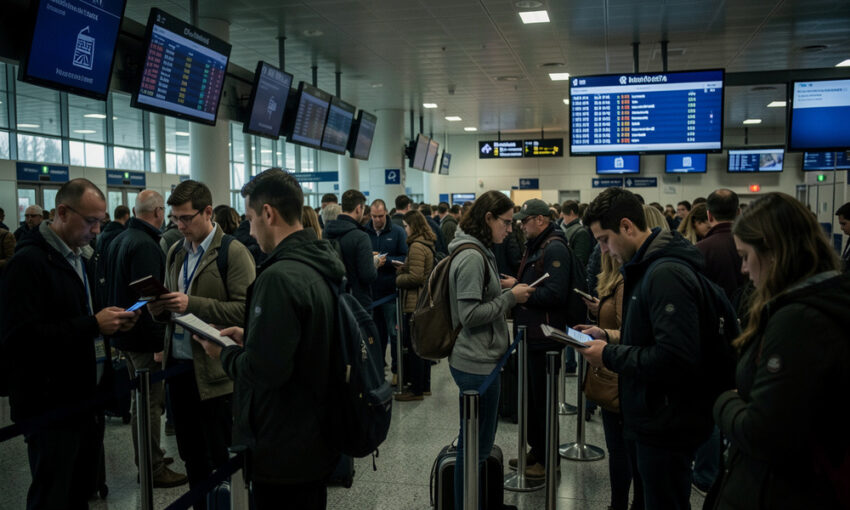
Aviation organizations across Europe have raised urgent concerns over the full rollout of the European Union’s Entry-Exit System (EES), warning that travelers could face lengthy delays at airports, particularly during the peak summer travel season. Non-EU passengers may experience wait times of up to four hours at border control if operational and technical issues are not addressed.
The warnings come as the EES, which uses biometric technology to track entry and exit of non-EU nationals, is set for full implementation by April 10, 2026. Aviation groups, including ACI Europe, Airlines for Europe (A4E), and the International Air Transport Association (IATA), have urged the EU to take immediate action to ensure smooth operations during the upcoming high-traffic months.

Industry Concerns Over System Readiness
In a joint letter to the EU Commissioner, the aviation associations highlighted that the current state of the EES system could lead to serious disruptions at airports. Travelers are already experiencing wait times of up to two hours at some checkpoints due to several factors, including:
- Understaffing at border control stations
- Technical difficulties with the EES infrastructure
- Slow adoption of the pre-registration app designed to streamline entry for non-EU nationals
The organizations stressed that these issues are expected to worsen as air traffic doubles during the summer months, potentially leading to chaos at Europe’s busiest airports.
Calls for Flexibility and Temporary Suspension
A key point of concern is the limited flexibility in the current EU regulation regarding the temporary suspension of the EES system. The aviation groups are requesting the EU clarify whether member states can pause or adjust EES operations if severe delays occur, particularly during the peak summer travel period, which extends into early July 2026.
Although the European Commission has indicated provisions exist to suspend operations partially or fully for up to 90 days after the official launch, industry stakeholders are seeking additional assurances that these mechanisms can be activated quickly to prevent passenger disruption.
Balancing Security with Operational Efficiency
The aviation associations emphasize the need to balance technological security objectives with the practical realities of border management. “While the EES promises enhanced security and streamlined processing, it must not compromise operational efficiency, particularly during periods of high passenger volume,” the joint letter noted.
Industry experts warn that failure to address the challenges could have far-reaching consequences, not only for travelers but also for tourism, business travel, and airport operations throughout Europe.
Recommendations for Immediate Action
To mitigate the risks, the associations have proposed several measures:
- Increasing staffing at border control points during peak periods
- Addressing technical glitches in the EES system promptly
- Encouraging travelers to use the pre-registration app to reduce processing times
- Allowing temporary system adjustments or suspensions as needed
These steps, according to aviation groups, are essential to prevent long queues, flight delays, and passenger frustration.
Preparing for a Critical Summer Travel Season
As summer approaches, European airports are expecting a sharp rise in passenger traffic. The aviation industry is calling on the EU to act swiftly and decisively, ensuring that operational challenges of the EES are resolved and that contingency measures are ready to be deployed.
Experts note that the success of the EES rollout will be a litmus test for the EU’s ability to manage both security objectives and high-volume travel efficiently. Smooth implementation will be critical to maintaining confidence among travelers, airlines, and tourism stakeholders alike.

The Entry-Exit System represents a significant technological advancement for border security in the Schengen Area, but its upcoming full implementation highlights a broader challenge: balancing innovation with operational practicality.
The aviation industry’s warnings serve as a timely reminder that preparation, flexibility, and rapid response mechanisms are essential to avoid disruptions that could ripple across airports, airlines, and passengers during Europe’s busiest travel season. By addressing staffing, technical, and regulatory issues now, the EU has the opportunity to ensure that the EES enhances border security without compromising traveler experience.