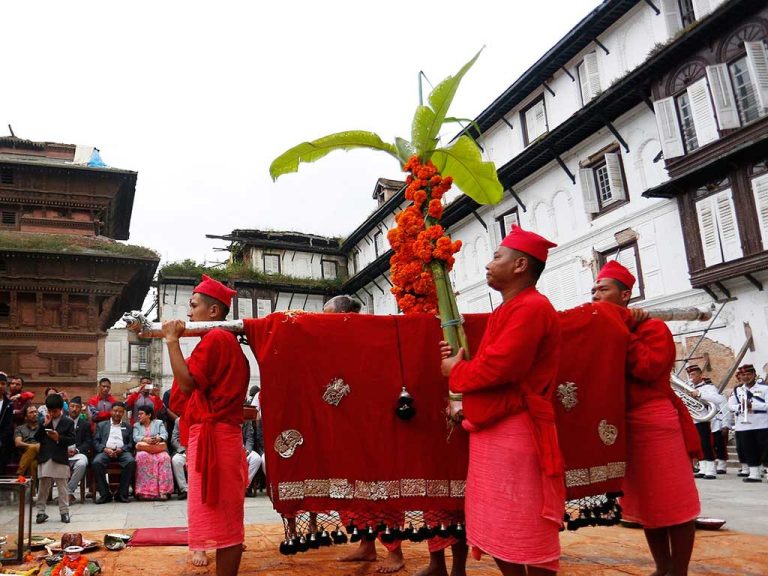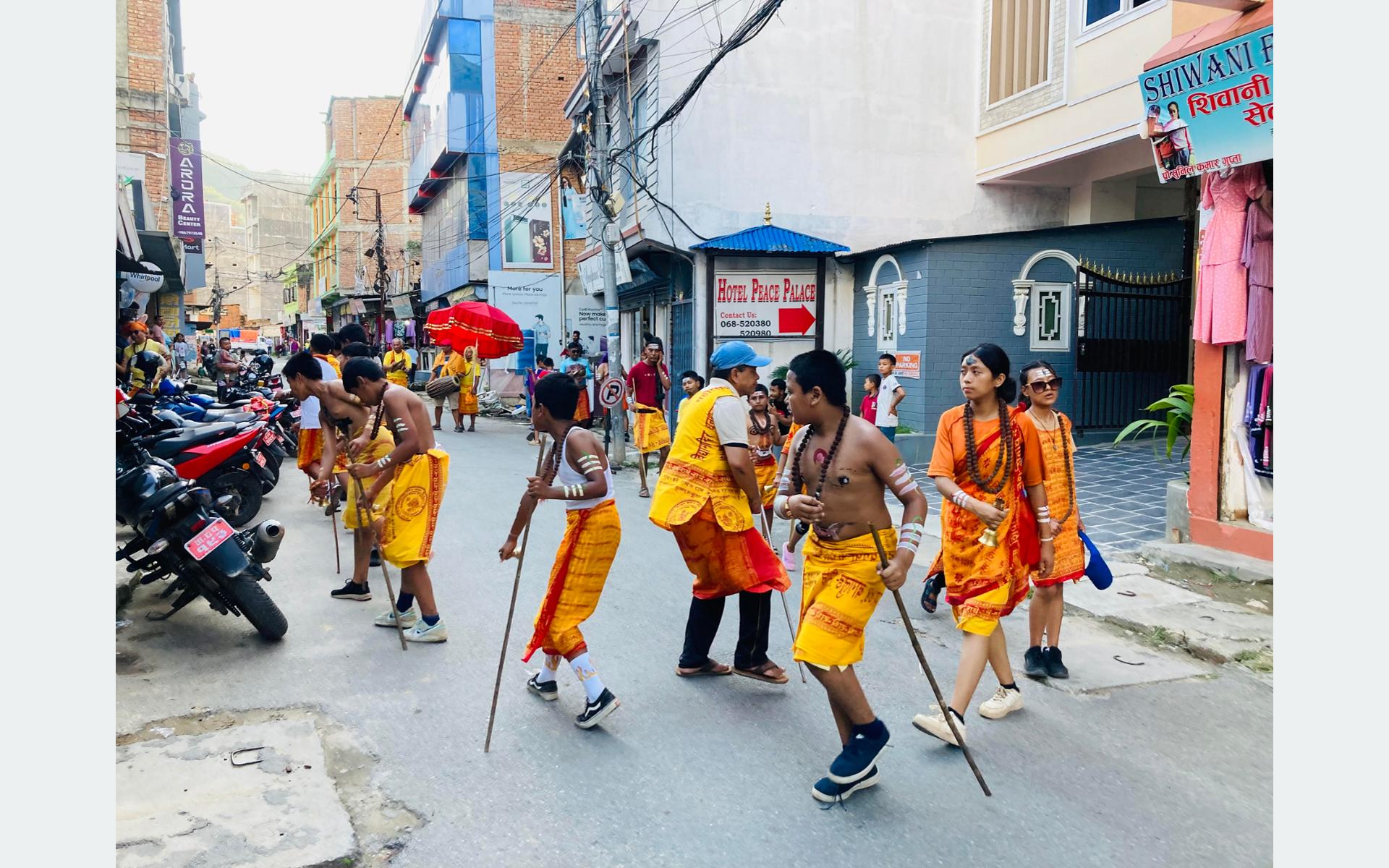
In recent days, the streets and alleys of Baglung Bazaar have been echoing the vibrant culture of the Newar community. The traditional Bhadaure (Monsoon) Dance, performed by the local Newar community, has brought a festive atmosphere to the area.
Recently, the town has witnessed the performances of Ropai Dance, Katwal Dance, and Jogi Dance. Preparations are underway for the Horse Dance, Thetar Dance, and Hova Dance. The daily performances of these traditional dances have filled Baglung Bazaar with cultural vibrancy. The Newar community in Baglung has taken on the responsibility of preserving these endangered dances.
However, some of the more elaborate dances like Thetar, Naga-Nagini, and Shikhari have already become extinct. After a hiatus of nine years, the Hanuman Dance was recently revived, according to Rajan Kumar Shakya, President of the Shakya Kalyan Samaj Baglung. The society has also been working to preserve the Lakhe and Jogi Dances, while the Hanuman Dance Conservation Council has taken the lead in reviving the Hanuman Dance. Similarly, the Neva Lyamh Puch Baglung has been organizing and showcasing dances like Katwal, Hova, Horse Dance, and Ropai Dance. The same organization has also revived the long-lost tradition of “Bato Napne” (measuring the path).
Mushek Chandra Rajbhandari, President of Manka Khal Baglung, noted that while the Gai Jatra festival usually brings a festive atmosphere to Baglung Bazaar, preserving the Bhadaure Jatra has become increasingly challenging. He mentioned that after the Ghantakarna festival, the Lakhe Dance is performed, and on Gai Jatra, the Bassa Dance is also showcased.
“Before 1843 BS, the Newar community settled in Baglung for trade, and it is documented that the Newar communities, including Shakya, Shrestha, and Rajbhandari, came together to preserve the Bhadaure Jatra,” Rajbhandari explained. “Unfortunately, the Shikhari, Thetar, and Naga Nagini Dances have been lost over time, and only one of the three Lakhe Dances survives.”
According to local resident Kazi Gaunle Shrestha, the Bhadaure Dance is 238 years old, and he emphasized the need for local authorities to support its preservation. Shrestha mentioned that some of the dances under the Bhadaure Jatra were discontinued due to the high costs involved in their performances. Despite these challenges, the Bhadaure Dance has brought excitement to the town, and Shrestha noted that the Hanuman Dance, a traditional Newar dance, was performed after nine years due to financial constraints.
The Bassa Dance was also performed during Gai Jatra. Typically, this dance is performed by families who have lost a member during the year, but only those with sufficient financial means are able to organize it. Although the Lakhe Dance is not technically part of the Bhadaure Jatra, it is performed around the monsoon season. Various dances are showcased from Ghantakarna Chaturdashi to the day of Haritalika Teej, making Baglung’s streets, squares, and neighborhoods culturally rich during the month of Bhadra.
In a time when indigenous and traditional cultures are gradually fading due to a lack of generational transfer, the enthusiasm and participation in these events have shown a renewed interest among the younger generation in cultural preservation.
The Bhadaure Dance is closely linked with the history of Baglung Bazaar. The Newar community claims that this dance began with the establishment of Baglung Bazaar, making it an integral part of the region’s history.