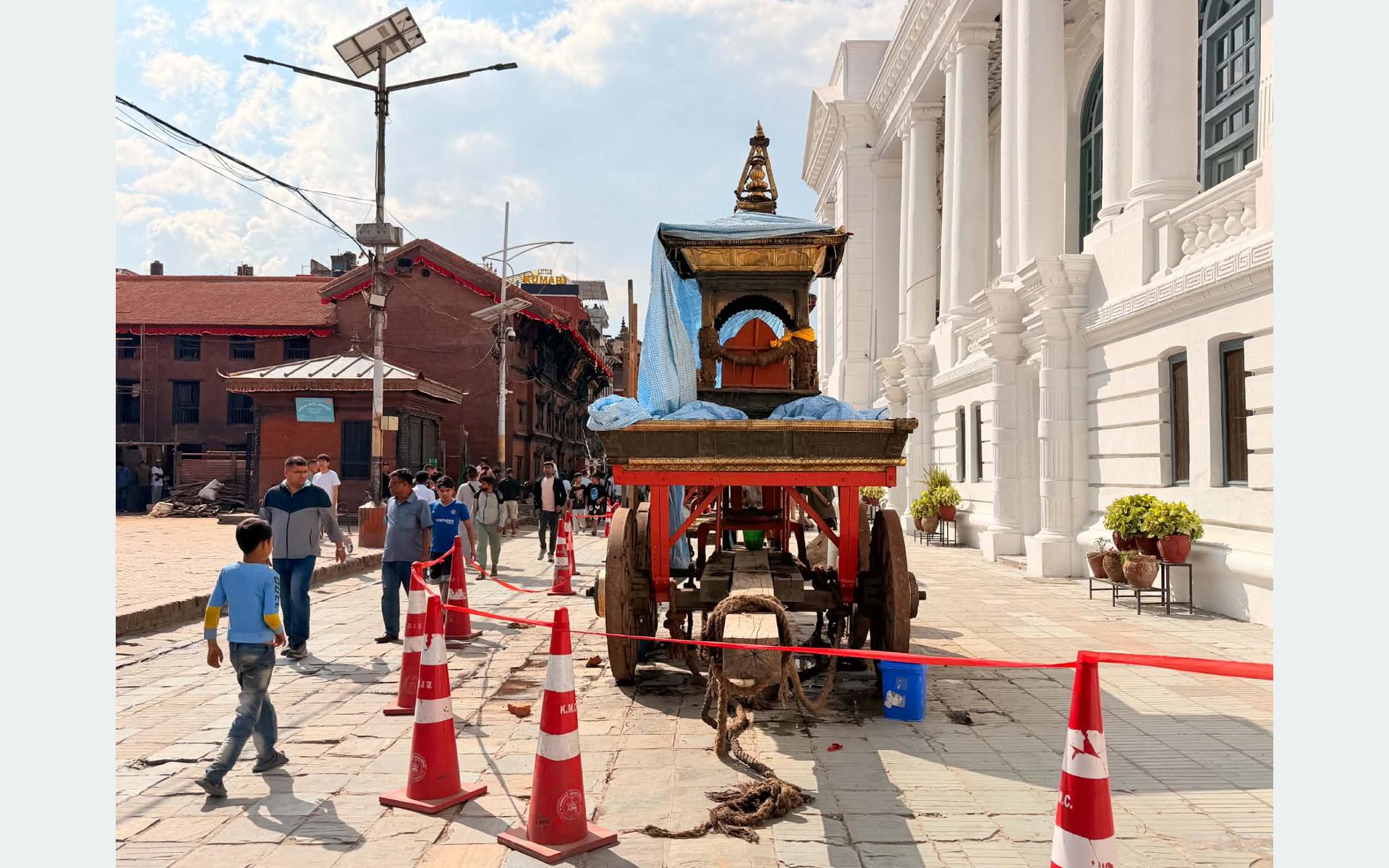
Basantapur Durbar Square is taking on a festive appearance as preparations for Indra Jatra, one of the Kathmandu Valley’s most celebrated traditional festivals, enter their final stage. The historic heritage site has grown increasingly busy with festival preparations, as chariot building, cleaning and other arrangements get underway.
Work is also taking place at a number of important monuments within the heritage complex. Kasthamandap, Kumari Ghar and the Shiva-Parvati Temple are receiving fresh coats of paint, while the ceremonial red flags are being replaced. Organizers say most of the essential work of Indra Jatra is already complete, and the remaining preparations are being sped up ahead of the festival.
Coordinated Preparations for Visitors
The Indra Jatra Management Committee has been coordinating closely with 31 Guthi groups taking part in the festival to organize the various rituals and cultural activities. The committee has held several rounds of discussions with the participating groups to make sure the traditional ceremonies and processions run smoothly. Security and visitor management are also being given attention. The committee has discussed security arrangements with Nepal Police for the festival period, when large crowds gather in and around Basantapur.
According to committee chair Gautam Ratna Shakya, arrangements are also being made for international visitors who come to Kathmandu to experience the festival.Since Indra Jatra is a cultural celebration of national importance, its appeal reaches beyond local devotees. The festival has increasingly become a chance for international tourists to experience Kathmandu’s living heritage, traditional rituals and centuries-old cultural practices firsthand.
A Living Heritage Festival in Kathmandu
Indra Jatra holds a particularly important place in Newar culture and is traditionally observed in various parts of the Kathmandu Valley and surrounding areas, including Lalitpur, Bhaktapur, Dhulikhel and Dolakha. In Kathmandu, the main celebrations are held around Hanuman Dhoka and Basantapur, bringing together religious ceremonies, processions, traditional dances and community gatherings.
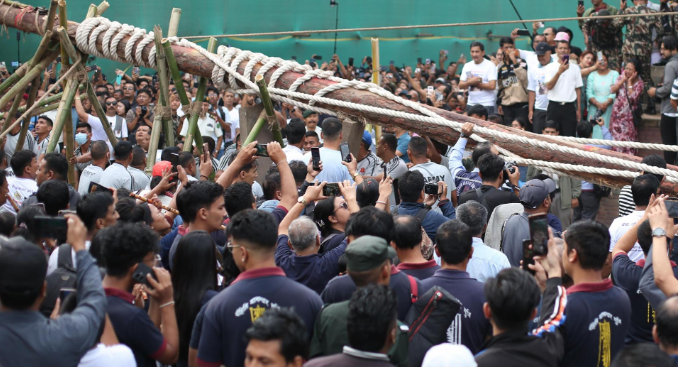
One of the most significant rituals is the raising of the lingo, a tall ceremonial wooden pole bearing the Indradhwaja at Hanuman Dhoka. Known as Indradhwajotthan, this ritual marks the formal start of the main festival activities. Worship of Bhairav at the base of the lingo is also a key part of the ceremony.
The festival has its origins in religious and cultural traditions linked to Indra, and it is customarily seen as a celebration marking a triumph over an enemy. Across generations, these customs have continued to be a significant element of Kathmandu’s cultural identity, while also growing into a major draw for visitors keen on Nepal’s heritage and traditional way of life.
Chariot Processions and Traditional Performances
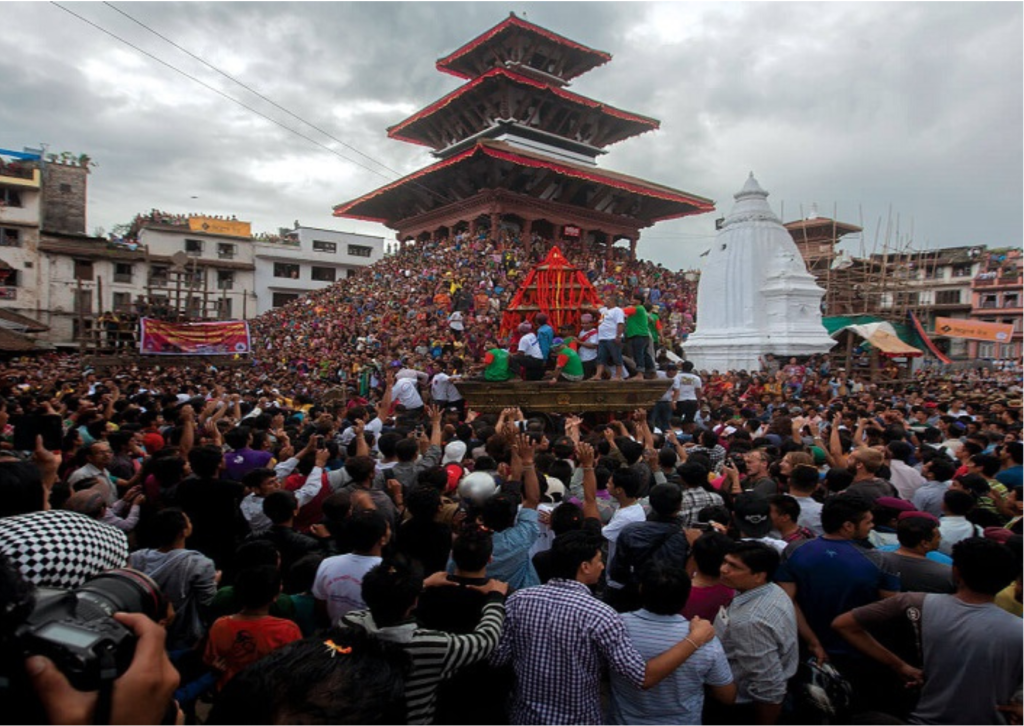
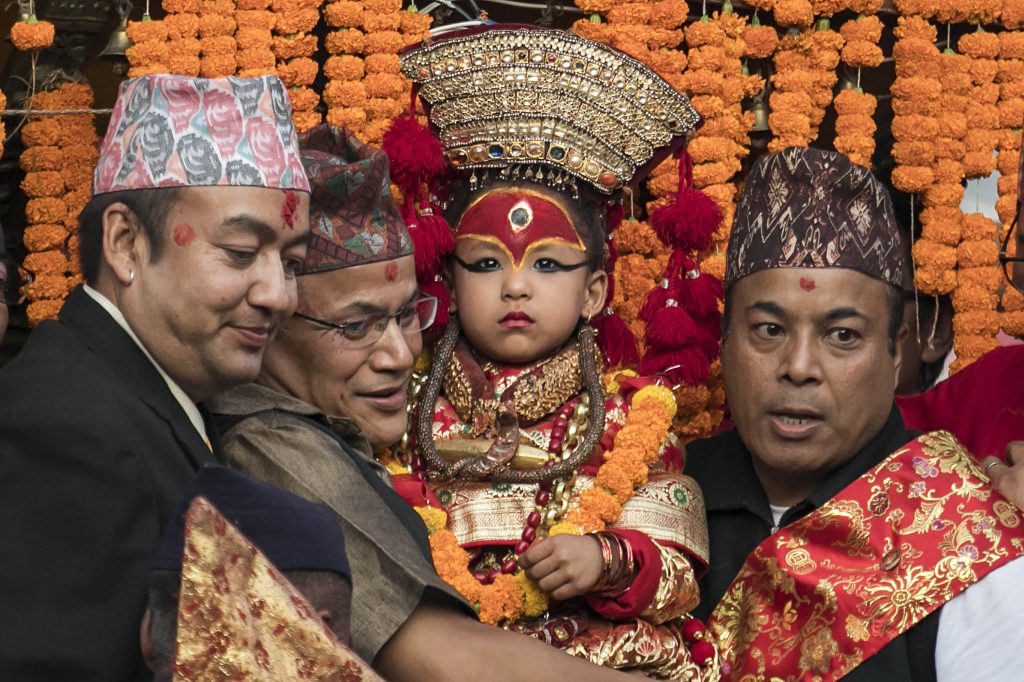
The chariot processions rank among the most eagerly awaited events of Indra Jatra. Throughout the festival, the chariots bearing the living goddess Kumari, together with Ganesh and Bhairav, are paraded along the historic streets of Kathmandu. By tradition, the procession is watched from Gaddi Baithak at Hanuman Dhoka by the President of Nepal, which adds to the importance of the occasion.
The festival likewise turns the streets surrounding Basantapur into stages for traditional performances. Bhakkunach, Mahakali dance, Lakhey dance and Dashavatar number among the cultural performances tied to Indra Jatra. Pulukisi, representing Airavata, the elephant connected with the deity Indra, is another well-loved attraction.
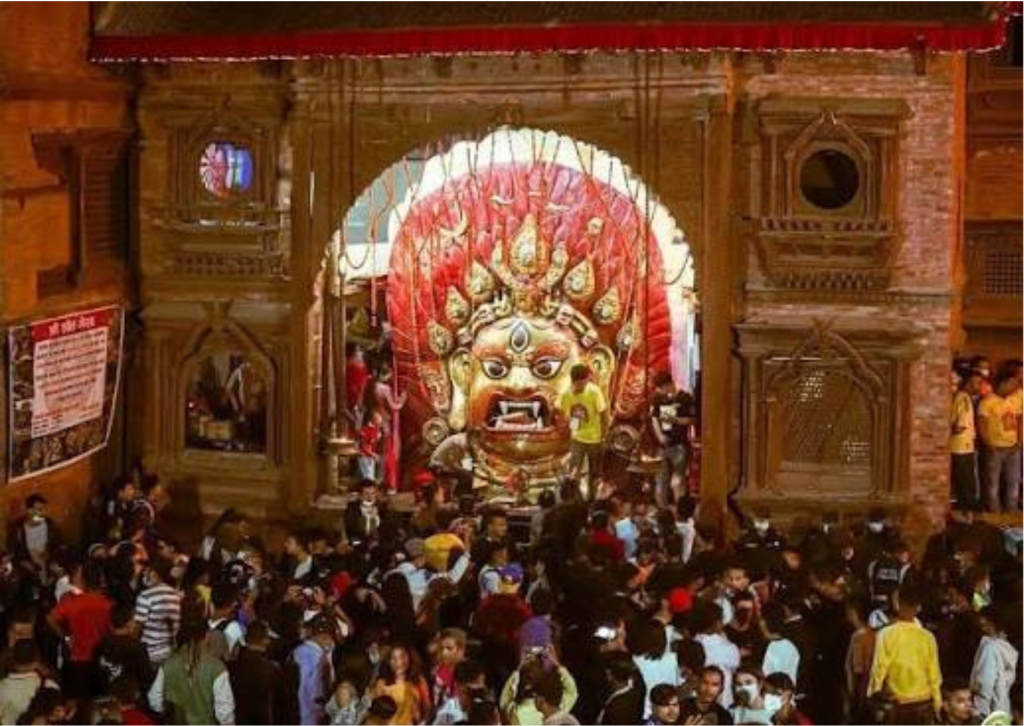
For tourists, these performances provide an up-close view of Kathmandu’s living cultural heritage. The blend of historic monuments, traditional music, masked dances, religious rituals and colorful chariot processions produces an experience that links visitors to the cultural life of the Kathmandu Valley.
By tradition, the festival ends on the eighth day after the lingo is erected, when the Indradhwaja is ceremonially brought down on Ashwin Krishna Chauthi. Until that point, Basantapur stays at the heart of a celebration that unites religious devotion, community traditions and cultural tourism.