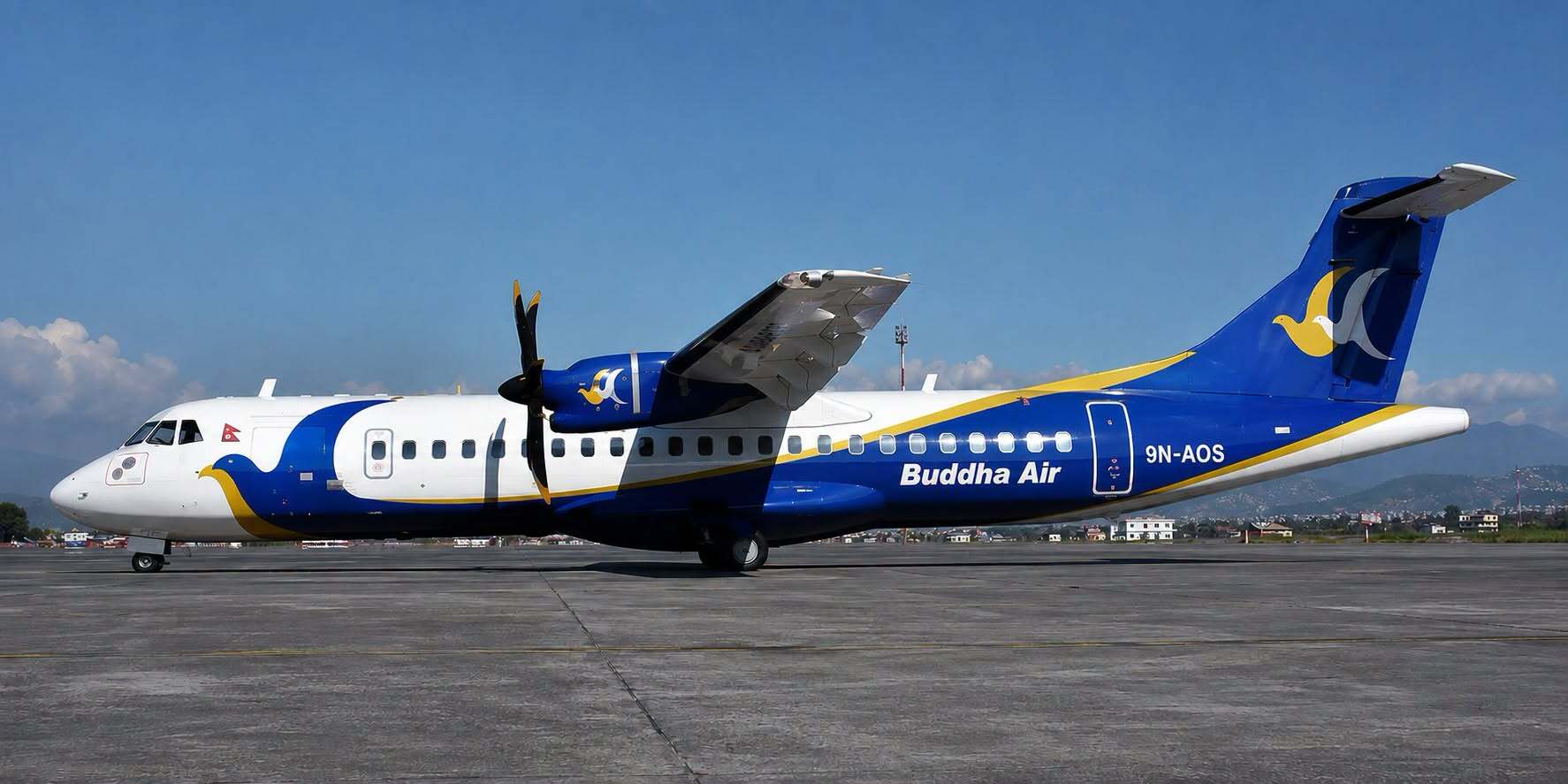
Buddha Air has added a new ATR 72-600 aircraft to its fleet, further strengthening its domestic aviation capacity and advancing efforts to improve flight reliability in challenging weather conditions. According to a statement issued by the airline, the aircraft will begin commercial operations from next month after completing all necessary procedures.
The aircraft, bearing the call sign 9N-AOS, was brought to Nepal from Toulouse, France. The newly acquired ATR 72-600 is equipped with a full glass cockpit, modern navigation systems, digital flight management systems, and advanced safety technology. The aircraft series is also considered relatively environmentally friendly due to its lower fuel consumption compared to larger aircraft.

Advanced navigation system to support operations in low visibility
One of the key features of Buddha Air’s newly imported ATR 72-600 is the RNP-AR (Required Navigation Performance–Authorization Required) approach system. The system enables aircraft to conduct safer approaches and landings at Kathmandu and Bhairahawa airports in visibility conditions of approximately 900 metres, subject to applicable operational approvals and procedures.
The Nepal Civil Aviation Authority (CAAN) is also studying the implementation of RNP-AR-based flight procedures at Pokhara International Airport. Once the procedure is implemented, the aircraft is expected to be capable of conducting safer operations at Pokhara in visibility conditions of approximately 2,000 metres, according to the airline.

Buddha Air believes the adoption of advanced navigation technology will help reduce flight delays and disruptions caused by poor visibility. The airline said the technology will not only support flight safety but also contribute to improving the quality and reliability of air services.
Lower visibility requirements compared with existing ILS procedures
At present, flights to Pokhara International Airport require approximately 3,100 metres of visibility under the existing Instrument Landing System (ILS) procedures. Similarly, flights to Kathmandu and Bhairahawa airports generally require around 1,600 metres of visibility under the current procedures. The implementation of RNP-AR-based procedures could therefore provide greater operational flexibility in certain low-visibility conditions, potentially helping to reduce weather-related disruptions and improve the regularity of flights.

Buddha Air plans to add three more ATR 72-600 aircraft
Buddha Air has also announced plans to further expand its fleet. The airline said it plans to bring in another ATR 72-600 aircraft towards the end of August. In addition, the company is working to acquire two more aircraft of the same series within the next few months.
Following the arrival of the latest aircraft, Buddha Air’s fleet currently comprises one ATR 42-320, 15 ATR 72-500 aircraft and one ATR 72-600 aircraft. The planned acquisition of additional ATR 72-600 aircraft is expected to further modernise the airline’s fleet and enhance its operational capabilities.