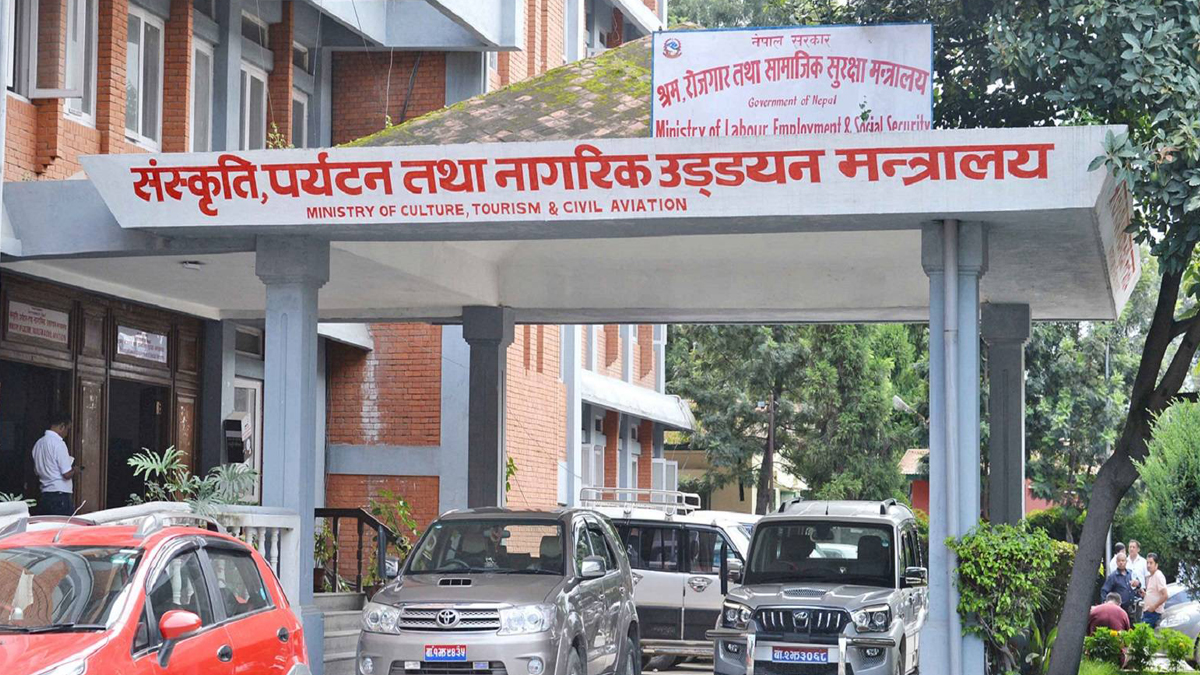
The Ministry of Culture, Tourism and Civil Aviation (MoCTCA) and its subordinate agencies recorded a poor budget execution rate during the last fiscal year, spending only 31.68 percent of the total allocated budget, according to the ministry’s fourth-quarter progress report.
The report shows that the ministry managed to spend only around Rs. 2.43 billion out of the Rs. 7.68 billion allocated for the fiscal year 2082/83 (2025/26), highlighting significant delays in the implementation of government programs and infrastructure projects.

Capital Spending Falls to Just 16.21 Percent
The ministry’s capital expenditure was particularly weak, with only 16.21 percent of the allocated development budget utilized during the fiscal year. In comparison, current (recurrent) expenditure reached 54.14 percent. The low level of capital spending is considered a major concern, as development expenditure directly supports tourism infrastructure, heritage conservation, and long-term sectoral growth. Poor capital budget utilization also raises questions about project planning, procurement efficiency, and implementation capacity within the ministry and its agencies.
Key Departments Behind the Weak Performance
The Ministry of Culture, Tourism and Civil Aviation channels a significant portion of its capital financial plan through agencies such as the Department of Tourism and the Department of Archaeology, which are responsible for implementing major tourism infrastructure and heritage conservation projects.
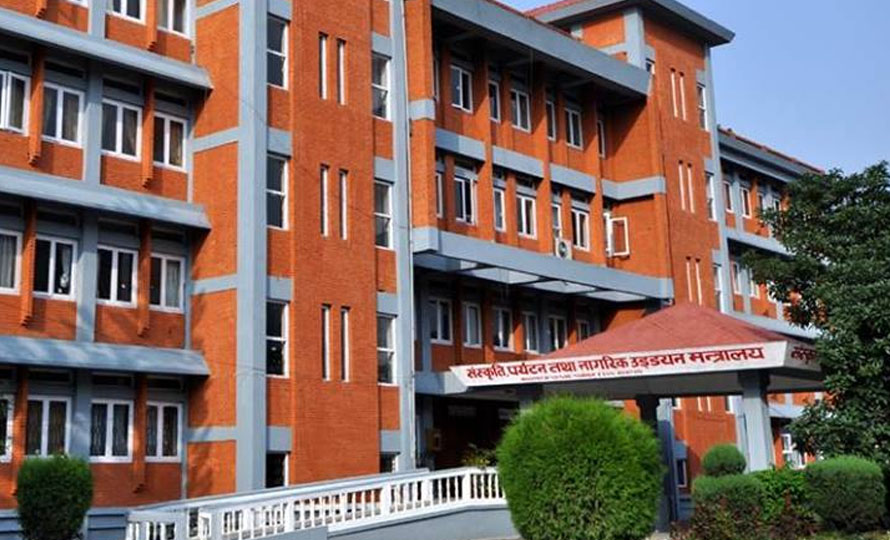
According to the progress report, these departments also recorded weak expenditure performance during the fiscal year, contributing significantly to the ministry’s overall low capital spending. The underutilization of funds suggests that several planned projects either progressed slowly or could not be completed within the fiscal year.
Ministry Itself Spends Less Than Half of Its Budget
The report further reveals that the ministry itself also failed to utilize even half of its allocated budget. Out of a total budget of Rs. 218.4 million earmarked for the ministry’s own programs and administrative activities, it spent only Rs. 93 million, representing 42.58 percent of the allocated amount.

Concerns Over Budget Implementation
The ministry’s low spending performance comes despite Nepal’s tourism sector continuing its recovery and the government’s repeated commitment to improving tourism infrastructure, cultural heritage conservation, and aviation development. Experts have often pointed out that delays in procurement processes, slow project execution, administrative bottlenecks, and weak coordination among implementing agencies remain key reasons behind Nepal’s persistent underutilization of development budgets.
With capital expenditure remaining substantially below expectations, concerns have been raised over whether several planned tourism and heritage projects will require reallocation or continuation in the current fiscal year. The fourth-quarter progress report underscores the need for stronger project management, timely procurement, and improved implementation mechanisms to ensure that budget allocations translate into tangible improvements in Nepal’s tourism, culture, and aviation sectors.