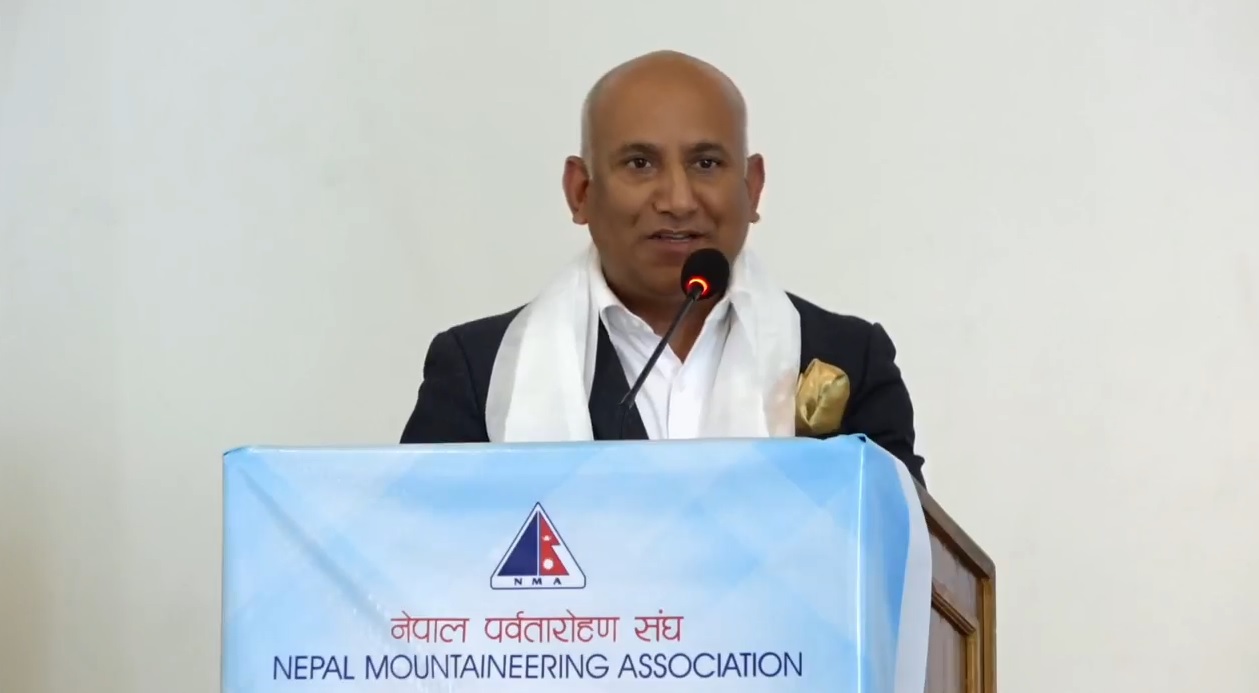
Chief Executive Officer (CEO) of the Nepal Tourism Board (NTB), Deepak Raj Joshi, has emphasized the urgent need to restore confidence and ensure a sense of safety in Nepal’s tourism industry, which faced significant setbacks during the recent Gen-Z movement.
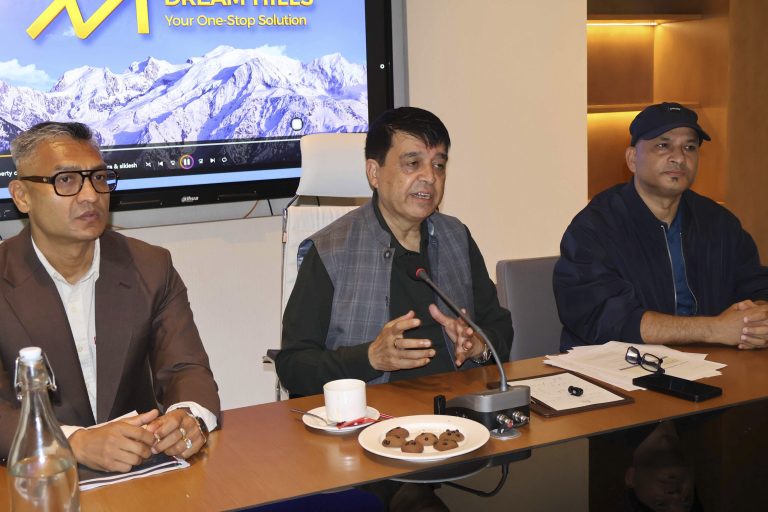
Addressing the 35th Special General Assembly of the Nepal Mountaineering Association (NMA), CEO Joshi said that the country’s tourism sector has suffered major losses due to the unrest on Bhadra 23 and 24, and now requires strong security assurances to revive its momentum.

“During the Gen-Z movement, Nepal’s tourism sector suffered considerable damage. We now need to assure safety to rebuild confidence within the industry,” Joshi stated during his address.
Need for Joint Efforts
Joshi stressed that both the government and private sector must work together to revitalize the tourism industry, which remains a cornerstone of Nepal’s economy. He shared that despite the temporary decline, tourist arrivals are gradually improving, signaling hope for recovery.
According to the NTB chief, during the peak of the Gen-Z protests, average daily tourist arrivals had dropped to around 1,600, a steep decline from the usual inflow. However, the number has since risen significantly.
“After September 8 and 9, the number of daily tourist arrivals fell to 1,600, but now the average has climbed back to around 4,200 per day. The Tourism Board is working continuously to send a strong message to the world that Nepal is safe and everything has returned to normal,” Joshi added.
Restoring Nepal’s Image as a Safe Destination
Joshi underscored that perceptions of safety play a vital role in shaping international travelers’ decisions. To attract visitors again, he said, it is necessary to project Nepal as a secure, welcoming, and resilient destination.
The NTB has been focusing on promotional campaigns, emphasizing Nepal’s readiness to host tourists and assuring that all tourism activities, from trekking to mountaineering, are being conducted smoothly and safely.
“We are committed to assuring both domestic and international travelers that Nepal is open, safe, and vibrant. Tourism has always been a symbol of resilience for our nation,” he said.
A Call for Long-Term Preparedness
Reflecting on Nepal’s past experiences, CEO Joshi noted that the country has faced various crises every decade, whether natural disasters, political upheavals, or global challenges, and yet, tourism has continued to serve as a pillar of recovery and unity.
He pointed out that to sustain this resilience, Nepal needs a permanent structure and crisis management mechanism dedicated to the tourism sector, one that remains active even during difficult times. “If we look back, our country faces some form of crisis roughly every ten years. Therefore, it is essential to establish a permanent structure that can function even during emergencies and ensure continuity in tourism activities,” Joshi explained.

Moving Forward
Joshi’s remarks come at a time when the Nepal Tourism Board and the NMA are jointly strategizing to reinvigorate mountain and adventure tourism, one of the hardest-hit sectors. He encouraged all stakeholders to collaborate on rebuilding trust and promoting Nepal’s image globally.
He further appealed to media houses, tour operators, and local communities to share positive stories of resilience, safety, and recovery, helping to rebuild Nepal’s international reputation as a must-visit destination. “Our collective responsibility is to revive hope and confidence in Nepal’s tourism. The beauty of Nepal’s mountains, the warmth of its people, and the strength of our unity can once again inspire travelers from around the world,” he concluded.