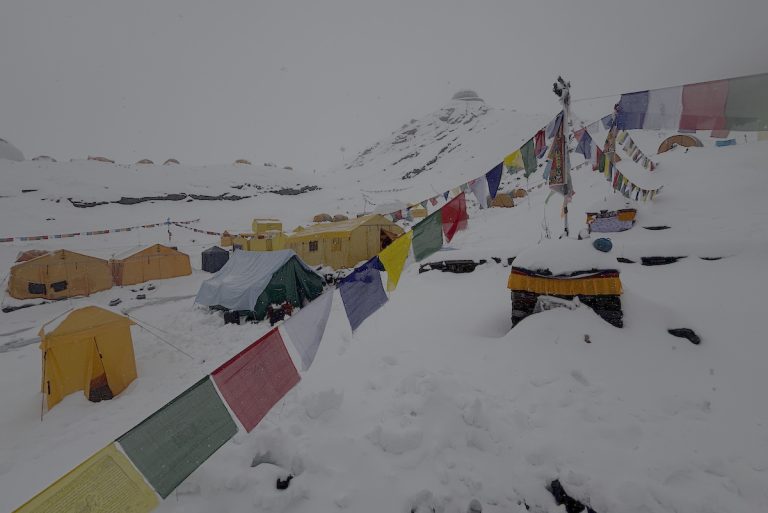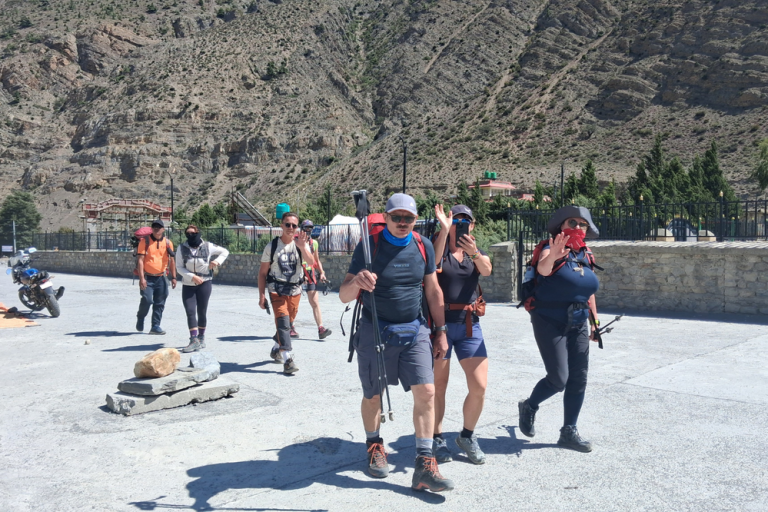
Dhaulagiri Base Camp in Myagdi has begun to see a surge of activity as international mountaineering teams arrive for the 2026 autumn climbing season on the world’s seventh-highest mountain. Standing at 8,167 meters, Mount Dhaulagiri rises in Dhaulagiri Rural Municipality-4 of Myagdi and remains one of Nepal’s most demanding high-altitude climbing destinations. By Saturday, around 30 foreign climbers had reached the mountain’s base camp, according to tourism professional Indra Singh Sherchan, who is coordinating the expedition teams.
The climbers have arrived through expedition operators including 8K Expeditions, Seven Summit Treks and 14 Peaks Expedition. Some teams have flown directly to base camp by helicopter, while others have used the route through Marpha because sections of the Dhaulagiri Circuit from Bagar have been damaged by recent floods and landslides.

International Climbers Begin Preparations at Base Camp
The arrival of the expedition teams has brought new activity to Dhaulagiri Base Camp, where climbers and their support crews are now preparing for the demanding ascent. Following their arrival, the teams performed traditional religious rituals at the base camp, seeking safe weather and a successful expedition. Such ceremonies are a familiar part of mountaineering in Nepal, particularly before climbers begin their push toward high-altitude camps.
Expedition logistics are also being organized at the base camp. Mules and helicopters are being used to transport food, climbing equipment and other supplies needed for the weeks-long expedition. The teams are expected to spend several days at base camp monitoring weather conditions and preparing for acclimatization and higher-altitude rotations. Once conditions become suitable, the expedition will move into the technical phase of the climb.
Rope-Fixing Team to Open the Route Toward the Summit
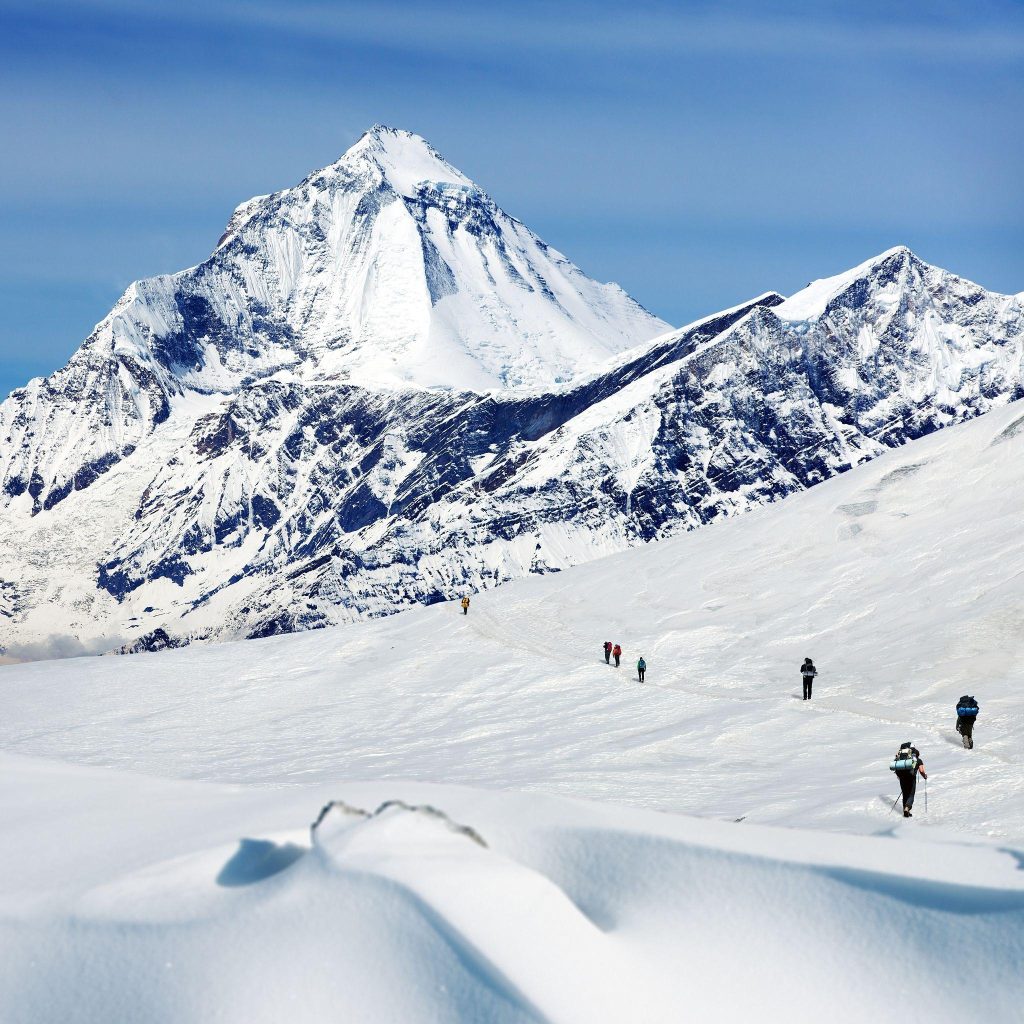
A major part of the preparation involves establishing a safe climbing route above base camp. Sherpa rope-fixing teams will work higher on the mountain, securing ropes along difficult sections so that climbers can follow an established route toward the summit. After the route is prepared, climbers will gradually move between higher camps as part of their acclimatization process before making a final summit attempt. Expedition schedules for autumn 2026 show extended periods at Dhaulagiri Base Camp and rotations through the higher camps before the planned summit window.
Weather remains one of the biggest factors determining the pace of the expedition. Conditions on Dhaulagiri can change rapidly, making careful acclimatization, route preparation and weather monitoring essential for both climbers and their support teams. The mountain’s challenging terrain and unpredictable conditions have contributed to Dhaulagiri’s reputation as one of Nepal’s more demanding 8,000-meter climbing objectives. The arrival of international teams is therefore not only the beginning of a summit campaign but also a major logistical operation involving climbing guides, Sherpa teams, porters, transport operators, helicopter companies and other local service providers.
Dhaulagiri Continues to Generate Mountaineering Revenue
The renewed climbing activity is also contributing to Nepal’s mountaineering tourism economy. According to the Department of Tourism, 34 climbers, including 10 women, had received permits for Dhaulagiri for the current climbing season as of Friday. The government had collected Rs. 7.78 million in climbing royalties from those permits. The figure places Dhaulagiri among the mountains attracting international climbers during Nepal’s autumn expedition season. Across the country, autumn 2026 has seen strong interest in Himalayan climbing, with the Department of Tourism issuing permits for multiple peaks.
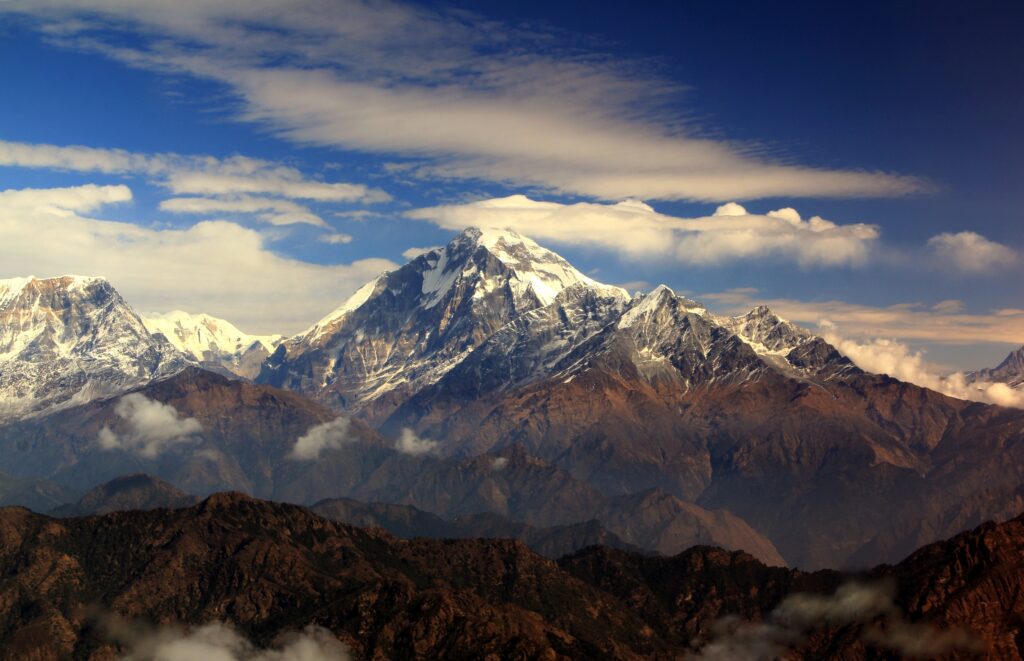
For Myagdi, the expedition season brings activity beyond the mountain itself. International climbers and their support teams require transportation, accommodation, food supplies, equipment, guides, porters and other services before and during their expeditions. The movement of climbers through the region therefore creates business opportunities for local tourism enterprises and communities. Dhaulagiri also forms part of the wider adventure-tourism landscape of the Myagdi and Annapurna region, where trekking routes, mountain views and high-altitude experiences attract international visitors.
Dhaulagiri’s Mountaineering Legacy
Dhaulagiri has a long and significant history in Himalayan mountaineering. The first successful ascent was recorded on May 13, 1960, when an Austrian-Swiss expedition reached the summit. The successful team included Kurt Diemberger, Peter Diener, Ernst Forrer, Albin Schelbert, Nawang Dorje and Nima Dorje. More than six decades later, Dhaulagiri continues to draw climbers from around the world seeking to take on one of Nepal’s highest and most technically challenging mountains.
The current autumn expedition season is adding another chapter to that history. With foreign climbers now gathering at base camp and additional teams preparing to arrive, the mountain is once again becoming a focal point of Nepal’s international mountaineering tourism. At the same time, the damage to access routes caused by floods and landslides highlights the importance of maintaining reliable infrastructure for mountain tourism. Better access, responsible expedition management and continued support for local tourism services will remain important as Dhaulagiri seeks to strengthen its position as a major destination for high-altitude adventure tourism.