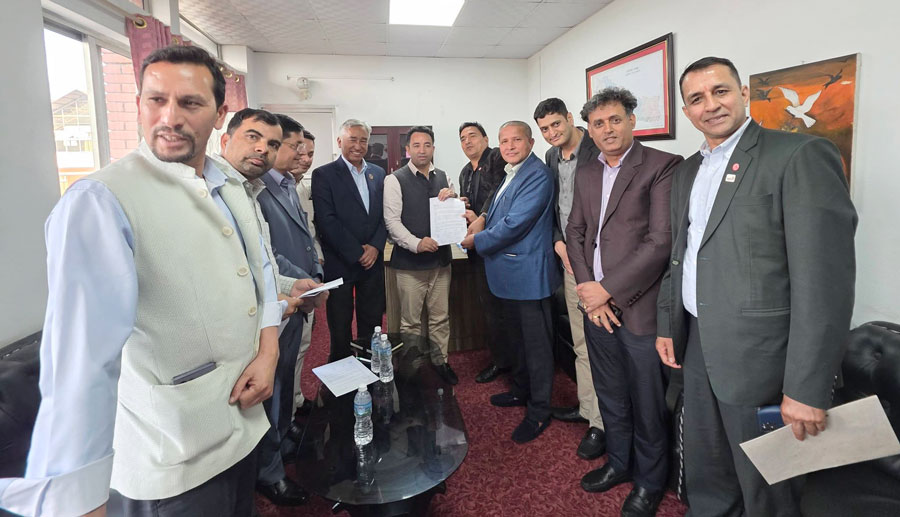
A delegation and entrepreneurs comprising representatives from various tourism-related associations and organisations, led by Vice President of the Federation of Nepalese Chambers of Commerce and Industry, Naresh Lal Shrestha, has submitted a unified set of suggestions and recommendations on the proposed “Tourism Bill, 2081” to members of the Federal Parliament.
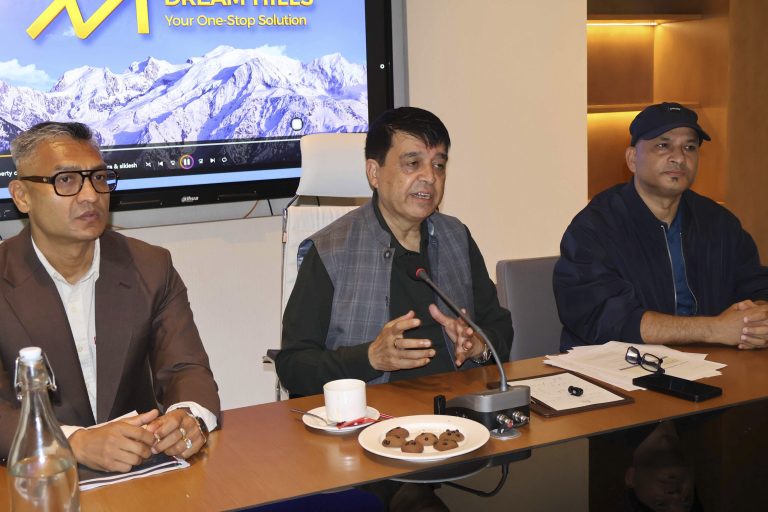
The recommendations were handed over during a programme held at Singha Durbar to Deputy Chairman of the Rastriya Swatantra Party and Deputy Leader of its Parliamentary Party, Ganesh Parajuli, along with Members of Parliament Prakash Singh Karki and Bharat Parajuli. Speaking on behalf of the private sector regarding the draft bill, FNCCI Vice President Shrestha said that tourism has the potential to become Nepal’s most important industry for achieving long-term economic development and prosperity.
He stressed that extensive reforms in laws, regulations, and policies are necessary to make Nepal’s tourism sector more modern, professional, and internationally competitive. “Tourism is the strongest pillar of Nepal’s economic prosperity. Therefore, revising existing laws, regulations, and legal frameworks in line with present-day needs has become essential,” Shrestha said during the programme.

Demand for Business-Friendly Tourism Legislation
The delegation and entrepreneurs urged lawmakers to ensure that the proposed tourism legislation incorporates business-friendly, tourism-friendly, and investment-friendly policy arrangements that reflect the realities and needs of the tourism industry. Representatives from the tourism sector requested parliamentarians to hold broader discussions on the bill before passing it, emphasizing that the legislation should address the practical challenges faced by tourism entrepreneurs and investors.
According to the delegation, policy reforms are crucial to creating a more competitive tourism environment capable of attracting greater foreign investment and strengthening Nepal’s overall economy. Industry representatives argued that unless tourism-related laws become more flexible, practical, and investor-friendly, Nepal may struggle to fully utilize the immense potential of its tourism sector.
The tourism entrepreneurs also highlighted that Nepal’s tourism industry, which significantly contributes to employment generation, foreign currency earnings, and economic activity, requires stable and progressive legal frameworks to compete effectively in the international market.
Parliamentarians Assure Serious Consideration
Receiving the recommendation document, Rastriya Swatantra Party Deputy Leader Ganesh Parajuli said the suggestions put forward by tourism entrepreneurs and private sector representatives would be taken very seriously. He assured the delegation that lawmakers are committed to incorporating important recommendations from stakeholders into the amendment process of the proposed Tourism Bill.
Parajuli acknowledged the important role played by the private sector in strengthening Nepal’s tourism industry and noted that constructive collaboration between policymakers and tourism entrepreneurs is necessary for sustainable sectoral growth. “The suggestions received from tourism entrepreneurs and the private sector will be taken with utmost seriousness, and we are committed to incorporating important recommendations into the amendment proposals of the bill,” he said.
Tourism Sector Seeks Modern and Competitive Policies
During the programme, presidents and representatives of various tourism-related associations were also present and shared their views on the proposed legislation. The participants stressed that Nepal’s tourism sector requires policies that are aligned with changing global tourism trends, investment patterns, and emerging business models. They argued that simplifying regulations and creating a more liberal policy environment would encourage both domestic and foreign investment in tourism infrastructure, hospitality, adventure tourism, and related industries.
Business leaders also pointed out that tourism remains one of Nepal’s most promising sectors for driving economic recovery and generating employment opportunities, particularly in rural and mountainous regions. According to them, improving the legal and policy environment could help Nepal position itself more strongly as a global tourism destination while also increasing investor confidence.

Tourism Seen as Key Driver of Economic Growth
The tourism industry has long been regarded as one of Nepal’s major economic pillars due to the country’s rich natural beauty, Himalayan landscape, cultural heritage, religious sites, and adventure tourism potential. Stakeholders at the meeting emphasized that Nepal’s economic future is closely linked with the growth and sustainability of the tourism industry. They stressed that policy-level improvements, streamlined administrative procedures, and investor-friendly laws are essential for unlocking the sector’s full potential.
The unified recommendation submitted to parliament is expected to contribute to ongoing discussions surrounding the Tourism Bill, 2081, which aims to reform and modernize Nepal’s tourism governance and regulatory framework. Tourism entrepreneurs expressed hope that the final version of the legislation will create a more supportive environment for businesses while promoting sustainable tourism development and enhancing Nepal’s competitiveness in the global tourism market.