When people talk about climate change, they often think of mountains and oceans as separate problems. Melting glaciers and rising seas seem unrelated. But they are closely connected. A glacier melts, its water flows into a river, the river reaches the ocean, and the ocean rises up the shore. This connection is the heart of the story.
Mountains: The World’s Water Towers
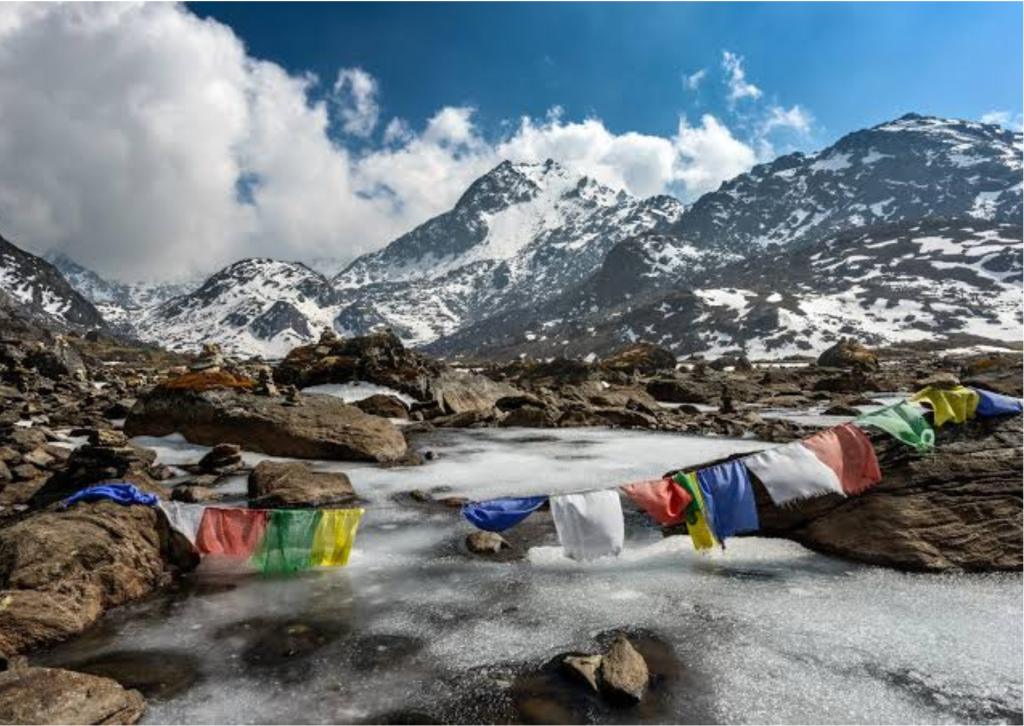
The world’s mountains are the planet’s water towers. From the Himalayas to the Alps, from the Rockies to the Andes, their glaciers hold most of Earth’s freshwater. In a normal year, ice builds up in winter and melts slowly through summer. This gives hundreds of millions of people downstream a steady supply of water.
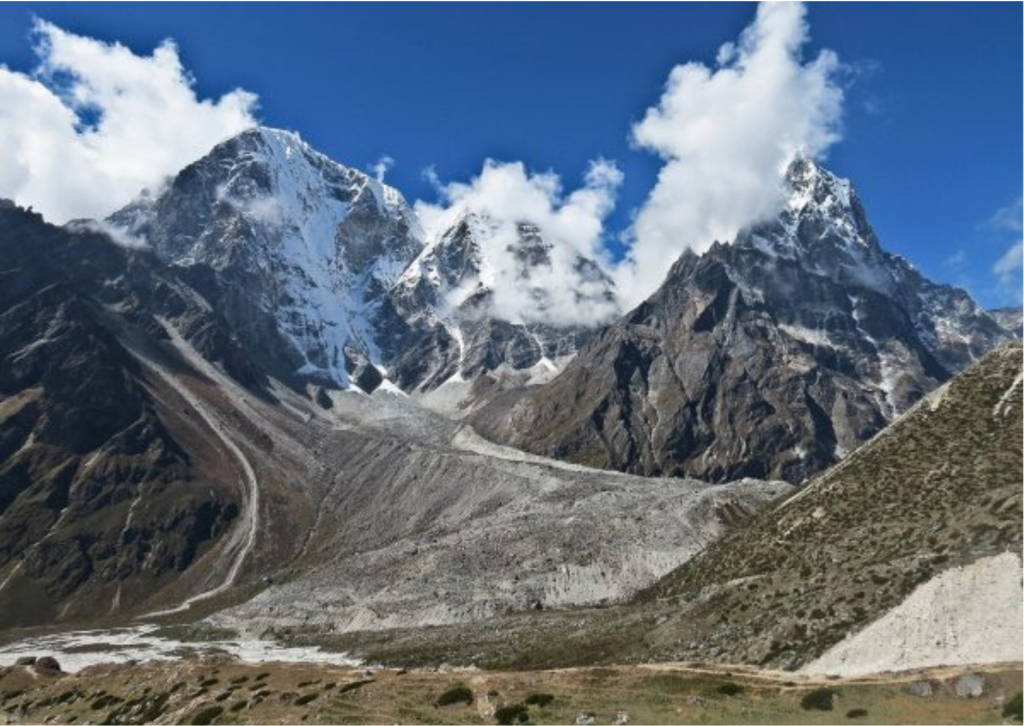
But this system is breaking down. High mountain areas at the top of the world are warming much faster than the rest of the planet. In the Hindu Kush Himalaya, temperatures rose about twice as fast as the global average between 1980 and 2020. Glaciers are losing ice at both ends: less snow in winter, more melting in summer. A report from the International Centre for Integrated Mountain Development found that ice loss in the region has doubled since 2000, and much of it cannot be reversed.
There is a name for the turning point ahead: peak water. At first, faster melting means more river flow, so downstream communities get more water than usual. But once that peak passes, the flow drops and will not recover. When this happens depends on how much ice a basin holds. The Indus has more glacier cover, so it will peak later. The Ganges and Brahmaputra have less, so they are expected to peak before the middle of this century. After that, the water is gone.
Once water leaves the glacier, it enters rivers and begins its long journey downhill. But water is not the only thing making that journey. The Himalayas and the Tibetan Plateau erode faster than almost anywhere else on Earth. Their rivers carry a large share of all the sediment that reaches the oceans. That sediment is full of carbon, which settles in the deep waters of the Arabian Sea, the Bay of Bengal, and the South China Sea. For a long time, scientists did not notice this part of the global carbon cycle.
Monsoon, Glaciers and the Ocean Connection
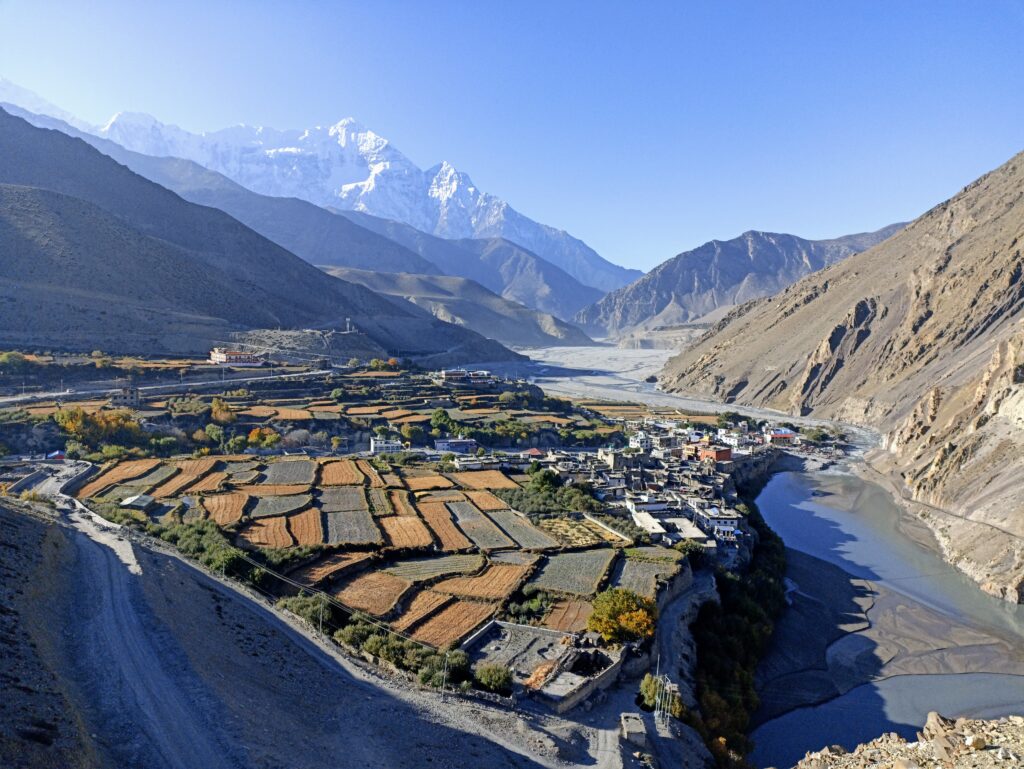
Rivers are not the only link between mountains and oceans in the world. The South Asian summer monsoon pulls moisture off the Indian Ocean and drops it as rain over the Himalayas. This feeds the glaciers and the snow. Those glaciers and snowfields then shape the monsoon in return, because their bright white surfaces reflect sunlight and cool the air above them. Less ice means less reflection, and a monsoon that behaves differently than it used to. The Indian Ocean is warming fast. Warmer surface waters drive stronger, more erratic monsoon rain, with long dry spells broken by extreme downpours. That speeds up glacier melt and raises the risk of floods from bursting glacial lakes and of landslides.
Now the story reaches the sea. The ocean is not the end of the line. It is where changes upstream come back around. Sea level rises in two ways: warm water takes up more space than cold water, and melting glaciers and ice sheets add more water on top of that. The Atlantic, Pacific, Arctic, and Southern Oceans are all warming, and the Indian Ocean is no exception. Even a small rise can push water a long way inland, because so much of the coast is nearly flat and gives the water nothing to push back against.
Deltas and Coastal Cities Under Pressure
The world’s great deltas are where this story comes together. The Ganga-Brahmaputra, the Nile, the Mississippi, and the Mekong are each fighting a two-front war. The land is sinking because the sediment that used to rebuild it is trapped behind dams or carried away by rivers that no longer flow the way they did. At the same time, the water is rising. The Bay of Bengal is already creeping up.
Coastal megacities like Mumbai, Kolkata, Colombo, Dhaka, Shanghai, New York, and Lagos are being hit from several directions at once. The sea is rising. Storm surges are getting stronger. Saltwater is seeping into the freshwater they drink. And the mangroves and wetlands that once protected them are disappearing.
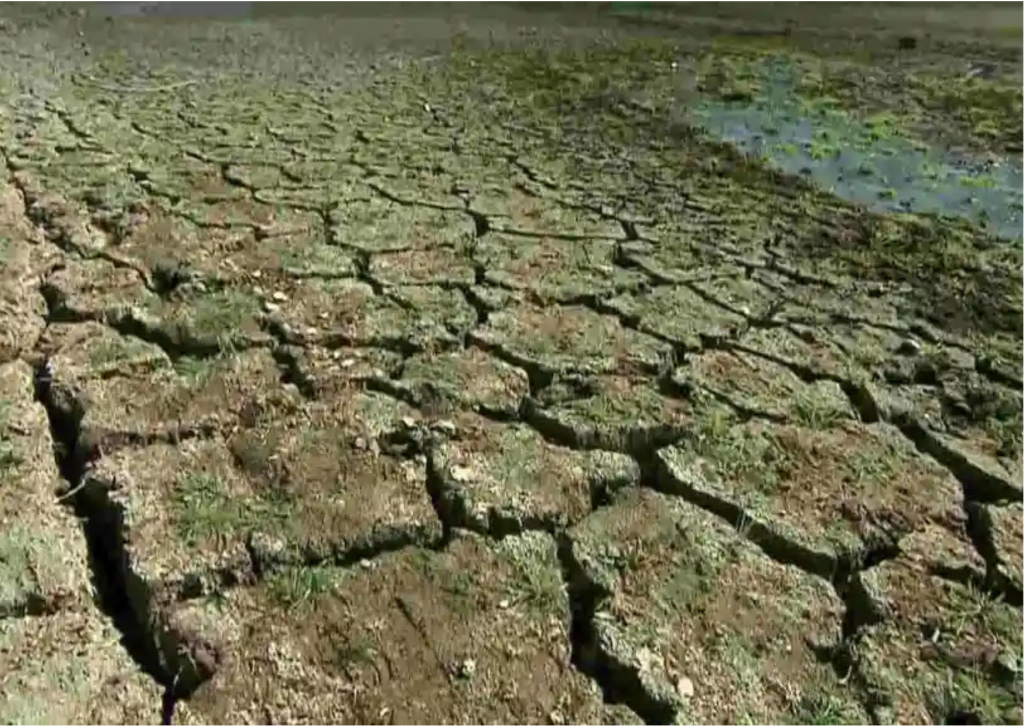
In the mountains, springs are drying up. Communities from the Himalayas to the Andes and the Alps live with the constant threat of floods from bursting glacial lakes. In the Hindu Kush Himalaya alone, some 870 million people depend on water that comes from glaciers. For them, this is not an abstract idea. It is about whether their fields get water in the dry season.
Down in the deltas and along the coasts, fishermen and farmers in Bangladesh, Egypt, Vietnam, and the Maldives are losing land to saltwater and watching the monsoons grow harder to predict. Mountain and ocean, the two ends of the thread, are tied together by more than water. They share the same vulnerability.
One Climate Story From Mountain to Sea of the World
The response has to be as interconnected as the problem. Early warning systems in mountain valleys can save lives when a glacial lake bursts. Building in deltas in ways that can survive higher water can slow the loss of land. And water management has to cross borders and stretch from mountain to sea, because no single country can manage a river it shares.
The fate of the highest peaks and the deepest seas is not separate. They are one system. A rockfall in a high mountain valley and a flood in a coastal megacity are not two unrelated events. They are the same event, arriving in different places and at different times. From the top of the world to the depths of the ocean, the climate crisis is one story, and it is still unfolding. We are not watching it from the outside.
Article By: Prashant Kumar Raut (The author is a student of Environmental Science at the University of Delhi.)