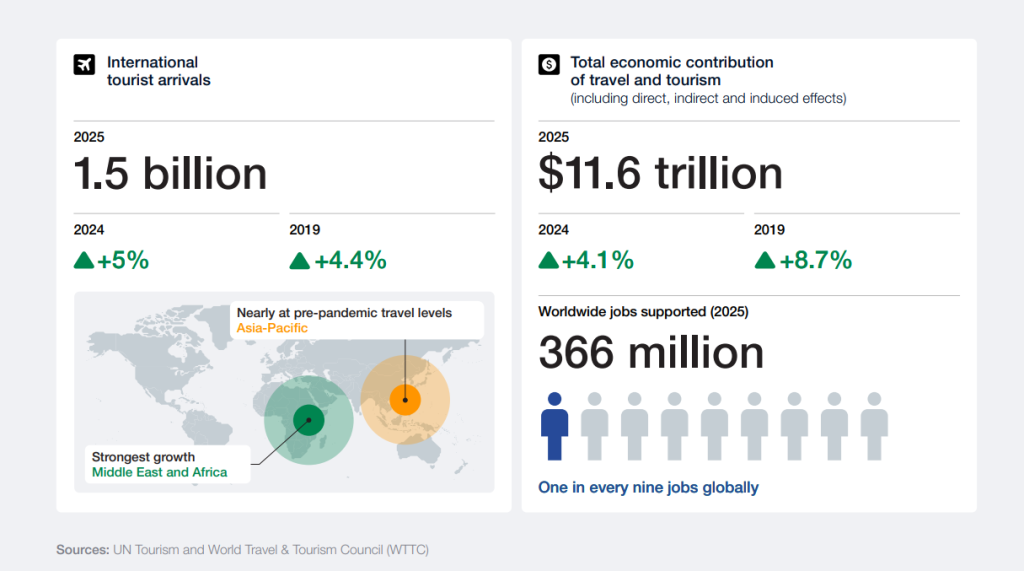
The global travel and tourism sector has largely moved beyond its post-pandemic recovery phase and entered a new period of expansion, with international tourist arrivals reaching a record 1.5 billion in 2025, according to the Travel & Tourism Development Index (TTDI) 2026. The latest assessment by the World Economic Forum shows that tourism assets, infrastructure, connectivity and visitor capacity have strengthened across much of the world, while the sector’s economic contribution has reached unprecedented levels.
However, the report also warns that the conditions for successful global tourism development are changing rapidly, with affordability pressures, investment gaps, workforce shortages, sustainability concerns and geopolitical and climate-related disruptions emerging as major challenges. The TTDI 2026, which evaluates 110 economies, shows that tourism development conditions are now at their strongest level since the pandemic, but emphasizes that simply attracting more visitors will no longer be sufficient. Destinations will increasingly need to ensure that tourism growth creates broader economic and social benefits while protecting communities, infrastructure and natural resources.
92% of Economies Improve Global Tourism Development Scores
The TTDI 2026 shows broad-based improvement across the global tourism sector. Between 2024 and 2026, 101 of the 110 economies, or 92%, improved their TTDI scores, while every economy ranked among the top 75 recorded gains. Average TTDI scores increased by around 2.1%, marking the fastest pace of improvement since 2019. The strongest improvements were recorded in areas including cultural resources, tourism infrastructure and services, and air connectivity, reflecting stronger tourism assets and systems capable of supporting increased visitor demand.
Despite widespread improvement, the pace of progress varies considerably between countries and regions. The report indicates that while advanced economies continue to dominate the highest positions in the index, several emerging tourism economies are improving at a much faster rate. Since 2019, the largest emerging tourism economies in global have increased their TTDI scores at more than twice the pace of the top 20 economies, supported by competitive pricing, strong natural resources and increasingly sustainable tourism patterns.
Japan Leads Global Tourism Development Rankings
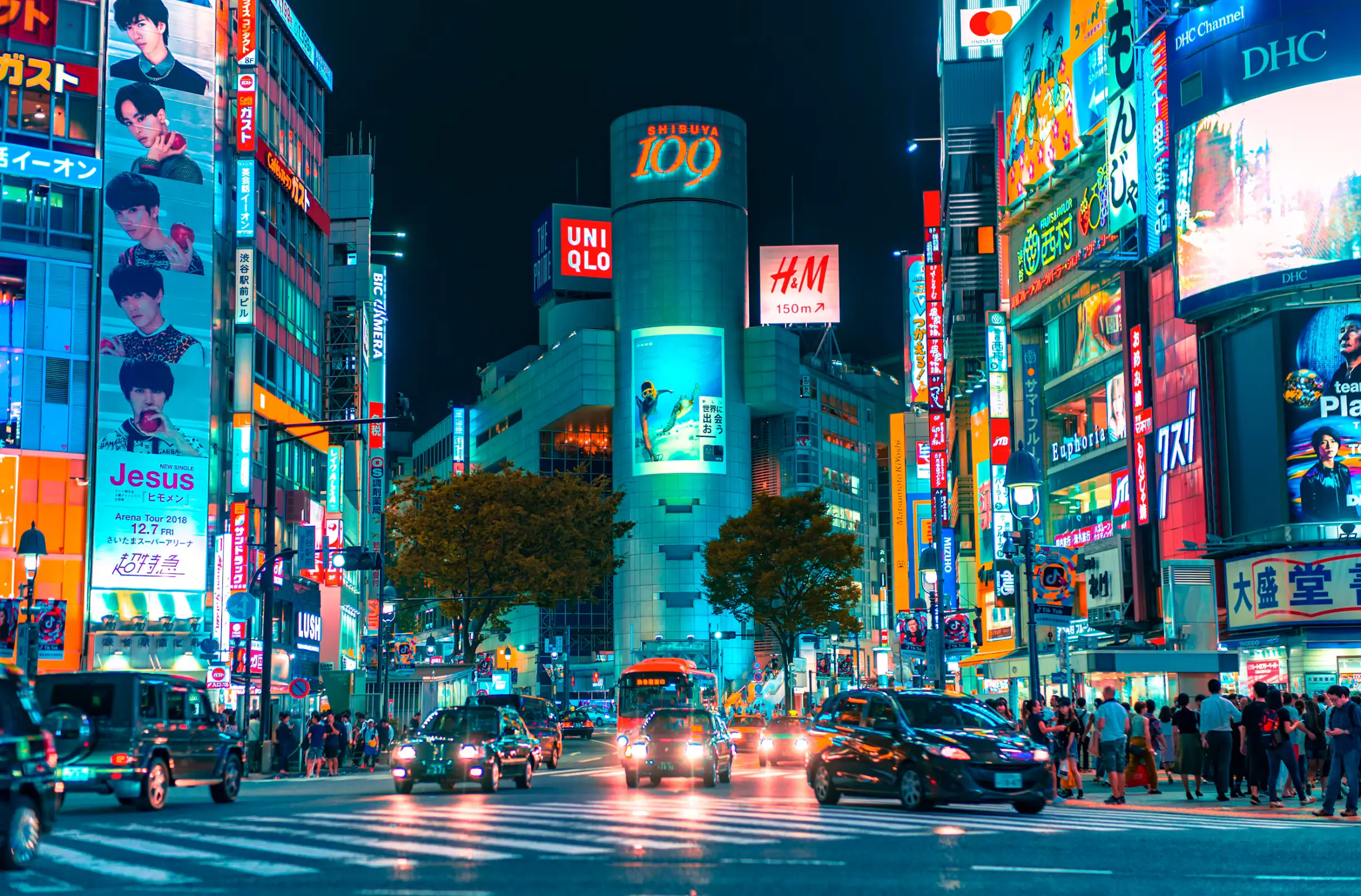
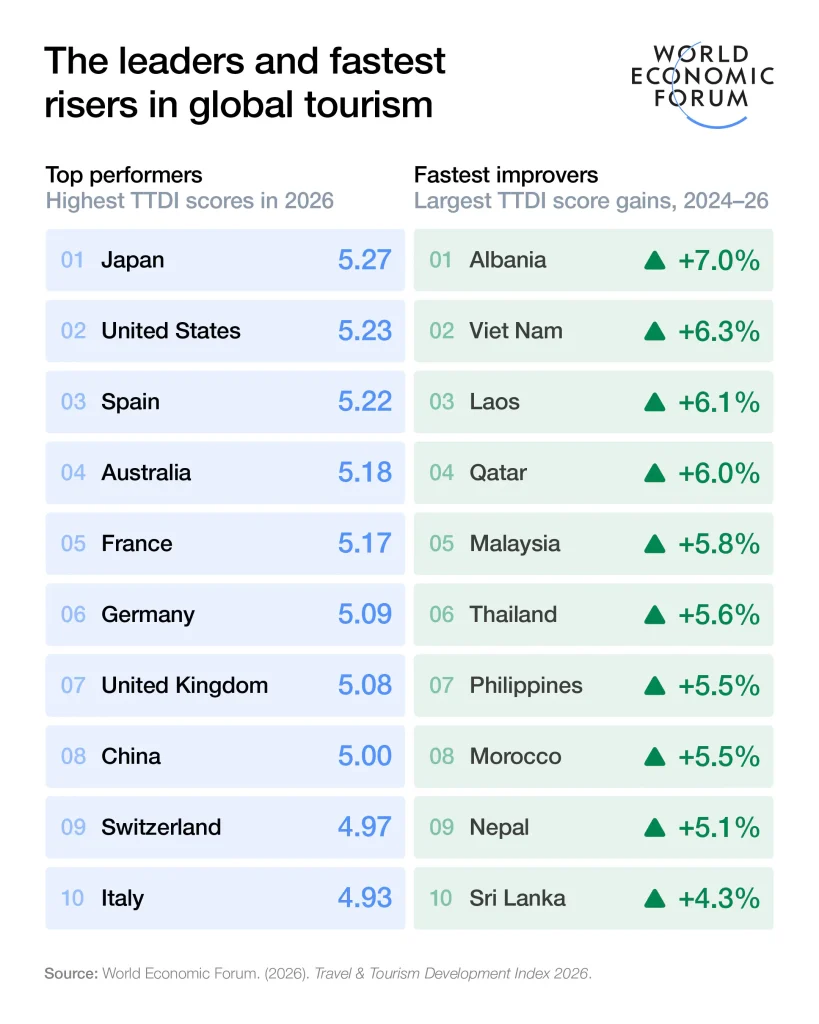
Japan has taken the top position in the TTDI 2026, moving up two places from the previous global ranking and overtaking the United States. The United States now ranks second, followed by Spain, Australia, France, Germany, the United Kingdom, China, Switzerland and Italy. The same 10 economies remain in the top 10 as in 2024, although their positions have changed. Advanced economies occupy nine of the top 10 positions, with China remaining the only emerging economy in the group. European economies account for six of the top 10 positions, reinforcing Europe and Eurasia’s position as the highest-performing region overall.
Japan’s rise to the top of the index reflects both the strength of its tourism infrastructure and its growing international visitor demand. Japan welcomed a record 42.7 million international visitors in 2025, supported partly by efforts to diversify its source markets and promote destinations beyond the country’s most established tourism centers. International visitor spending reached approximately $59.7 billion during the year, demonstrating the economic value of its tourism expansion.
Asia-Pacific Emerges as the Global Fastest-Improving Region
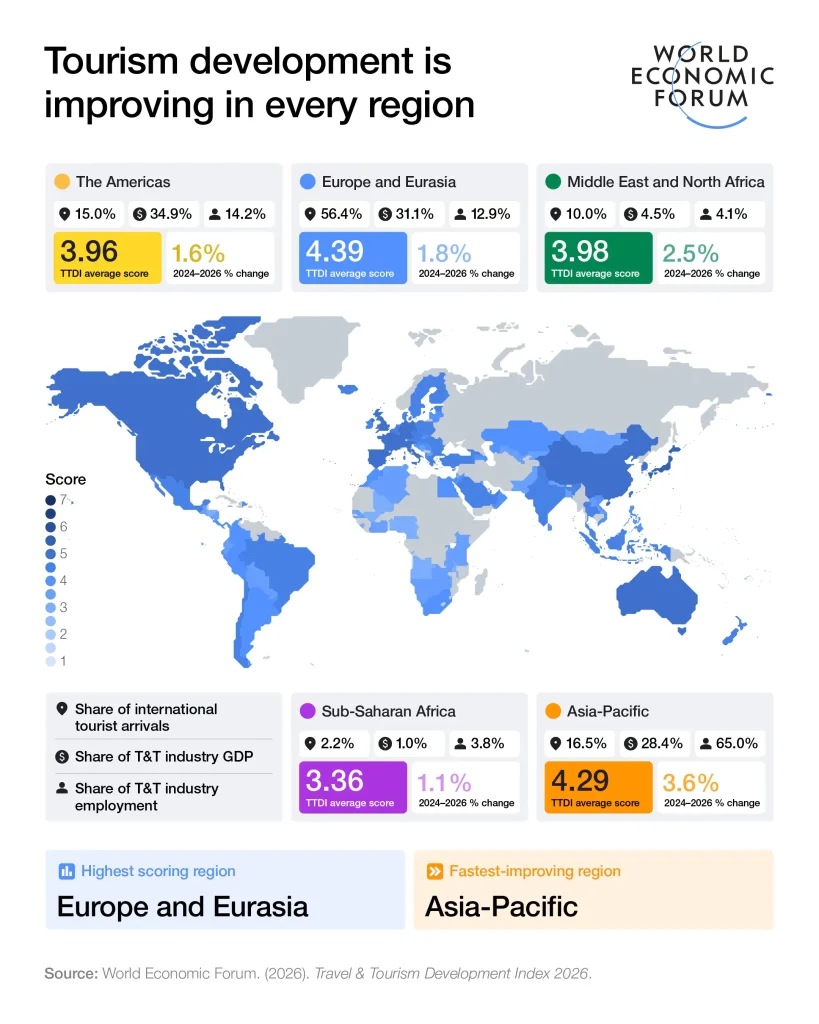
Although advanced economies continue to lead the overall rankings, the strongest momentum is increasingly being seen across Asia-Pacific and other emerging tourism markets. Asia-Pacific recorded a 3.6% increase in its average TTDI score between 2024 and 2026, making it the most improved region in the latest index.
Seven of the 10 fastest-improving economies came from developing countries in South and Southeast Asia. Lao PDR increased its score by 6.1%, Malaysia by 5.8% and Thailand by 5.6%, among the notable performers. The report attributes much of this momentum to stronger tourism demand and increased capacity as Asia-Pacific continued its recovery from the region’s relatively delayed reopening following the pandemic.
Albania was the strongest overall improver, increasing its TTDI score by 7% between 2024 and 2026. Improvements in tourism services and infrastructure, air transport, and ground and port infrastructure helped the country strengthen its ability to convert growing visitor demand into wider tourism growth.
Global Tourism Growth Reaches Record Economic Contribution
The global tourism sector’s recovery has translated into a substantial economic contribution. International tourist arrivals increased by 5% in 2025 compared with 2024 and were 4.4% above 2019 levels, marking a full recovery from the pandemic downturn in terms of international visitor volumes. The total economic contribution of travel and tourism, including direct, indirect and induced effects, reached a record $11.6 trillion in 2025, representing a 4.1% increase from 2024 and an 8.7% increase compared with 2019. The figure was equivalent to nearly 10% of global GDP.
Tourism also supported approximately 366 million jobs worldwide in 2025, representing around one in every nine jobs globally. Growth was supported by both leisure and business travel. Leisure spending, which accounts for more than 80% of total traveller spending, increased by 3.5% to $6.1 trillion, while business travel spending grew by 4% to $1.5 trillion as meetings, conferences and other in-person events continued to recover.
Domestic Tourism Remains a Major Source of Resilience
Domestic travel continued to represent the largest source of tourism demand in 2025, accounting for 73.6% of total traveller spending, equivalent to approximately $5.6 trillion. Domestic travel spending increased by 3.7% compared with 2024, slightly faster than international visitor spending, which rose by 3.2% to around $2 trillion. The report emphasizes that strong domestic tourism markets can provide an important buffer when international travel is disrupted.
Countries with large domestic markets can maintain tourism businesses, accommodation capacity and supporting infrastructure even when international arrivals fluctuate. Domestic travel can also reduce dependence on overseas source markets, distribute demand across different seasons and help sustain tourism activity outside major international visitor hotspots. Business travel, meetings and events provide a similar stabilizing effect by generating demand throughout the year, supporting higher visitor spending and reducing dependence on peak leisure seasons.
Affordability Becomes a Growing Challenge Globally
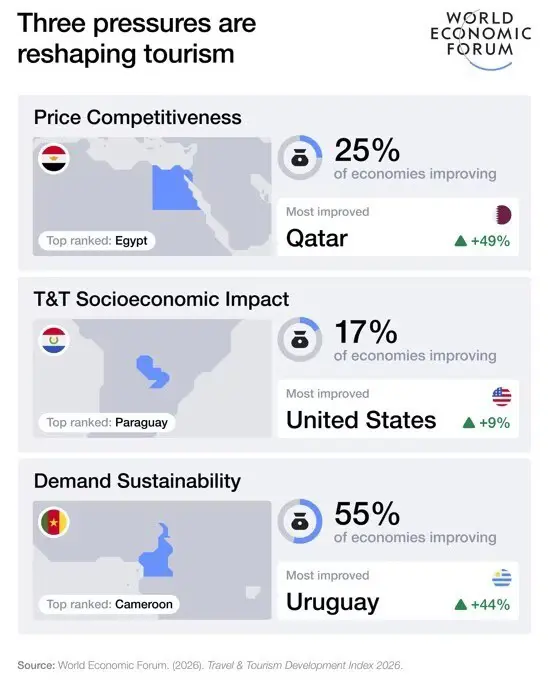
Despite strong tourism growth, affordability has emerged as one of the sector’s major constraints in global tourism. Tourism-related prices have increased faster than general inflation in many economies, contributing to a decline in price competitiveness in three-quarters of the economies assessed by the TTDI between 2024 and 2026.
The issue is particularly relevant for destinations competing for price-sensitive international travelers. Rising accommodation, transportation, food and other tourism costs can influence destination choices and potentially redirect travelers toward more affordable markets.
The TTDI also highlights an investment gap. Although global tourism activity has expanded significantly, tourism investment has lagged behind the pace of sector activity since 2022. At the same time, workforce shortages and skills gaps are creating additional pressure on service quality and the industry’s ability to adapt to digital technologies and artificial intelligence.
Tourism Growth Alone Does Not Guarantee Wider Benefits
The TTDI 2026 warns that increasing visitor numbers and tourism spending do not automatically translate into greater economic and social benefits for destinations. While travel activity and visitor spending continue to rise, the broader economic and social value generated by tourism weakened between 2024 and 2026.
Crowding and visitor concentration remain above pre-pandemic levels in many destinations, creating pressure on communities, infrastructure and natural resources. The report therefore argues that managing tourism growth is becoming just as important as generating growth.
Successful destinations will need to distribute tourism benefits more widely, reduce excessive pressure on popular areas and ensure that local communities participate in the economic opportunities created by tourism. This will require better destination management, infrastructure planning and policies that encourage tourism activity to spread geographically and seasonally.
Culture and Nature Strengthen Tourism Competitiveness
Cultural resources recorded one of the strongest improvements among the 17 pillars measured by the TTDI. Cultural resources increased by 9.6% between 2024 and 2026, with more than 95% of the economies included in the index recording improvements. The report links this progress partly to global efforts to protect cultural heritage. The number of sites on UNESCO’s World Heritage List increased from 869 in 2019 to 972 in 2026. At the same time, interest in intangible cultural heritage, including festivals, performing arts, craftsmanship and food culture, is contributing to the expansion of cultural tourism.
Natural resources also strengthened, increasing by 4.1%, with 96% of economies recording improvements. Growing demand for nature-based travel is helping expand tourism into rural areas and creating opportunities for emerging and developing economies with strong forests, coastlines, wildlife and protected natural areas. Among the 30 highest-scoring economies for natural resources, 20 are emerging or developing economies, primarily located in Latin America and the Asia-Pacific region.
Leading Destinations Face the Cost of Success
The highest-ranked tourism economies benefit from extensive visitor infrastructure, strong international connectivity, major cultural and business attractions and well-developed tourism services. They also generally perform strongly in areas such as health and hygiene, safety and security, ICT readiness and the business environment.
However, the TTDI shows that the world’s leading tourism economies do not outperform every other economy across every category. The top 20 economies perform significantly worse in price competitiveness and somewhat below average in tourism demand sustainability. The report associates this with a common challenge facing mature tourism destinations: tourism success can bring higher costs, overcrowding and increased pressure on popular destinations.
Several European economies also score lower on tourism’s socioeconomic impact because of the intensity and concentration of visitor activity. At the same time, many of these destinations perform strongly on environmental sustainability, suggesting greater capacity to manage environmental pressures and protect the natural assets on which tourism depends.
Geopolitical and Climate Risks Test Tourism Resilience
Resilience is increasingly becoming a competitive advantage for tourism destinations as geopolitical, economic and climate risks intensify. The report highlights how disruptions in one part of the world can rapidly affect international tourism through interconnected aviation and transport networks.
The escalation of conflict in the Middle East from late February 2026 disrupted major aviation corridors connecting Europe, Asia, Australia and Africa. Airspace closures, security concerns and restrictions affected flight routes, travel times, fuel costs, airfares, schedules and traveller confidence. In April 2026, revenue passenger kilometres carried by Middle Eastern airlines declined by 46.6% year on year, contributing to a 3.4% decline in global air traffic, the first contraction since the post-pandemic recovery.
Climate-related disruptions have added another layer of risk. Severe heatwaves and wildfires affected parts of southern Europe, including Spain and France, during the summer of 2026. Despite these disruptions, international tourist arrivals still increased by 2% during the first quarter of 2026, with growth recorded in every region except the Middle East.
Tourism’s Next Phase Will Depend on Sustainable Growth
The TTDI 2026 presents a global tourism industry that is no longer defined primarily by pandemic recovery but by the challenge of managing sustained growth in an increasingly uncertain environment. The record 1.5 billion international arrivals in 2025 and the sector’s $11.6 trillion economic contribution demonstrate the strength of global travel demand, while continued improvements across 92% of ranked economies indicate that tourism development is advancing worldwide.
However, the report makes clear that future competitiveness will depend on more than attracting visitors. Destinations will need to remain affordable, invest in infrastructure and skills, strengthen connectivity, manage visitor concentrations and protect cultural and natural resources. They will also need to build resilience against geopolitical shocks, climate events and disruptions to international transport networks.
The destinations best positioned for the next phase of global tourism, according to the TTDI 2026, will be those capable of combining strong tourism assets with effective management, resilience and sustainability. As international travel continues to expand, the central challenge for governments, businesses and investors will be to ensure that tourism growth creates lasting value not only for visitors and businesses, but also for the communities and environments that make destinations attractive in the first place.