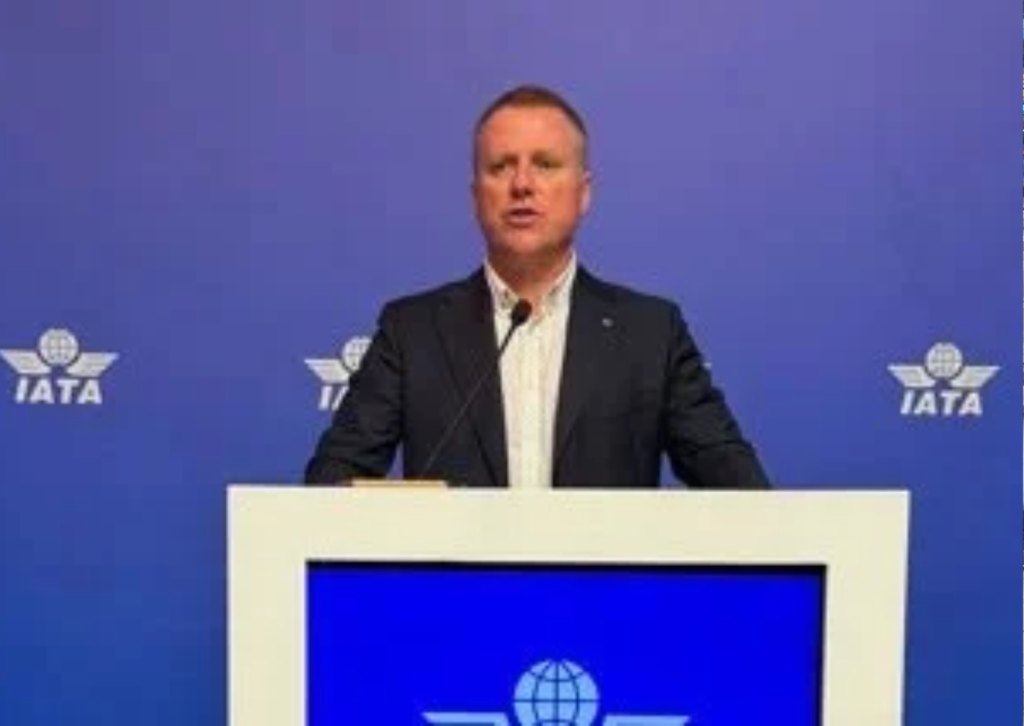
The International Air Transport Association (IATA) has called for stronger integration of people, technology and global standards to achieve the next major improvement in aviation safety, stressing that none of these elements can deliver maximum safety benefits when operating in isolation. Addressing the IATA World Safety and Operations Conference in Istanbul, IATA highlighted both the significant progress made by the aviation industry and the challenges that continue to require coordinated global action. The conference brought together aviation leaders, regulators, safety professionals and industry stakeholders to examine how operational performance and safety can be strengthened in an increasingly complex aviation environment.
IATA also thanked Turkish Airlines for hosting the event and highlighted Türkiye’s growing importance as a global aviation market, with international passenger departures increasing by nearly 70% over the past decade, making it the world’s seventh-largest market by passenger departures. Istanbul, one of the world’s major aviation hubs, was described as a fitting location for discussions on how people, technology and standards must work together in increasingly complex aviation operations.
Aviation Safety Has Improved, but Fatalities Remain a Concern
IATA pointed to substantial improvements in aviation safety over the past decade. Around ten years ago, the industry recorded one fatal accident for every 3.5 million flights, while in 2025 the rate improved to one fatal accident for every 5.6 million flights. According to IATA, the improvement reflects years of investment in global standards, safety data, cooperation and operational improvements across the aviation sector.

However, the organization stressed that the progress should not create complacency. In 2025, 394 people lost their lives onboard aircraft, demonstrating that even with aviation operating at historically high levels of safety, further improvements remain necessary. IATA said the next step change in safety will depend on how effectively the industry combines people, technology and standards as interconnected components of a single safety system.
People Remain at the Heart of Aviation Safety
Under the conference theme “Performance Through People,” IATA emphasized that aviation professionals remain the critical element in ensuring that safety systems function effectively. One of the major challenges facing the sector is the changing workforce demographic, with a disproportionately large number of experienced safety professionals expected to retire in the coming years. IATA stressed the importance of transferring their knowledge, experience and institutional understanding to the next generation before that expertise is lost.
The organization noted that aviation has spent decades developing a strong positive safety culture in which employees are encouraged to report mistakes, hazards and near misses so that the industry can learn from them rather than simply assign blame. IATA said maintaining this culture will require deliberate mentoring and knowledge transfer as experienced professionals leave the industry. The next generation of aviation workers is also entering the sector with greater familiarity with digital technology and artificial intelligence, creating opportunities to use new technologies to strengthen safety and operational performance.
However, IATA cautioned that technological skills must complement, rather than replace, operational judgment and traditional aviation competencies. Human intuition, professional judgment and decision-making must evolve alongside new technologies, while the industry must avoid excessive dependence on automated systems. Safety professionals must retain the ability to question technological outputs, particularly when operating in dynamic and unpredictable environments.
Safety Reporting Culture Needs Strong Protection
IATA also stressed the importance of maintaining an environment in which aviation personnel can report errors, hazards and near misses without fear of inappropriate punishment. Such reporting is a fundamental element of modern safety management and is reflected in the International Civil Aviation Organization’s safety management framework as well as European regulations concerning occurrence reporting and safety culture. IATA cited the experience of the Netherlands, where air traffic controllers were prosecuted following an occurrence that they had reported.
The organization noted that occurrence reporting subsequently declined significantly, demonstrating how legal or institutional responses can undermine safety culture when employees fear that reporting mistakes could expose them to prosecution. The experience contributed to efforts to strengthen protections and improve cooperation between safety authorities and judicial authorities. IATA emphasized that a strong safety culture depends on people being able to report potential problems so that the industry can identify risks before they develop into serious accidents.
Runway Safety Requires Greater Attention to Small Deviations
Runway operations were highlighted as an important example of how people, technology and standards must function together. Although runway accidents are relatively rare, runways remain the most common location for aviation accidents and incidents. Controllers issue clearances, pilots operate aircraft and ground personnel manage equipment in the same operating environment, while technology provides situational awareness and standards guide the actions of everyone involved.
IATA warned that small deviations from established procedures can gradually become normalized, particularly in busy and high-pressure environments. Standard phraseology, for example, can sometimes be shortened because personnel understand one another and believe the abbreviated communication is more efficient. However, repeated deviations can eventually create vulnerabilities. IATA referred to the concept of “normalization of deviance,” emphasizing that the fact that a deviation has not previously caused harm does not mean it will always remain harmless.
To address these risks, IATA, the Civil Air Navigation Services Organisation (CANSO) and Airports Council International (ACI) launched a Joint Runway Safety Initiative in 2026. The initiative aims to identify early warning signs through Local Runway Safety Teams before minor deviations develop into more serious safety events. IATA stressed that runway safety is not solely the responsibility of pilots or air traffic controllers but a broader system issue involving airports, airlines, air navigation service providers, regulators and other stakeholders.
Technology Can Strengthen Decision-Making but Cannot Replace Resilience
Technology was identified as another critical component of aviation safety, particularly because it enables aviation professionals to obtain better information, identify risks earlier and make more informed decisions. IATA said aviation has historically become safer not by simply removing people from operational systems, but by providing them with better information, tools and understanding of risk. The organization therefore argued that the key question when evaluating automation should not simply be whether a process can be automated, but whether the technology will enable people to operate more safely and effectively.
IATA highlighted the growing importance of data-sharing initiatives across the industry. Its Turbulence Aware programme received more than 65 million turbulence reports from aircraft during the year, providing airlines and aviation professionals with valuable information about turbulence risks. SafetyIS draws operational safety information from 248 airline contributors, while IATA Connect has more than 5,600 users from over 600 organizations sharing information, experience and best practices. According to IATA, the common objective of such initiatives is to identify risks earlier, share lessons across the industry and support better operational decisions.
Rising GNSS Interference Highlights Need for Backup Systems
At the same time, IATA warned that technology cannot be treated as infallible. Aviation systems must remain resilient when technology becomes unavailable, degraded or provides misleading information. The increase in interference with global navigation satellite systems (GNSS) was cited as a significant example. Compared with 2023, reported GNSS jamming events increased by 67% in 2025, while reported GPS spoofing incidents increased by 193%.
Spoofing is particularly challenging because an aircraft can receive positioning information that appears credible while actually being false. IATA emphasized that the solution is not to abandon GNSS, whose safety and efficiency benefits have transformed aviation, but to ensure that operations are supported by multiple layers of protection. Redundancy, established procedures, appropriate training and professional crew judgment remain essential when satellite-based navigation information cannot be trusted.
IATA outlined three key questions that should be considered when introducing new aviation technologies: whether the technology helps people understand their operating environment, whether it supports better decision-making, and whether operations can remain safe if the technology becomes unavailable or compromised. IATA also highlighted the GNSS Resilience Plan launched with the European Union Aviation Safety Agency (EASA), focusing on monitoring, prevention, backup infrastructure and civil-military coordination. The organization said the challenge now is to turn these initiatives and identified risks into effective implementation.
Global Standards Must Be Consistently Implemented
IATA also placed strong emphasis on the role of international standards, arguing that one of the industry’s biggest safety challenges is not necessarily the absence of standards but inconsistent implementation and oversight. Data from the IATA Operational Safety Audit (IOSA) was cited to demonstrate the value of common safety standards. In 2025, airlines on the IOSA registry recorded one accident for every 1.09 million flights, compared with one accident for every 0.39 million flights among non-IOSA operators. IATA noted that an audit alone does not explain the difference, but said the figures demonstrate the importance of common global standards supported by effective oversight.
The organization emphasized that passenger safety should not depend on the country in which an airline is based. The same principle applies to national safety oversight. IATA pointed to the importance of the International Civil Aviation Organization’s Universal Safety Oversight Audit Programme (USOAP), while noting that insufficient funding for safety oversight authorities and shortages of qualified technical personnel remain major obstacles. Such resource limitations can prevent internationally agreed standards from being consistently implemented in day-to-day aviation operations.
Risk-Based Oversight Can Identify Problems Before Accidents
IATA said there is progress toward making safety oversight more effective and risk-based. ICAO has accepted a recommendation that evidence gathered through State safety audits should feed back into the international standard-setting process. This approach could help ensure that global standards reflect the actual risks being encountered by States and that limited oversight resources are directed toward areas where they can have the greatest safety impact.
The same principle is being applied through risk-based IOSA, which focuses audit attention on the specific risk profile of individual airlines. Since January 2025, the programme has identified nearly 14,000 findings and 6,000 observations, according to IATA. The organization said such oversight should serve as an early-warning mechanism, identifying weaknesses before they develop into accidents.
Conflict Zones and Accident Reporting Need Stronger State Action
IATA also called for stronger compliance with international obligations in two particularly important areas: conflict-zone information and accident reporting. Civil aviation operators require timely, transparent and coordinated information about airspace risks to make appropriate operational decisions. However, IATA said such information is not always available at the level required.
Accident reporting is another area requiring attention. Between 2020 and 2024, only 52% of accident reports were completed in line with State obligations under ICAO Annex 13. IATA warned that delays in accident reporting also delay the industry’s ability to learn safety lessons. When authoritative information is unavailable, speculation can fill the information gap, making timely and accurate reporting an important part of the global aviation safety system.
Rather than assigning blame, IATA called for a better understanding of why States may not be meeting their international obligations and for greater cooperation to identify practical solutions. The organization also welcomed efforts in Europe to simplify regulatory requirements, emphasizing that standards must evolve when technology, operations and regulatory environments change. Standards that no longer serve their intended purpose should be updated or removed so that the regulatory system remains effective and relevant.

People, Technology and Standards Must Work as One System
Concluding the address, IATA returned to the example of runway incursions to illustrate how people, technology and standards can collectively prevent accidents. A runway incursion can be prevented through clear communication between pilots and controllers and a safety culture in which personnel feel comfortable asking for clarification. Technology can identify developing conflicts and provide alerts while there is still time to intervene, while airports and aviation authorities can reduce risks by ensuring that infrastructure, operations and oversight comply with global standards.
IATA emphasized that people, technology and standards should not be treated as three separate safety priorities. Instead, they are interconnected elements of one aviation safety system, and weakness in any one component can reduce the resilience of the entire system. The organization said the next major improvement in aviation safety will therefore not come from relying exclusively on better technology, stronger standards or better-trained people, but from making all three work more effectively together.
IATA urged participants at the three-day conference to use the gathering to exchange operational experience, challenge existing practices and openly share both successful approaches and lessons from failures. The organization reiterated that the aviation industry’s ultimate objective remains unchanged: zero accidents and zero fatalities.