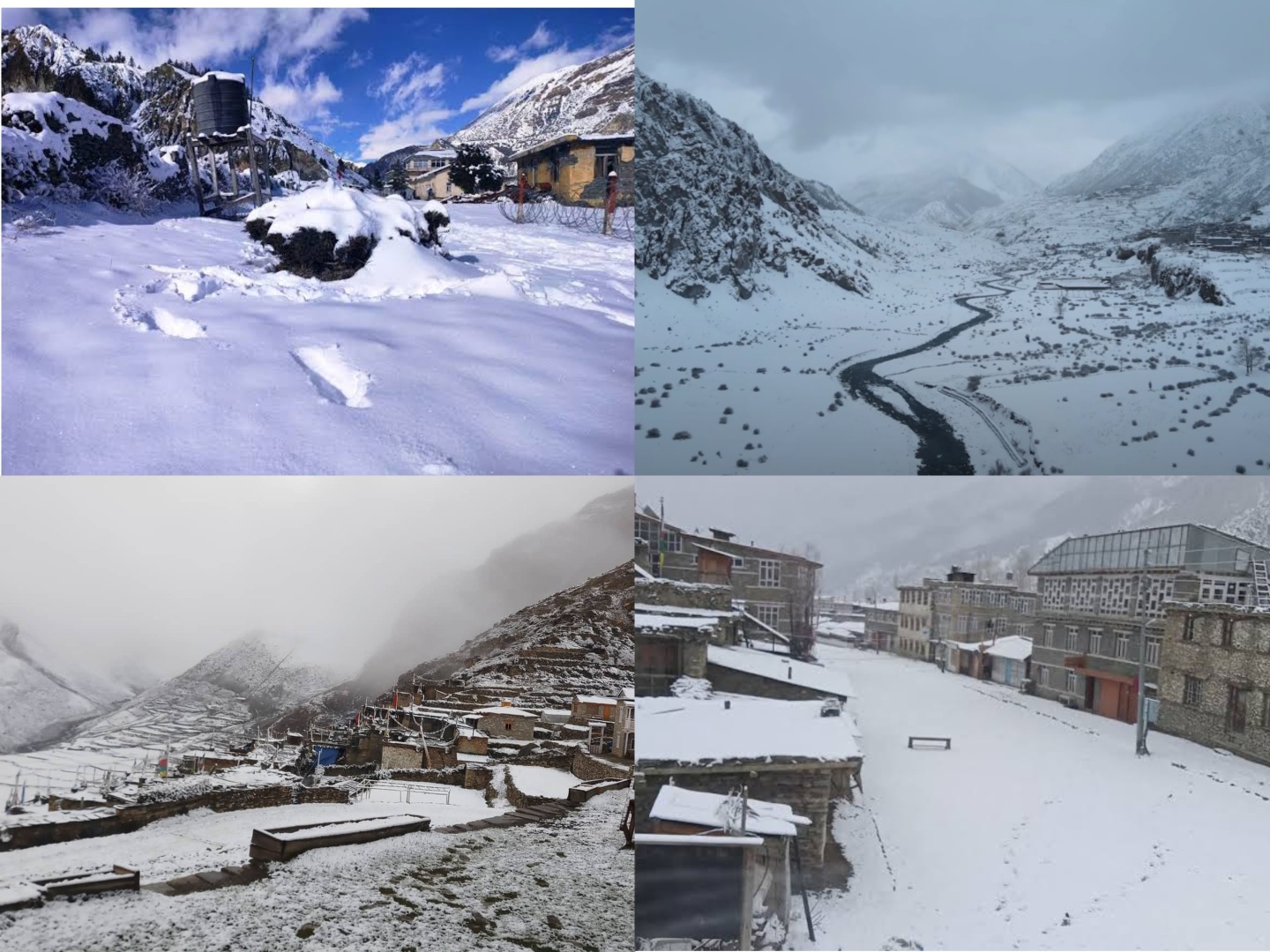
Heavy snowfall has been reported across several Himalayan regions of Nepal, covering high-altitude landscapes in snow as the country’s autumn tourism season gets underway. Videos from the Dhaulagiri region, Gokyo and Dingboche show moderate to heavy snowfall in mountain settlements and surrounding areas. The snowfall comes amid unsettled weather conditions across Nepal, with the Department of Hydrology and Meteorology forecasting heavy to very heavy rainfall in several parts of the country along with snowfall in the high Himalayan areas through September 27. The latest footage shows snow accumulating around mountain settlements and affecting the surrounding landscape, with some areas already experiencing noticeable impacts from the continuing snow fall.
Snowfall Spreads to Tourism Hotspots in Dhaulagiri, Gokyo and Dingboche
The recent snowfall has impacted a number of prominent mountain tourism areas, including Dhaulagiri, Gokyo and Dingboche. The snowfall has transformed the high-altitude landscape as accumulations build around settlements and mountain trails. Footage from Dhaulagiri region recorded by Pemba Sherpa and other videos from Gokyo and Dingboche courtesy of Panorama Resort capture the intensity of snowfall currently impacting these iconic mountain destinations. The significance of this latest round of snowfall is that it comes during the autumn trekking season, with Gokyo and Dingboche being key stopping points along the Everest circuit trek. The Dhaulagiri area, meanwhile, offers challenging high-altitude trekking and climbing opportunities during the autumn months of September and October.

Heavy Rain and Snowfall Forecast for Nepal Amidst Unsettled Weather
The snowfall in Nepal’s high Himalaya is adding to a period of unsettled weather, with the Department of Hydrology and Meteorology issuing heavy to very heavy rainfall warnings for a number of provinces. In particular, heavy to very heavy rainfall was forecast to impact parts of Gandaki and Lumbini. A look at the department’s current website confirms a range of weather and hydrological warnings, with dedicated monitoring for snow fall, landslides and avalanches as well as rainfall and river levels. Authorities and tourism stakeholders are therefore keeping close watch on snowfall impacts, with potential ramifications for trekking trails, mountain passes, road access and remote mountain settlements.
Wintry Weather Adds Drama to Start of Nepal’s Peak Autumn Tourism Season
The recent snowfall in Nepal’s Himalayan regions has provided an added element of drama to this key tourism period in the mountain kingdom. The autumn season has proven a popular period for trekking, climbing and exploring Nepal’s high mountain landscapes. Destinations across the Everest, Annapurna, Manaslu, Dhaulagiri and Himalaya regions draw large numbers of visitors during this period, with trails and villages becoming progressively busier as the months progresses.
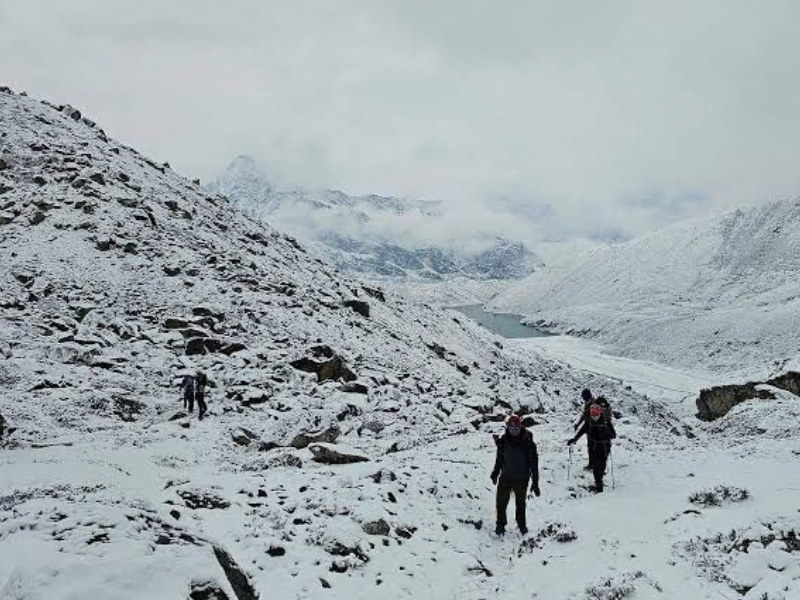
New snowfalls across the mountain regions have the potential to enhance the visual appeal of high altitude areas as trails and ridgelines are picked out in white whilst simultaneously challenging trekkers and climbing teams used to more clement conditions. With snowfall impacting mountain areas this week, it will be interesting to see how conditions evolve during this key tourism period.
The mountain conditions in the Manang region provide a clear example of how fast changing weather patterns can impact high altitude tourism. Local authorities have announced restrictions on trekking in a number of areas from September 25 to 27 due to predicted heavy rainfall and snowfall. The restricted areas include Tilicho Lake, Thorong La Pass, Ice Lake, Kangla Pass and Bhimthang.

Tourism Authorities in Nepal Watch Weather Closely
With unsettled weather set to continue in parts of Nepal’s high mountains, local authorities and tourism stakeholders will be monitoring affairs closely. Both trekking areas and remote settlements are susceptible to changing weather conditions which have the potential to bring disruption to trails and accommodation. As a result it is essential for would-be travellers to ensure they have the latest weather information prior to heading off to remote mountain areas for the autumn season.
The Department of Hydrology and Meteorology has a range of services aimed at forecasting and monitoring weather, aviation, hydrology and issuing warnings for mountain areas of Nepal. In particular, the department keeps a detailed watch on snowfall and avalanche activity which has an impact on trekking routes and climbing routes in the Himalaya. For Nepal’s tourism industry snowfall in the high Himalaya provides welcome wintry scenery across some of the most popular tourist destinations. At the same time this latest spell of unstable weather reminds visitors of the need to remain aware of changing conditions, ensuring they have the latest information prior to heading to remote mountain areas.