The International Air Transport Association (IATA) has called on governments to strengthen the foundations of the Carbon Offsetting and Reduction Scheme for International Aviation (CORSIA) as the global aviation industry marks the 10th anniversary of the International Civil Aviation Organization (ICAO) Assembly resolution that established the landmark climate initiative.
Adopted at the 2016 ICAO Assembly, CORSIA became the first global market-based climate measure designed for an industrial sector. The scheme represented a major step in international aviation’s efforts to reduce its carbon footprint and followed the adoption of the Paris Agreement in 2015. IATA said CORSIA demonstrates what can be achieved through international cooperation on a global environmental challenge and urged governments to ensure its consistent implementation as aviation continues its transition toward net-zero emissions.
CORSIA Participation Expands Globally
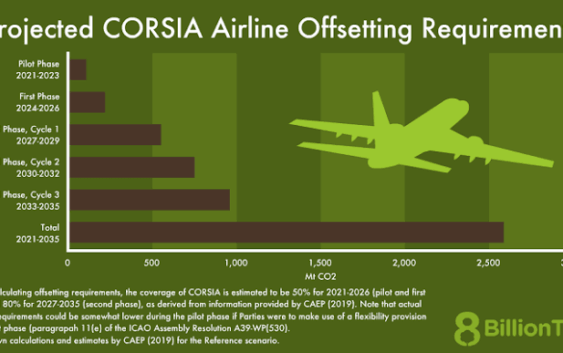
More than 130 countries currently participate in CORSIA, reflecting broad international support for a common framework to address emissions from international aviation. According to IATA, the scheme is expected to have mitigated approximately 200 million tonnes of CO2 by the end of 2026. From 2027, CORSIA is projected to cover approximately 85% of global international aviation emissions.

The association also estimates that CORSIA could mobilize up to $120 billion in climate finance through the end of the scheme. The funds could support emissions-reduction and carbon-removal projects around the world, linking aviation’s climate responsibilities with broader global efforts to reduce greenhouse-gas emissions.
IATA Calls CORSIA a Landmark Climate Achievement
Marie Owens Thomsen, IATA’s Senior Vice President Sustainability and Chief Economist, described CORSIA as an important example of international cooperation. She said the scheme provides a global solution to a global challenge while maintaining a level playing field for international aviation and directing climate finance toward emissions-reduction efforts worldwide.
According to Thomsen, CORSIA’s significance is particularly important at a time when international cooperation is increasingly challenged by fragmentation. She stressed that broad participation, consistent implementation and continued government support could make CORSIA one of the most successful examples of climate action and climate finance in practice.
EU Reviews Aviation Emissions Trading System
The 10th anniversary of CORSIA coincides with the European Union’s review of its Emissions Trading System (EU ETS), which has prompted concerns within the aviation industry over potential overlap between regional carbon-pricing measures and the global CORSIA framework.
The EU is considering proposals that could extend the EU ETS to destinations within 5,000 kilometres of the EU, using Frankfurt as the geographical centre. The proposals also include a mechanism through which comparable carbon-pricing systems could potentially be developed with third countries. IATA has argued that the EU ETS review should strengthen rather than undermine CORSIA’s role as the global framework for international aviation.
IATA Warns Against Overlapping Carbon Systems
Thomas Reynaert, IATA’s Senior Vice President External Affairs, said the EU should focus on reinforcing CORSIA rather than creating overlapping regional or bilateral systems. He argued that Europe’s climate and competitiveness objectives could be better served by directing aviation-related revenues toward Sustainable Aviation Fuels (SAF), infrastructure and emerging aviation technologies, rather than increasing carbon costs without addressing the industry’s underlying energy constraints. IATA has also raised concerns about the absence of an impact assessment examining the potential consequences of expanding the EU ETS for third countries, international connectivity, aviation competitiveness and the operation of CORSIA.
Proposed EU ETS Expansion Could Increase Compliance Costs
According to IATA’s analysis, the proposed expansion of the EU ETS could significantly increase compliance costs for the aviation sector. IATA estimates that extending the scope of the system could increase EU ETS compliance costs by 40% to approximately EUR 280 billion between 2027 and 2040. The association argues that policymakers should carefully consider the potential effects on international aviation and third countries before introducing measures that could overlap with the existing global framework.
IATA Calls for Stronger CORSIA Implementation
As part of its recommendations to European policymakers, IATA has called for the EU ETS review to reinforce CORSIA as the unified global framework for international aviation. The association is urging the EU to ensure the full and unified implementation of CORSIA for international aviation rather than extending the EU ETS extraterritorially.
IATA has also called for the removal of the proposed “EU ETS as a Service” mechanism, arguing that it could encourage the development of parallel regional or bilateral carbon-pricing systems alongside CORSIA. According to IATA, maintaining a single, globally coordinated framework would reduce regulatory fragmentation and provide greater certainty for airlines and governments.
Greater Support Sought for Sustainable Aviation Fuel
IATA has also urged the EU to strengthen mechanisms supporting the production and deployment of Sustainable Aviation Fuel, which is considered one of the key tools available to aviation in reducing its carbon emissions. The association has called for stronger support through the SAF allowances mechanism, with increased assistance available immediately rather than beginning only from 2029. It has also urged policymakers to remove geographical production restrictions and additional conditions that could limit support for SAF production pathways that already meet required sustainability standards.

Aviation Revenues Should Support Green Technologies
IATA further recommends that aviation-generated revenues from the EU ETS be ringfenced for investment in SAF production, infrastructure and emerging aviation technologies. The association believes such an approach could help address the aviation sector’s long-term energy and technology challenges while supporting Europe’s competitiveness, resilience and energy security. Redirecting revenues toward decarbonization, rather than simply increasing the cost burden on airlines, could accelerate the development and deployment of technologies needed for aviation’s long-term transition.
IATA Shares Recommendations With European Policymakers
IATA said its revised analysis and recommendations have been shared with European policymakers as part of the ongoing legislative review of the EU ETS. The association continues to advocate for international coordination on aviation climate policy, arguing that a globally consistent approach would provide greater certainty for airlines while supporting meaningful emissions reductions.
As CORSIA enters its second decade, IATA is urging governments to maintain the momentum generated by the 2016 agreement and ensure that the global aviation industry can pursue decarbonization through coordinated international action. The association’s position centres on strengthening CORSIA, accelerating SAF production, investing in aviation infrastructure and emerging technologies, and avoiding fragmented carbon-pricing regimes that could undermine the effectiveness of a global approach to aviation decarbonization.