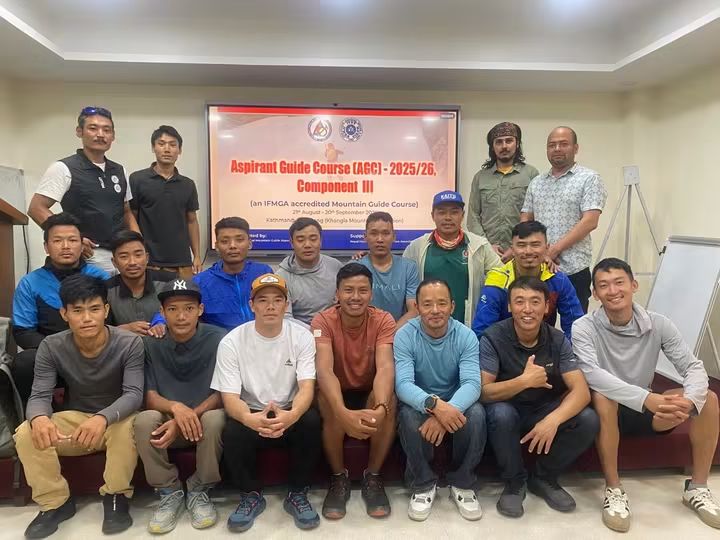
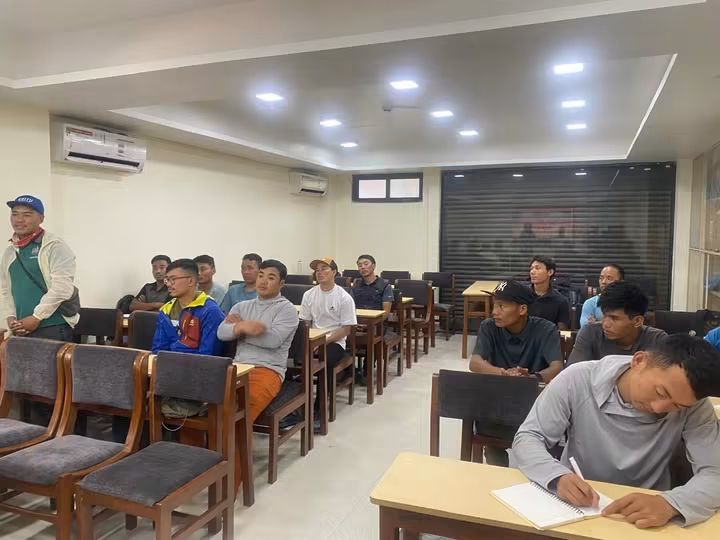
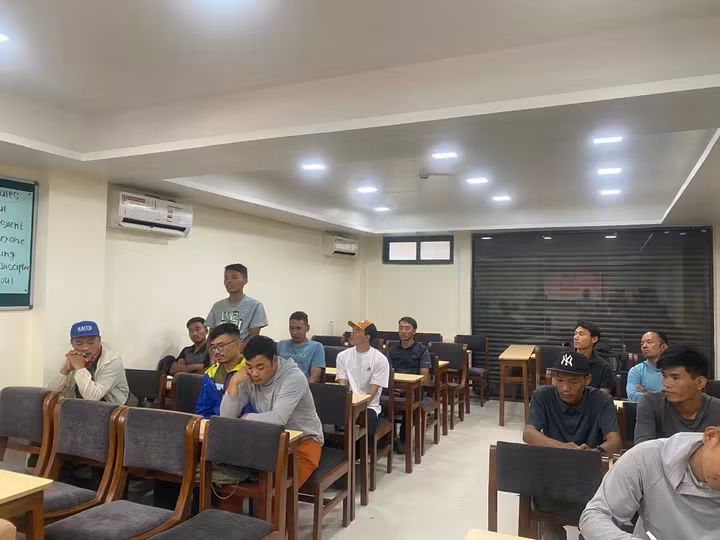
The IFMGA-accredited Aspirant Guide Course (AGC) 2025/26, Component III has officially commenced with an orientation session and the first theory class at the training hall of the Nepal Mountaineering Association (NMA).
The 22-day training program is being organized by the Nepal National Mountain Guide Association (NNMGA) to further develop the technical knowledge and practical skills of aspiring mountain guides. The third component of the course will be conducted in and around the Kathmandu Valley as well as at Kangla Pass in Manang.
A total of 15 trainees who have successfully completed the previous components of the Aspirant Guide Course are participating in the latest phase.
Course Begins with Mountain History and Geography
The training opened with an orientation session followed by a theory class on Mountain History and Geography, conducted by course expert Anish Dahal.
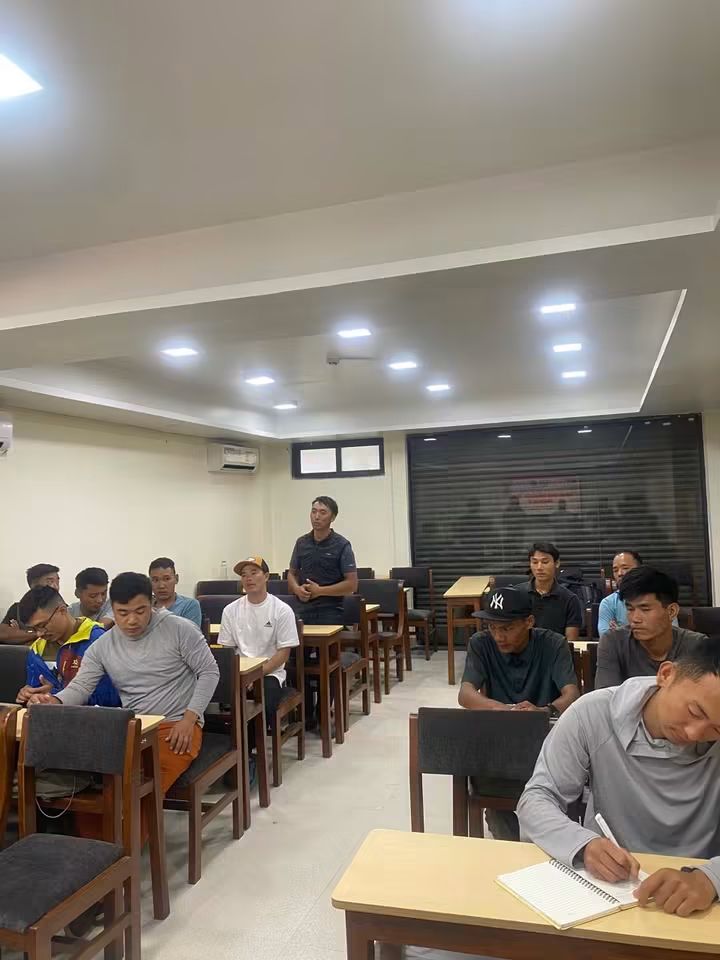
During the orientation, Riten Jangbu Sherpa (Tashi), Technical Committee Co-Convener of NNMGA and Education Chief of the course, briefed participants on the curriculum, training schedule, examination system and evaluation procedures.
The orientation provided trainees with an overview of the intensive training they will undertake during the 22-day program, including both classroom-based learning and field-based practical exercises.
Focus on Advanced Mountain Guiding Skills
The course has been designed to provide participants with advanced technical and practical knowledge required for professional mountain guiding and mountaineering.
Throughout the training, participants will receive instruction in glacier travel, technical ice climbing and crevasse rescue, along with techniques required for guiding on alpine peaks.
The practical component will also cover complex rock routes using short-rope techniques and rock climbing while wearing mountaineering boots. These skills are intended to strengthen trainees’ ability to manage challenging mountain environments and safely guide clients in technical terrain.
Experienced instructors and course experts will provide training and practical guidance throughout the program.
Training to Combine Theory and Field Practice
Unlike classroom-only training, the AGC Component III combines theoretical education with practical field exercises. The training locations in the Kathmandu Valley and Kangla Pass in Manang will provide participants with opportunities to apply technical knowledge in real mountain environments.
The practical sessions are expected to help trainees improve decision-making, technical climbing ability, rescue skills and mountain safety practices while operating in challenging terrain.
The comprehensive training is part of the professional development pathway for aspiring mountain guides seeking to advance their qualifications under an IFMGA-accredited training framework.
NNMGA Leads Training with Support from NMIA and NMA
The Aspirant Guide Course is being conducted by the Nepal National Mountain Guide Association (NNMGA) with support from the Nepal Mountaineering Instructors Association (NMIA).
The organizers have also expressed appreciation to the Nepal Mountaineering Association (NMA) for providing a spacious and well-equipped training hall for the theory sessions.
The latest component of the course is expected to contribute to the development of technically skilled and professionally trained mountain guides, further strengthening Nepal’s reputation in the international mountain tourism and guiding sector.