Emirates has completed the roll out of its Travel Rehearsal program across all eight UK airports it serves, expanding an initiative designed to help passengers with autism and other accessibility requirements feel more prepared and confident about flying.
The program allows participants to experience key stages of an airport journey before taking an actual flight, giving them the opportunity to become familiar with airport surroundings, procedures and interactions that can otherwise be unfamiliar or overwhelming. The latest expansion covers Emirates’ entire UK airport network, marking an important development in the airline’s efforts to make international travel more inclusive and accessible for a wider range of passengers.

Rehearsing the journey before taking a flight
The Travel Rehearsal program is built around a straightforward but significant principle: familiarity can make travel easier. For some passengers with autism or other accessibility requirements, an airport can present a series of unfamiliar experiences, including large crowds, security screening, announcements, queues, changes in routine and multiple stages of interaction with airline and airport personnel.
Rather than asking travelers to navigate these situations for the first time on the day of their trip, Emirates’ program provides an opportunity to practise the journey beforehand in a supportive setting. Participants can see where they need to go, understand what procedures involve and become more comfortable with the sequence of events from arrival at the airport through to departure and the subsequent arrival process.
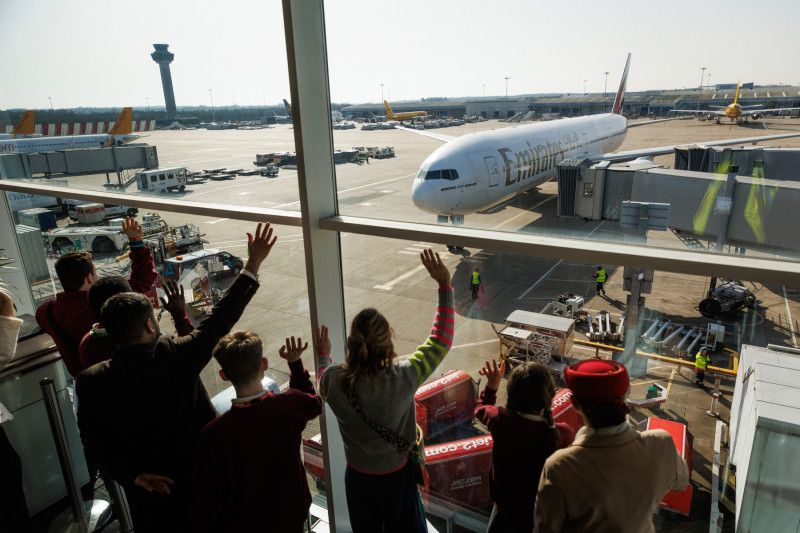
The sessions cover a broad section of the passenger journey rather than focusing on a single stage of airport travel. Participants are guided through check in, security procedures and the departure lounge, allowing them to understand how the airport experience develops before a flight.
The program also introduces the arrival side of an international journey, including immigration and passport control, baggage collection and the arrivals meet-and-greet process. Having the opportunity to experience these procedures in advance can be particularly valuable for families, as it gives both passengers and accompanying relatives a clearer idea of what to expect and how the journey will unfold.
All eight Emirates UK airports now covered
The latest sessions have extended the program to every UK airport from which Emirates operates, including London Stansted, London Heathrow, London Gatwick, Birmingham, Newcastle, Manchester, Glasgow and Edinburgh.
This means the initiative now reaches Emirates passengers across the airline’s complete UK gateway network, from Scotland to London. More than 90 participants have taken part in the UK Travel Rehearsal sessions so far, with Emirates working alongside special-needs schools and Additional Support Needs groups to organize the experiences and reach families who could benefit from additional preparation before travelling.
The sessions have involved cooperation between airline personnel and airport teams at all eight locations. Staff have accompanied participants through the different stages of the journey, helping them understand airport procedures while providing reassurance and practical guidance.
This cooperation is particularly important because accessibility does not depend solely on an airline’s cabin service; passengers interact with numerous airport facilities and employees before boarding and after landing. By involving staff across the airport journey, Emirates is attempting to create a more consistent experience for travelers who may require additional assistance or reassurance.
Accessibility becomes an increasingly important part of tourism
The expansion also reflects a broader development within the international travel industry, where accessible and inclusive tourism is increasingly being recognized as an essential part of the passenger experience.
Travelling for a holiday, visiting relatives or taking an international trip can involve considerable preparation for any passenger, but the challenges can be significantly greater for people who find unfamiliar environments, sensory stimulation or changes in routine particularly difficult.
For families travelling with autistic passengers, concerns about airport procedures and the unpredictability of the journey can influence whether they feel comfortable making a trip at all.
Programs such as Travel Rehearsal can therefore have implications beyond the airport itself. By helping passengers become more familiar with the process of flying, airlines can contribute to reducing barriers that may discourage some people from participating in international tourism.
Accessible tourism is not limited to wheelchair access or physical infrastructure; it also encompasses the ability of travelers with different cognitive, sensory and developmental needs to navigate the travel experience with dignity, confidence and appropriate support. Emirates’ initiative addresses this less visible dimension of accessibility by focusing on preparation, communication and familiarity.
More than 35,000 Emirates employees receive autism training
Emirates has also invested in employee training as part of its wider accessibility strategy. The airline says it became the world’s first Autism Certified Airline, with more than 35,000 cabin crew and ground staff completing specialized autism awareness training.
The training covers the autism spectrum, common misconceptions, challenges that passengers may encounter during travel and approaches for providing support according to individual passenger needs. This is intended to ensure that accessibility support is not limited to a particular program or airport but is also reflected in the way passengers are assisted during their regular journeys.
For travelers requiring additional support, the role of trained employees can be just as important as the physical facilities available at an airport. A crowded terminal, unfamiliar procedure or unexpected change can become considerably easier to manage when staff understand the passenger’s needs and know how to respond appropriately.
Emirates’ combination of specialized employee training and practical Travel Rehearsal sessions therefore provides two complementary forms of support: helping travelers understand what to expect while also preparing staff to better understand the people they are assisting.
The initiative has expanded across the airline’s global network
The UK program is part of a much larger international effort by Emirates. Since April 2025, the airline’s Airport Services teams have organized more than 40 Travel Rehearsal sessions involving over 250 families at airports across its network.
The program has reached destinations including Accra, Antananarivo, Athens, Bali, Bangalore, Barcelona, Bologna, Brussels, Cairo, Cebu, Christchurch, Da Nang, Delhi, Dubai, Dublin, Durban, Düsseldorf, Edinburgh, Glasgow, Guangzhou, Hanoi, Harare, Hong Kong, Istanbul, London, Luanda, Lusaka, Madrid, Male, Mauritius, Milan, Newcastle, Nice, Orlando, Oslo, Paris, Pampanga, Peshawar, Port Louis, Rome, Stansted, Stockholm, Sydney, Toronto, Trivandrum, Venice and Vienna.
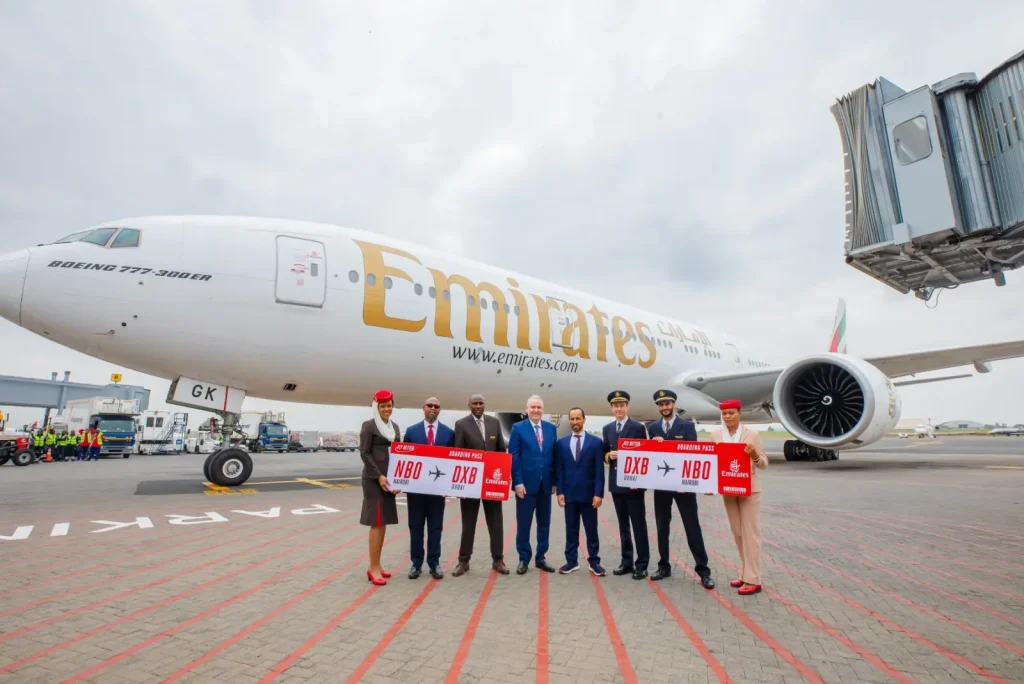
The international reach of the program is significant because Emirates operates a large global network connecting travelers across numerous regions and tourism markets. By introducing accessibility initiatives at multiple international gateways, the airline can potentially make the experience of travelling between different countries less daunting for passengers who benefit from advance preparation.
It also highlights the growing importance of considering accessibility throughout the entire international travel chain, particularly as tourism becomes increasingly focused on serving travelers with diverse needs.
Emirates plans to continue supporting accessible travel
Jabr Al-Azeeby, Emirates’ divisional vice president for the UK, said the airline was proud to have brought the program to all of its UK gateways, from Scotland to London. He also credited the airline’s Airport Services teams for organizing and hosting the experiences and said feedback from participating families had been positive.
According to Emirates, the program is intended to help remove some of the “invisible barriers” that people with accessibility requirements can encounter when travelling, while giving families greater confidence to undertake journeys that might otherwise feel difficult to manage.
Emirates said it intends to continue the Travel Rehearsal program across its UK airports and support more people who want to travel. The expansion comes at a time when accessibility is becoming an increasingly important consideration for airlines, airports and the wider tourism sector.
For many travelers, the ability to reach a destination is only one part of a successful trip; feeling safe, understood and adequately supported throughout the journey can be equally important.
A wider push towards inclusive tourism
The completion of the UK rollout positions Emirates’ Travel Rehearsal program as part of a broader movement towards more inclusive international tourism, in which travel providers recognize that passengers have different needs and may require different forms of assistance.

By giving travelers the opportunity to experience airport procedures before their actual journey, the program seeks to turn an unfamiliar and potentially stressful process into one that is more predictable and manageable. For participating families, that preparation can mean greater confidence when planning holidays, visiting relatives or undertaking other forms of international travel.
The significance of the initiative therefore extends beyond Emirates’ individual operations. As airlines, airports and tourism businesses continue to focus on improving the passenger experience, accessibility is increasingly becoming a measure of how inclusive the travel industry really is.
Emirates’ expansion across all eight UK gateways, combined with its global Travel Rehearsal program and extensive autism-awareness training, represents a practical effort to address the challenges faced by travelers who have historically found parts of the international travel experience difficult to navigate.