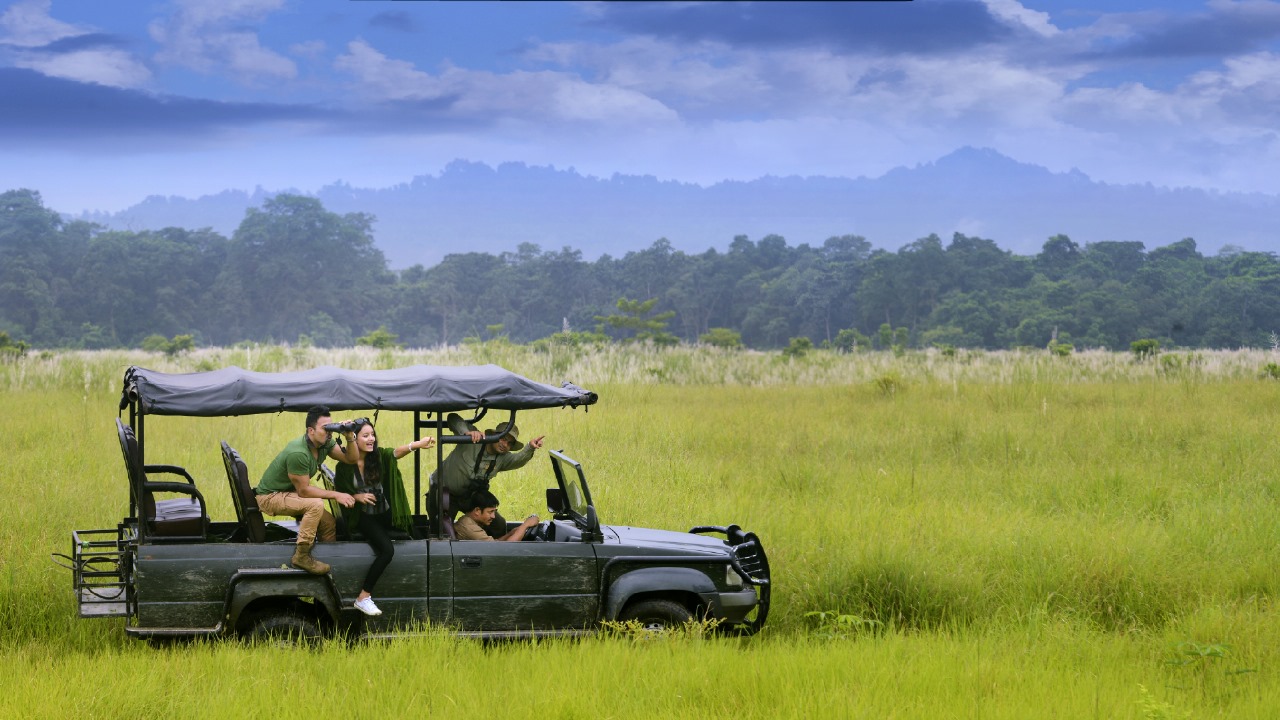
After more than three months of closure, Chitwan National Park (CNP) has officially reopened its popular jeep safari service from today. The park had suspended safari operations since June 30 (Ashadh 16) due to the monsoon season, when heavy rainfall significantly damages forest trails. During this period, muddy roads, swollen streams, landslides, and fallen trees often make travel unsafe for both visitors and staff. The park authority had cited risks of human casualties and infrastructure damage as the main reasons behind the temporary suspension.
According to park officials, the closure was necessary not only to ensure safety but also to allow time for maintenance. The jungle roads often deteriorate during continuous rainfall, while floods and landslides create obstacles that make it impossible for jeeps to pass through.

Official Reopening and Permission
Park Information Officer Abinash Thapa Magar informed that as of today, official permission has been granted for jeep safari operations. Only those jeeps that were registered and operated last year have been allowed to renew their licenses and resume activity inside the protected area.
To ensure safety and comfort, jeeps that had been in poor condition have undergone repair and maintenance before being brought back into service. The park authority had already started clearing bushes and repairing roads from early September to prepare for the reopening. With this, safari tours are expected to once again offer visitors the chance to explore the rich biodiversity of Chitwan.
Distribution of Jeeps From Different Entry Points
Currently, jeeps from various entry points around the national park have been permitted to operate. From Sauraha, the main gateway for domestic and international tourists, 32 jeeps have been registered for safari tours. From Kasara, the park’s headquarters, 16 jeeps are in operation. Similarly, Meghauli has nine jeeps, Ujjoli has two, Amaltari has five, and Madi has one jeep designated for safari purposes.
This distribution ensures that tourists entering the park from different locations can access safari facilities conveniently. The park management hopes this will also help balance the tourist flow and reduce pressure on any single entry point.
Safari as a Major Attraction
Jeep safari is one of the most popular activities for visitors to Chitwan National Park. The park, a UNESCO World Heritage Site, is home to endangered species such as the one-horned rhinoceros, Bengal tiger, Asian elephant, and gharial crocodile, along with over 500 species of birds. The safari provides tourists with the opportunity to experience the park’s diverse landscapes, ranging from dense sal forests and grasslands to riverine habitats.
Every year, thousands of visitors, both Nepali and foreign, participate in jeep safaris to catch a glimpse of these rare animals in their natural environment. The reopening of jeep safaris, therefore, is expected to significantly boost tourist arrivals in Chitwan, particularly during the festive season when domestic travel also increases.
Maintenance and Safety Preparedness
In preparation for the reopening, the park authority had undertaken extensive road maintenance, including clearing debris, repairing bridges, and cutting back thick vegetation that had grown during the monsoon. Jeep operators were instructed to ensure their vehicles were in proper working condition to minimize the chances of breakdowns or accidents inside the park.
The park has also strengthened its monitoring system to ensure compliance with safety guidelines. Rangers and security personnel will patrol safari routes to address any emergencies and prevent illegal activities such as poaching.
Economic Significance for Local Communities
The resumption of jeep safaris is not only important for tourists but also for the local communities that rely heavily on tourism for their livelihood. Jeep owners, drivers, guides, and small businesses such as hotels, restaurants, and souvenir shops all benefit from the influx of visitors drawn by safari experiences.
In Sauraha and surrounding areas, many families depend on safari tourism as their main source of income. The months-long suspension had adversely affected their earnings, making today’s reopening a welcome relief. With the return of jeep safaris, local tourism entrepreneurs are optimistic about recovering the losses incurred during the monsoon break.
Challenges and Future Plans
Despite the reopening, challenges remain. Heavy rainfall can still affect certain areas, and wildlife movement patterns can sometimes disrupt safari routes. The park administration is working on improving infrastructure to make safaris more resilient to seasonal changes.
Long-term plans include introducing stricter vehicle standards, promoting eco-friendly practices, and possibly regulating the number of jeeps allowed daily to reduce environmental impact. Conservation remains the park’s top priority, and safari operations will continue to balance tourism promotion with ecological protection.

A Boost for Nepal’s Tourism Sector
The reopening of jeep safaris at Chitwan comes at a crucial time for Nepal’s tourism industry, which is gradually recovering after the global slowdown of recent years. Adventure and wildlife tourism remain among the most attractive segments for international visitors. By resuming safari services, Chitwan National Park has once again positioned itself as a key destination for both domestic and foreign travelers.
With its combination of natural wonders, cultural experiences, and thrilling wildlife encounters, the park is expected to draw increased attention in the coming months. The resumption of jeep safaris marks the start of a new tourist season, filled with renewed hope for conservation, community development, and sustainable tourism growth.