The sacred pilgrimage season to Kailash Mansarovar has arrived in full force in the remote Himalayan district of Humla, with more than 3,700 Indian religious pilgrims already having passed through Simikot Airport en route to one of Hinduism’s most revered destinations. As the pilgrimage season gains momentum with each passing week, the once-quiet mountain district is buzzing with activity, from a packed airport and fully booked hotels to busy porters, thriving local businesses, and a sky filled with the constant hum of aircraft and helicopters ferrying devotees toward the sacred peaks and waters that lie beyond the Nepal-China border.
Over 3,780 Indian Pilgrims Have Arrived in Humla So Far for the Kailash Mansarovar Trek
According to Police Inspector Bishnu Shrestha of the District Police Office, a total of 3,780 Indian pilgrims have so far entered Humla district through Simikot, travelling onward via Hilsa to Taklakot in China before proceeding to Kailash Mansarovar. The current pilgrimage heading to Kailash Mansarovar season began on Baisakh 30 (approximately mid-May) of this year, and the numbers have been climbing steadily ever since as more and more Indian devotees make the long and arduous journey to seek the blessings of this supremely sacred Himalayan destination.

Of the total arrivals recorded so far, 1,892 are women, and 1,888 are men, a remarkably balanced gender split that reflects the deep and universal appeal of the Kailash Mansarovar pilgrimage across all sections of India’s Hindu community. Inspector Shrestha confirmed that between 80 and 200 Indian pilgrims are arriving in Humla by air every single day during the peak pilgrimage season, creating a continuous and substantial flow of visitors through Simikot that is transforming the character and economy of the entire district during these months.
Simikot Airport: The Gateway to the Sacred Journey
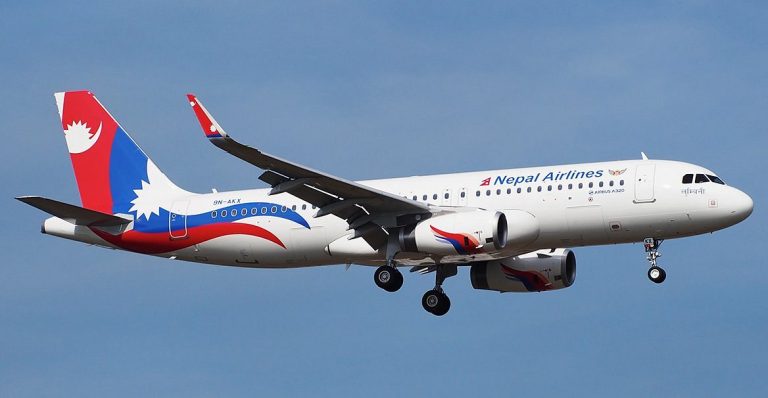
Simikot Airport, the sole air gateway to the remote district of Humla and the primary entry point for Indian pilgrims undertaking the Nepal route to Kailash Mansarovar, has been transformed into one of Nepal’s busiest and most activity-filled small airports during the pilgrimage season. Mahendra Singh, Chief of the Civil Aviation Authority of Nepal’s Simikot Branch, confirmed that six private airline companies are currently operating a total of six daily flights on the Nepalgunj-Simikot route, with services running continuously from 7:00 AM until late in the evening to accommodate the high and sustained demand for seats.
The airlines currently operating on this vital pilgrimage route include Tara Air with one flight, Sita Air with two flights, and Summit Air with three flights, a combined operational capacity that reflects the significant and growing commercial importance of the Kailash Mansarovar pilgrimage traffic for Nepal’s domestic aviation sector. The volume of traffic at Simikot Airport has become so significant during peak pilgrimage days that Chief District Officer Tek Kumar Regmi noted that the airport occasionally experiences what can only be described as a traffic jam, an extraordinary situation for a remote mountain airstrip that underlines the scale of the pilgrimage influx.

Six Helicopters Shuttle Pilgrims Between Simikot and Hilsa
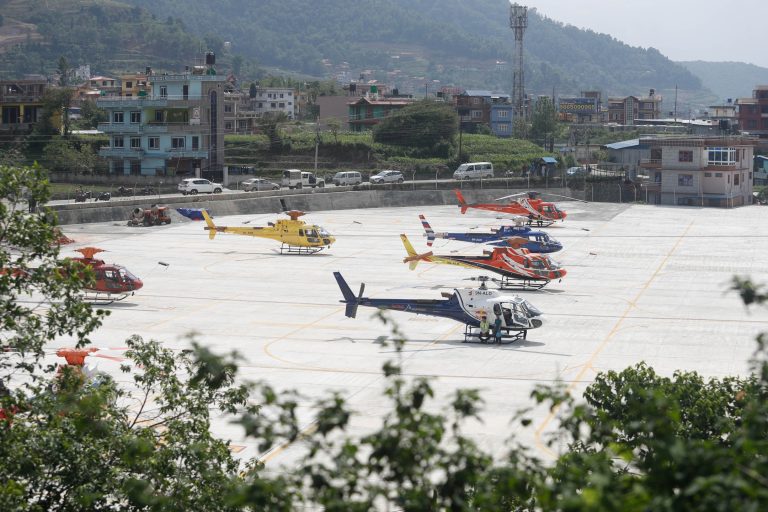
Once pilgrims arrive at Simikot by fixed-wing aircraft from Nepalgunj, the onward journey to the Nepal-China border at Hilsa is made by helicopter, the only practical means of covering the rugged mountain terrain between Simikot and the border crossing in a reasonable time. Civil Aviation Authority Chief Mahendra Singh confirmed that six helicopters from six different companies are currently operating regular flights between Simikot Airport and Hilsa, with operations running from as early as 6:30 AM in the morning until 7:00 PM in the evening to maximise the number of pilgrims that can be transported each day.
The combination of fixed-wing aircraft bringing pilgrims in from Nepalgunj and helicopters shuttling them onward to Hilsa has created a remarkably efficient and high-capacity air transport corridor that is the logistical backbone of the entire Kailash Mansarovar pilgrimage operation through Nepal. The bustle of activity at Simikot Airport, with aircraft arriving and departing throughout the day and helicopters constantly ferrying pilgrims to and from Hilsa, is mirrored by a similar energy at the Hilsa border area itself, where the movement of pilgrims crossing into China creates a lively and spiritually charged atmosphere at one of Nepal’s most remote international border crossings.
Hotels and Guesthouses Packed to Capacity
The dramatic surge in pilgrim arrivals has had an immediate and highly visible impact on Humla’s hospitality sector, with hotels and guesthouses in Simikot as well as accommodation facilities in the vicinity of Kailash and Mansarovar running at full or near-full capacity throughout the pilgrimage season. Hotel operators in the district have reported significant and noteworthy improvements in their income compared to the off-season, with the concentrated two-month window of pilgrimage activity providing a crucial economic lifeline for businesses that depend heavily on seasonal tourism revenue.
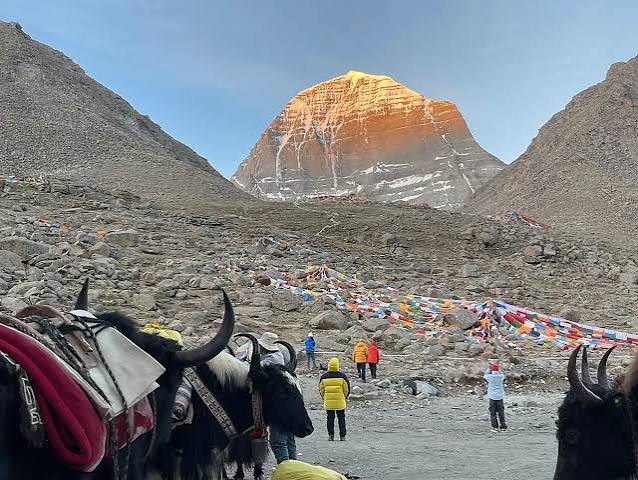
The overflow of pilgrims to Kailash Mansarovar and the associated economic activity extends well beyond Simikot itself to the border area of Hilsa, where hotel operators and porters are similarly experiencing a marked increase in business and earnings. The pilgrimage season has essentially transformed the economic landscape of both Simikot and Hilsa for its duration, injecting substantial spending into the local economy at every point along the pilgrimage corridor.
Porters, Farmers, and Local Communities Benefit on the Route to Kailash Mansarovar
The economic benefits of the Kailash Mansarovar pilgrimage season extend well beyond the hotel and aviation sectors to touch the lives of a wide range of local community members whose livelihoods are directly or indirectly connected to the flow of pilgrims through Humla. More than 30 porters are currently employed full-time carrying the luggage and equipment of pilgrims of Kailash Mansarovar from Simikot Airport to the town’s hotels, a simple but vital service that provides meaningful income for local men and women during the pilgrimage months.
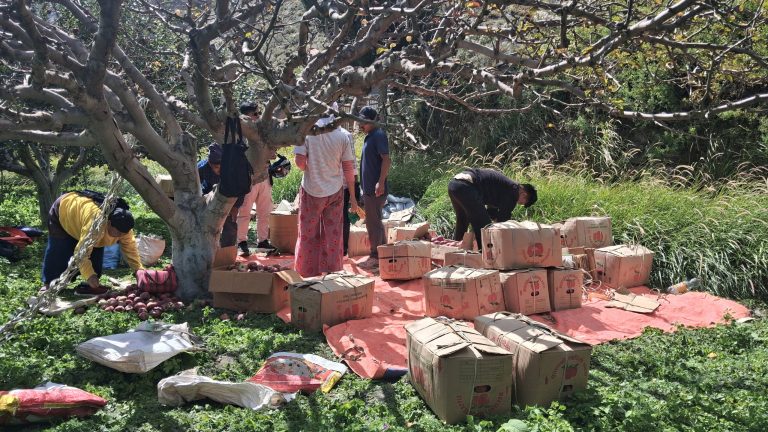
Perhaps most significantly, the surge in pilgrim arrivals has created a new and valuable market for locally produced agricultural products from Simikot, with the town’s farms and gardens now able to sell their fresh produce directly to the hotels and guesthouses catering to the steady stream of pilgrims.

This development is particularly meaningful in a district as remote and economically marginalised as Humla, where access to markets for agricultural products has historically been one of the most significant barriers to rural economic development. The pilgrimage season is, in this sense, acting as a powerful catalyst for broader local economic development, connecting Humla’s farmers and producers to a reliable and paying market that would not exist without the flow of pilgrims through the district.
Chief District Officer Highlights Unprecedented Activity
Chief District Officer Tek Kumar Regmi described the current level of activity at Simikot Airport and across the district as unprecedented, noting that the arrival of Indian pilgrims in such significant and sustained numbers since the start of the pilgrimage season has fundamentally transformed the atmosphere and pace of life in Simikot from morning until evening. He highlighted the logistical complexity of managing such high volumes of pilgrim traffic through a remote mountain district with limited infrastructure, while also welcoming the substantial economic benefits that the pilgrimage season brings to Humla’s communities.
CDO Regmi confirmed that helicopter operations to Hilsa begin at 6:30 AM each morning and continue throughout the day, a schedule driven entirely by the need to move as many pilgrims as possible across the challenging mountain terrain between Simikot and the Chinese border within the limited operational window each day. The coordination required between fixed-wing aircraft operations at Simikot Airport and helicopter shuttle services to Hilsa represents a significant logistical achievement for a district that lies at the very edge of Nepal’s transportation network.

A Sacred Journey to Kailash Mansarovar That Transforms Lives and Local Economies
The Kailash Mansarovar pilgrimage through Humla’s Simikot-Hilsa corridor is far more than a religious journey for the tens of thousands of Indian devotees who undertake it each year. For the people of Humla, it is the economic heartbeat of the year, a concentrated period of intense activity and income generation that sustains hotels, airlines, helicopter operators, porters, farmers, shopkeepers, and countless other members of the local community.
The pilgrimage season’s ability to generate economic activity and community prosperity in one of Nepal’s most remote and least developed districts makes it not just a spiritual phenomenon but a powerful force for sustainable local development. As the 2026 pilgrimage season continues to build momentum with pilgrim numbers already exceeding 3,780 and daily arrivals showing no sign of slowing, Humla district and its communities are experiencing one of their most economically vibrant and spiritually charged seasons in recent memory, a testament to the enduring power of faith and devotion to move not just the human heart, but entire mountain economies.