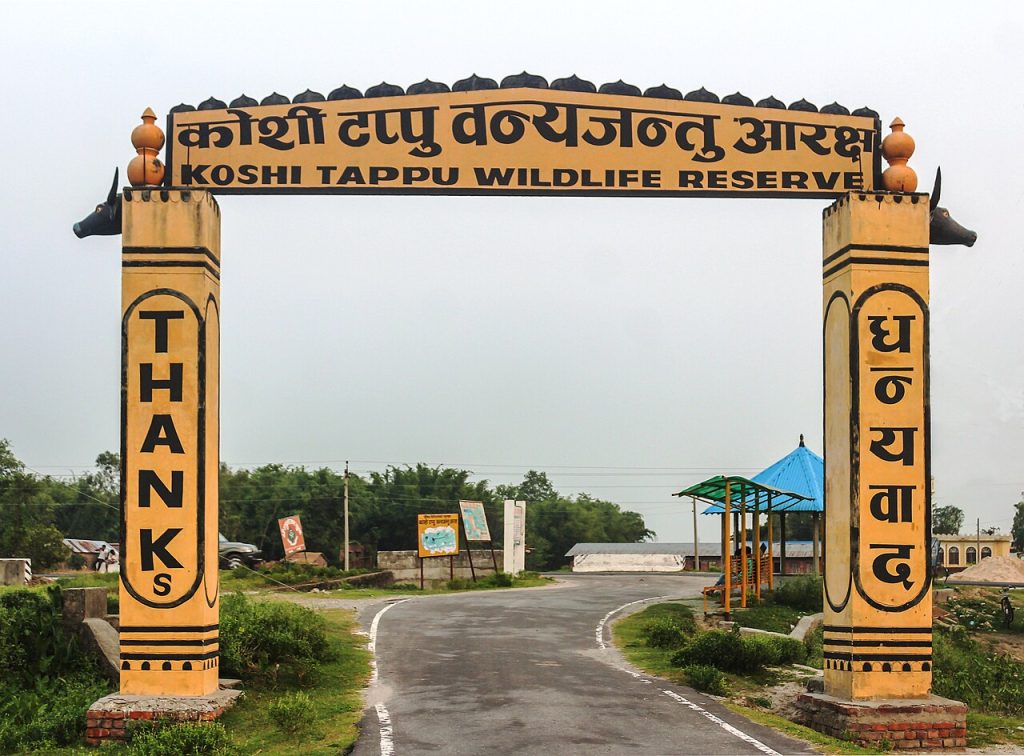
Known for its rare wild buffaloes, diverse birdlife and rich wetland ecosystem, Koshi Tappu Wildlife Reserve is increasingly emerging as an attractive destination for both domestic and international tourists. Located across Sunsari, Saptari and Udayapur districts, the protected area offers opportunities for wildlife watching, birdwatching, photography, nature-based tourism and ecotourism.
A Wetland of International Importance
Established in 1976, Koshi Tappu Wildlife Reserve initially covered an area of 175 square kilometers. Following the addition of a buffer zone in 2004, the reserve currently covers approximately 173 square kilometers. Situated around the islands and floodplains created by the Sapta Koshi River, the reserve is particularly famous as the main natural habitat of Nepal’s wild water buffalo, locally known as Arna. The area also contains sandy river islands, forests dominated by sissoo and khair, extensive grasslands and important habitats for migratory birds. Koshi Tappu was listed as a Ramsar wetland of international importance in 1987, highlighting its ecological significance.

A Paradise for Birdwatchers
Koshi Tappu is widely regarded as one of Nepal’s most important birdwatching destinations because of its remarkable diversity of resident and migratory birds. The reserve provides a major resting and feeding ground for migratory birds arriving from Siberia, China, Mongolia and Central Asia during winter. According to bird expert Anish Timalsina, Koshi Tappu serves as an important stopover for birds traveling from the Northern Hemisphere. He described the reserve metaphorically as an “international airport” for migratory birds in Nepal, where birds spend several months during winter before returning to their breeding destinations as temperatures rise. The reserve is also home to the critically rare Bengal florican, locally known as Khar Mayur. A 2023 census recorded 32 Bengal floricans in the area.
Home of Nepal’s Wild Buffalo
The wild water buffalo is the most prominent attraction of Koshi Tappu. The reserve is considered the primary habitat of the only naturally occurring population of wild buffalo in Nepal. The population has increased significantly over the decades. According to reserve officials, only 63 wild buffaloes were recorded in 1976, while the number reached 498 in the 2021 census. The reserve’s extensive grasslands provide ideal habitat for wild buffaloes, which also play an important ecological role by grazing vegetation, dispersing seeds and helping maintain open grassland ecosystems.
Rich Wildlife and Aquatic Life
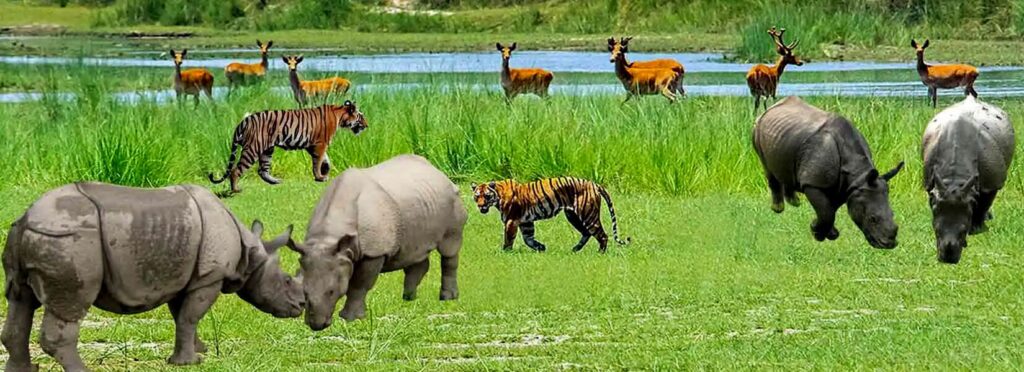
Koshi Tappu supports a remarkable range of wildlife and aquatic species. The reserve is home to 42 species of mammals, 535 species of birds, 141 species of fish and 77 species of butterflies. Among its other wildlife are wild elephants, one-horned rhinoceroses, nilgai, spotted deer, barking deer, fishing cats, gharials, mugger crocodiles, pythons and monitor lizards. The reserve also provides habitat for aquatic species including Ganges river dolphins, with 19 dolphins recorded during the 2022 census. Gharials, mugger crocodiles and numerous fish species further add to the ecological diversity of the Sapta Koshi river system.
Tourism Numbers Show Growing Interest
The growing popularity of Koshi Tappu is reflected in visitor numbers. According to the reserve office, 11,603 tourists visited Koshi Tappu during fiscal year 2024/25 (2081/82). Of them, 11,214 were domestic visitors, 87 came from SAARC countries, and 302 were visitors from other countries. The visitor breakdown included 5,924 women and 5,679 men. February recorded the highest number of visitors, with 1,693 tourists, followed by March with 1,624 and January with 1,457. The monthly visitor figures were:
- February – 1,693
- March – 1,624
- January – 1,457
- June – 1,353
- April – 1,226
- November – 1,075
- October – 1,088
- December – 1,066
- May – 722
- September – 685
- August – 420
- July – 194
More Than 9,000 Visitors in the Current Fiscal Year
Koshi Tappu has continued to attract visitors during the current fiscal year 2025/26. By the end of May, 9,242 tourists had already visited the reserve. Visitor numbers included 496 in July, 547 in August, 325 in September, 591 in October, 1,893 in November, 642 in December, 1,499 in January, 697 in February, 691 in March, 791 in April and 1,070 in May. The figures indicate continued domestic interest in nature-based destinations, particularly during months favorable for wildlife and bird observation.
Nature-Based Tourism Opportunities
With its combination of wildlife, wetlands, grasslands and river landscapes, Koshi Tappu has strong potential for expanding wildlife tourism, birdwatching, nature photography and ecotourism. Ranger Ankit Paudel said Nepal’s distinctive biodiversity across the Himalayas, hills and Tarai, along with endangered wildlife, aquatic species and birds, has helped position the country as an attractive destination for nature lovers, researchers and tourists. For visitors, the reserve offers opportunities to observe wildlife in natural surroundings while experiencing the landscape formed by the Sapta Koshi River.
Tourism Beyond Wildlife
The tourism experience around Koshi Tappu is not limited to wildlife observation. Local communities believe the region’s river system, biodiversity and traditional culture could be developed into broader tourism products. Jungle safaris, nature walks, birdwatching, photography, rural experiences and opportunities to experience local food and culture are among the activities that could be promoted. Local hotel entrepreneur Lok Bahadur Magar said interest in jungle safaris, nature walks and cultural experiences has been increasing. He suggested that well-managed homestays could further encourage visitors to stay longer and experience local lifestyles, traditional food and culture.
Visitors Find the Reserve an Attractive Getaway
Domestic tourists are also increasingly visiting Koshi Tappu for short recreational trips. Sarita Shrestha, who visited the reserve with friends from Itahari, said the area’s natural scenery, birdwatching opportunities and chances to see elephants and wild buffaloes were among its major attractions. She said she and her friends often visit the area during their free time, reflecting the growing popularity of Koshi Tappu as a nearby nature-based getaway for residents of eastern Nepal.
Infrastructure Remains a Major Challenge
Despite its considerable tourism potential, local tourism entrepreneurs say Koshi Tappu is still in the early stages of tourism development. Limited accommodation facilities, inadequate road access, insufficient tourism infrastructure, weak promotional activities and a lack of investment have prevented the destination from fully realizing its potential. Local stakeholders believe greater investment in roads, accommodation, visitor facilities, interpretation centers and tourism promotion could help transform the reserve into a stronger wildlife and ecotourism destination. At the same time, they emphasize that infrastructure development must be carried out without compromising the reserve’s sensitive ecosystem.

Conservation and Tourism Need to Move Together
Koshi Tappu’s ecological value extends beyond its wildlife. Its vegetation includes sissoo, khair, silk cotton, kadam, sal and bamboo, along with extensive riverine forests and grasslands. These grasslands provide important habitats for wild buffaloes, deer, nilgai and other wildlife, while the river and wetlands support birds, fish, dolphins and reptiles. Residents say the region’s biodiversity, river system, wildlife and culture are its greatest assets. They argue that these resources should be converted into sustainable tourism products through careful planning, improved infrastructure and effective promotion.
A Growing Ecotourism Destination
With nearly 500 wild buffaloes, hundreds of bird species, migratory birds, dolphins, crocodiles and diverse plant life, Koshi Tappu represents one of Nepal’s most important natural tourism assets. Its growing visitor numbers demonstrate rising interest in wildlife and nature-based travel. However, long-term tourism growth will depend on maintaining a balance between conservation, community participation and responsible tourism development. If infrastructure, promotion and local tourism services are improved while protecting its fragile wetland ecosystem, Koshi Tappu could strengthen its position as a major wildlife and birdwatching destination in eastern Nepal.