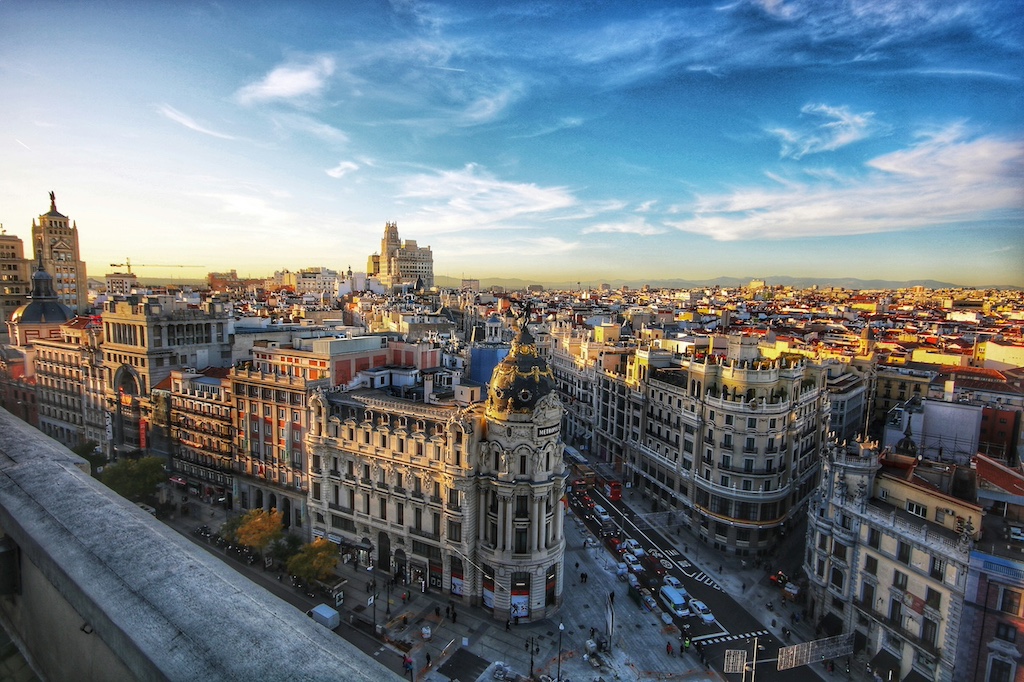
Spanish capital welcomes 5.66 million tourists as international visitor spending rises 11.4 percent, strengthening Madrid’s position as a leading European tourism destination. Madrid has recorded a historic performance in international tourism during the first half of 2026, with overseas visitors spending more than €10 billion in the Spanish capital between January and June. According to tourism data published by Spain’s National Statistics Institute (INE), international tourism expenditure in Madrid reached €10.007 billion, representing an 11.4 percent increase compared with the same period in 2025. The strong growth in spending was accompanied by a substantial rise in visitor numbers, demonstrating the continuing strength of Madrid’s international tourism market.
During the first six months of the year, the city welcomed approximately 5.66 million tourists, an increase of 4.1 percent compared with the first half of 2025. The figures indicate that the capital has not only attracted more international visitors but has also generated significantly higher tourism revenue. International travelers accounted for approximately 59 percent of total tourist arrivals and were responsible for around two-thirds of hotel overnight stays, highlighting their importance to Madrid’s accommodation and wider tourism economy.

International spending reaches new milestone
Madrid’s €10.007 billion in international tourism expenditure represented 15.7 percent of Spain’s total international tourism spending during the period. International tourists spent approximately €63.84 billion across Spain between January and June, marking a 7 percent year-on-year increase. Madrid therefore remained one of the country’s most important destinations for international tourism expenditure, ranking close to the Canary Islands and Catalonia in terms of its contribution to national tourism revenue.
The increase in visitor expenditure provides an important boost to Madrid’s wider economy. International tourists contribute not only through hotel bookings but also through restaurants, shopping, transportation, cultural attractions, entertainment and other tourism-related services. The continued increase in international spending therefore has implications beyond the tourism sector itself, supporting businesses and employment across different parts of the city.
Madrid Councilor for Tourism Almudena Maíllo described the achievement as evidence of the city’s growing international appeal. She emphasized that tourism contributes to economic activity throughout Madrid’s neighborhoods and supports stable employment, while visitor spending also contributes to services used by residents.
United States remains Its leading international market
The United States continued to represent the largest international visitor market for Madrid during the first half of 2026. American travelers accounted for approximately 567,000 arrivals and generated around 1.3 million overnight stays, underlining the importance of the US market to the city’s international tourism industry. Italy and the United Kingdom followed the United States among Madrid’s leading international source markets. The figures demonstrate the city’s ability to maintain strong demand from both European markets and long-haul destinations.
However, the most significant growth came from Brazil. Brazilian arrivals increased by approximately 30 percent compared with the same period in 2025, while overnight stays by Brazilian visitors rose by 24 percent. The rapid expansion of the Brazilian market indicates growing interest in Madrid among Latin American travelers and provides the city with an increasingly diverse international tourism base.
International visitors dominate hotel demand
The growth in international arrivals was also reflected in Madrid’s accommodation sector. The city recorded 11,961,895 overnight stays during the first six months of 2026, or just under 12 million. International visitors stayed in Madrid for an average of approximately 2.38 nights, contributing substantially to demand for hotels and other accommodation facilities.
By the end of June, Madrid had approximately 920 accommodation establishments, providing around 48,600 rooms and more than 96,000 beds. The hospitality sector employed approximately 15,249 workers, representing a 5.4 percent increase compared with the previous year. The growth in accommodation-related employment indicates that the increase in tourism activity is generating benefits beyond visitor spending alone. Rising demand has created additional opportunities for workers in hotels and other hospitality businesses, reinforcing tourism’s role as an important source of employment in the capital.
June sets new monthly tourism record
Madrid’s strong performance continued into June, when the city registered its highest number of tourist arrivals ever recorded for that month. Approximately 884,881 tourists visited Madrid in June 2026, representing a 13.9 percent increase compared with June 2025. International tourism expenditure also remained strong during the month, reaching approximately €1.86 billion, which was 7.3 percent higher than the amount recorded in June 2025.
The figures indicate that Madrid’s tourism growth accelerated toward the end of the first half of the year rather than showing signs of slowing. The June performance is particularly significant because it demonstrates that the city’s overall first half growth was supported by continued demand throughout the period. The combination of record arrivals and higher total visitor expenditure strengthened Madrid’s position as one of Europe’s major urban tourism destinations.
Daily tourist spending shows a mixed trend
Despite the substantial increase in overall international tourism expenditure, Madrid recorded a decline in average daily tourist spending during June. Daily expenditure per visitor fell by 12.5 percent compared with June 2025. Visitors nevertheless spent an average of approximately €288 per day in Madrid, considerably higher than the €211 national average for Spain.
This suggests that while visitors were spending less per day than during the same month a year earlier, tourists in Madrid continued to spend significantly more on a daily basis than international visitors did across Spain as a whole. The difference is important for Madrid’s tourism economy because higher average daily expenditure can provide stronger economic benefits to accommodation providers, restaurants, retail businesses, cultural attractions and other tourism services, even when the duration of individual stays remains relatively short.
International tourism strengthens Madrid’s economy
The record tourism figures underline the growing economic importance of international visitors to Madrid. With foreign tourists accounting for 59 percent of arrivals and generating approximately two out of every three hotel nights, international tourism has become a major contributor to the city’s accommodation and visitor economy.
The €10 billion spending milestone also demonstrates that tourism’s impact extends across the city rather than being concentrated exclusively in traditional tourist attractions. Visitors spend money on accommodation, food, transportation, shopping, entertainment and cultural experiences, allowing tourism revenue to circulate through different businesses and neighborhoods. The increase in hospitality employment further reflects this economic impact. With more than 15,000 workers employed in the accommodation sector by June, continued tourism growth is supporting the expansion of services required to accommodate Madrid’s growing visitor numbers.
Global tourism institutions add to Madrid’s international profile
Several developments in 2026 have further strengthened Madrid’s position within the international tourism industry. The city was recently selected as the new global headquarters of the World Travel & Tourism Council (WTTC), reinforcing its role as an important center for the global travel and tourism sector. Another significant development came at the end of June, when Spain’s Prime Minister Pedro Sánchez inaugurated the new headquarters of UN Tourism in Madrid. The presence of major international tourism organizations gives the capital greater visibility within the global tourism industry and strengthens its reputation as a center for tourism policy, cooperation and business.
Madrid was also named Europe’s Best Destination for 2026 by European Best Destinations earlier in the year. The recognition highlighted the city’s cultural attractions, food, lifestyle, architecture and overall appeal to international travelers and may have contributed to increased interest in the destination.

Madrid enters the second half of 2026 from a position of strength
Madrid’s tourism performance during the first half of 2026 points to a strong and expanding international visitor economy. More than 5.66 million tourists, almost 12 million overnight stays and more than €10 billion in international spending demonstrate the scale of tourism activity generated by the capital during just six months. The continued growth of major international markets, particularly the United States, Italy and the United Kingdom, combined with rapid expansion from Brazil, provides Madrid with a broad visitor base. At the same time, rising accommodation capacity and employment indicate that the city’s tourism infrastructure is continuing to respond to demand.
With international tourism spending increasing faster than visitor numbers during the first half of the year, Madrid appears to be benefiting not simply from attracting more tourists but from maintaining a strong economic contribution from international travel. Supported by its growing international profile, major tourism institutions, global recognition and diverse visitor markets, the Spanish capital enters the second half of 2026 with tourism firmly positioned as one of the city’s major economic drivers.
Source: Travel Tomorrow, Camille Van Puymbroeck, August 4, 2026; based on tourism data from Spain’s National Statistics Institute (INE).