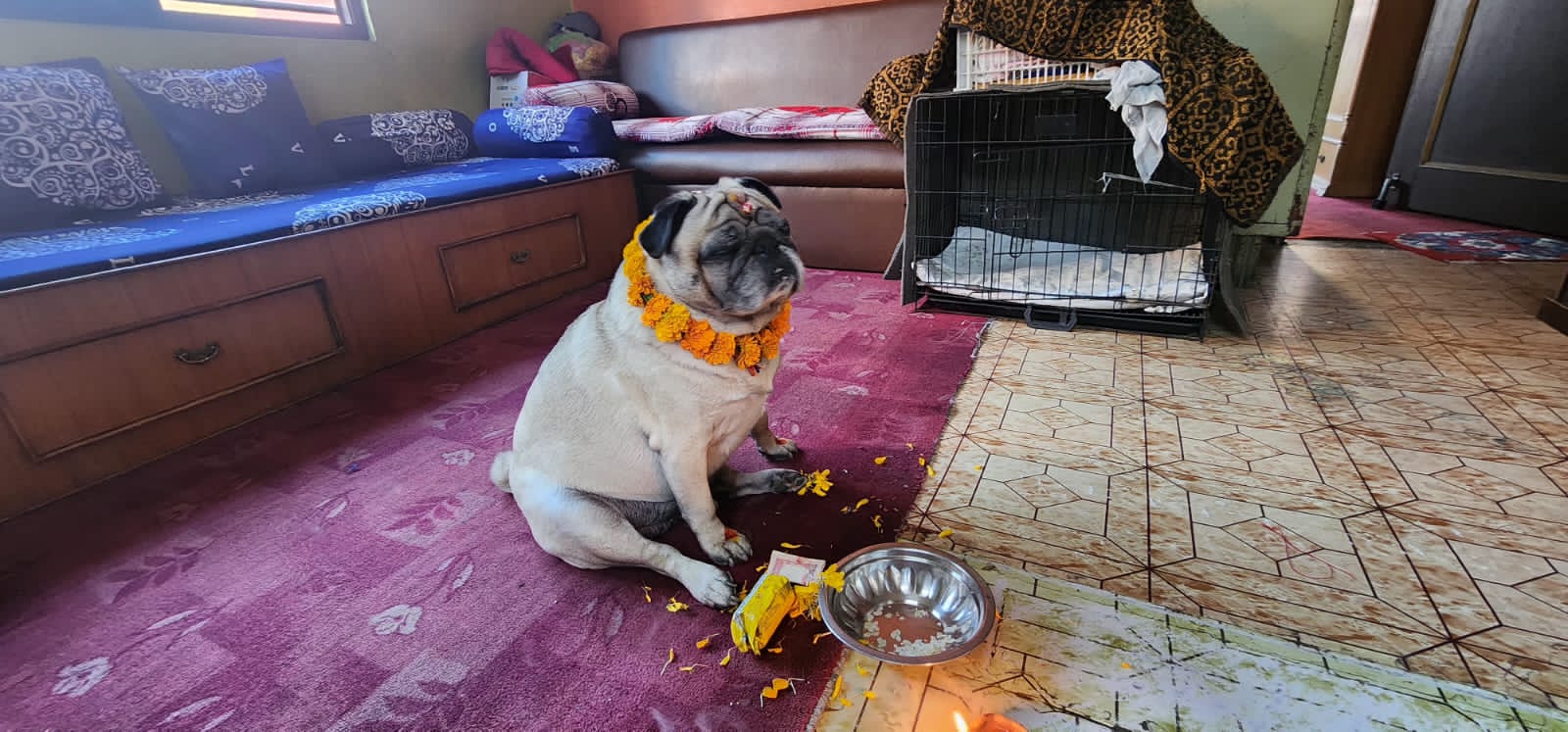
Kukur Tihar, the festival of dogs, is being joyfully celebrated in every household across Nepal today, marking the third day of Yamapanchak in this year’s Tihar festival. Streets and homes are adorned with flowers, lights, and cheerful faces as people express gratitude and reverence toward their four-legged companions who have stood by humans for centuries as protectors and loyal friends.
Celebration Amid Calendar Adjustment
Although Kukur Tihar traditionally falls on the second day of Tihar, this year it is being observed on the third day due to adjustments in the lunar calendar, according to Professor Dr. Devmani Bhattarai, a member of the Nepal Calendar Determination Committee. Such changes occur occasionally when the lunar and solar calendars differ, leading to modifications in festival dates. Despite the shift, the enthusiasm and devotion among devotees remain as vibrant as ever, reflecting the festival’s deep emotional and cultural significance.

The Significance of the Faithful Dog
Dogs hold a special place in Nepali culture and Hindu belief systems. Regarded as a Yamadoot, a messenger of Lord Yamaraj, the God of Death, dogs are believed to guard the gates of the afterlife and guide souls on their journey. On this sacred day, people worship dogs to seek protection, express gratitude, and recognize their spiritual role as intermediaries between the mortal and divine realms.
Historically, dogs have been celebrated for their unwavering loyalty, vigilance, and companionship. In ancient times, they were not only protectors of homes and herders of livestock but also symbols of faithfulness and moral duty. Their presence in human life is deeply intertwined with both emotional and religious dimensions, making Kukur Tihar a heartfelt celebration of trust, friendship, and respect between species.
Rituals and Traditions of the Day
The rituals of Kukur Tihar begin early in the morning. People bathe and adorn their dogs with garlands made of fresh marigolds (sayapatri) and chrysanthemums, symbolizing purity, love, and good fortune. A red tika is placed on the dogs’ foreheads, representing honor and blessings. Families then prepare special meals consisting of meat, eggs, milk, and various treats, dishes that are offered to dogs as a token of appreciation.
Even stray dogs are not forgotten during this festival. In cities and villages alike, community members gather to feed and garland street dogs, emphasizing compassion and kindness toward all living beings. The act of feeding and honoring these animals reflects a message of inclusivity and care that extends beyond ownership, reminding society of the shared responsibility toward the welfare of all creatures.
Mythological Connection: The Story of Yudhisthir and His Dog
The celebration of Kukur Tihar also draws inspiration from the Mahabharat, one of the greatest epics in Hindu mythology. According to the legend, Dharmaraj Yudhisthir, the eldest of the Pandavas, embarked on his final journey to heaven accompanied by a dog. When he reached the gates of heaven, the divine guards refused to allow the dog entry. However, Yudhisthir refused to enter heaven without his loyal companion, declaring that abandoning a faithful friend would be a sin greater than forsaking heaven itself. His unwavering loyalty moved the gods, who revealed that the dog was in fact Lord Yamaraj in disguise. This story exemplifies the virtues of faithfulness, righteousness, and unconditional love, values that Kukur Tihar celebrates today.
Narak Chaturdashi: The Day of Cleansing and Protection
Kukur Tihar is also known as Narak Chaturdashi, a day believed to protect devotees from untimely death and suffering in the afterlife. Rituals performed on this day are thought to purify the soul and the household, ensuring peace, prosperity, and spiritual protection. The worship of dogs, therefore, becomes not just an act of affection but also a symbolic prayer for security and salvation.
Symbolism of Love and Coexistence
Beyond its religious context, Kukur Tihar stands as a testament to humanity’s enduring bond with animals. In a world often marked by conflict and indifference toward animal welfare, this festival highlights compassion, empathy, and the recognition of animals as sentient beings deserving of dignity. It reminds people of the moral responsibility to care for creatures who share the planet with us.
The sight of garlanded dogs wagging their tails, receiving love and blessings from humans, symbolizes harmony and mutual respect between all forms of life. The festival not only fosters a culture of kindness but also teaches lessons of humility and gratitude.

Global Recognition and Modern Relevance
In recent years, Kukur Tihar has gained international attention, inspiring dog lovers and animal welfare advocates around the world. Photos and videos of Nepali families and animal shelters celebrating the day have gone viral on social media, turning the festival into a global symbol of love for dogs. Animal organizations have also begun to participate in the celebration, organizing adoption drives, vaccination campaigns, and awareness programs to promote animal rights and welfare.
A Celebration of Loyalty and Humanity
As lamps flicker across homes and streets today, Kukur Tihar once again reminds people of the profound connection between humans and their loyal companions. It is a day that celebrates devotion, friendship, and the shared emotional bond that transcends species. By honoring dogs as divine messengers and faithful protectors, Nepali society reaffirms one of its most beautiful values, the belief that love and loyalty are sacred virtues worthy of worship. Kukur Tihar thus stands as more than just a festival; it is a tribute to faithfulness, compassion, and the timeless friendship between humans and dogs, a celebration that bridges the spiritual and the earthly, the human and the divine.