May 18 marks a historic moment in the world of mountaineering as climbers and adventure enthusiasts celebrate Lhotse Day, commemorating the first successful ascent of Mount Lhotse in 1956. This year, 2026, holds special significance as it marks the 70th anniversary of the historic climb of the world’s fourth-highest mountain.
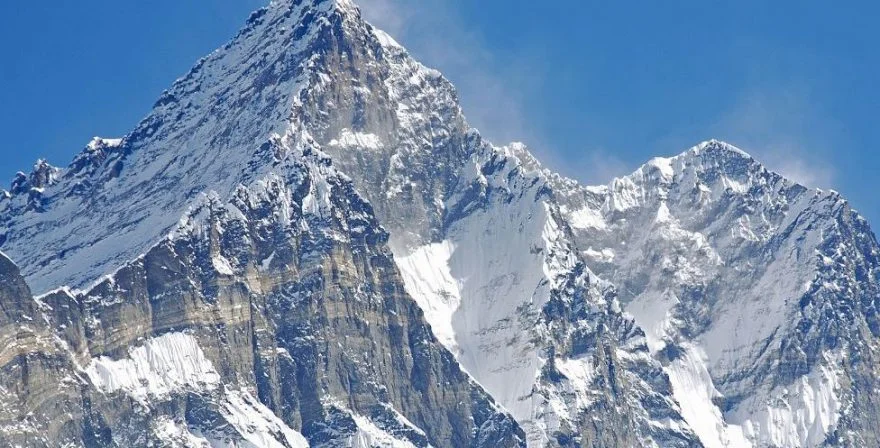
Standing at an elevation of 8,516 meters (27,940 feet), Mount Lhotse is located on the border between Nepal’s Khumbu region and the Tibet Autonomous Region of China. The mountain was first successfully climbed on May 18, 1956, by Swiss climbers Ernst Reiss and Fritz Luchsinger, members of the Swiss Mount Everest/Lhotse Expedition.
Using the Western Cwm and the northwest face, the same route later associated with Everest expeditions, the Swiss climbers etched their names into mountaineering history by reaching the summit of one of the world’s most challenging Himalayan peaks.
The Meaning and Geography of the Mountain
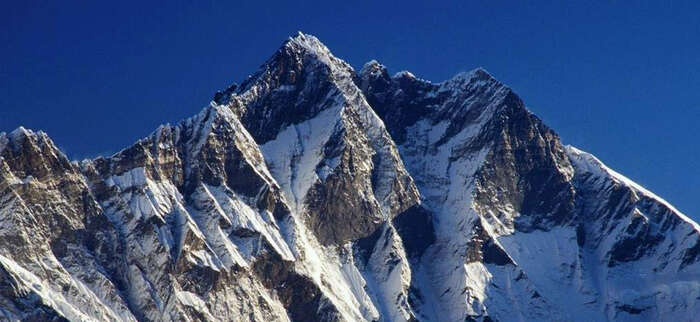
The name “Lhotse” comes from the Tibetan language and means “South Peak,” reflecting its close geographical relationship with Mount Everest. Positioned directly south of Everest and east of Nuptse, Lhotse forms part of the dramatic horseshoe-shaped Everest massif.
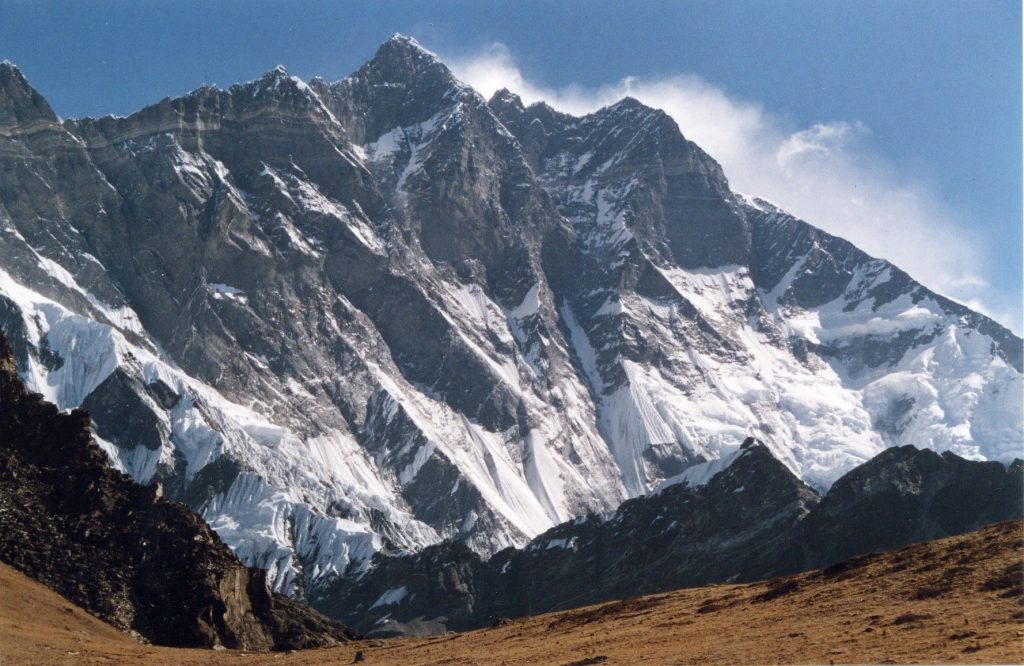
Although overshadowed by Everest due to its proximity, Lhotse is considered one of the most technically demanding mountains among the world’s fourteen eight-thousanders. Its steep faces, narrow couloirs, and harsh weather conditions have made it both respected and feared in the mountaineering community.
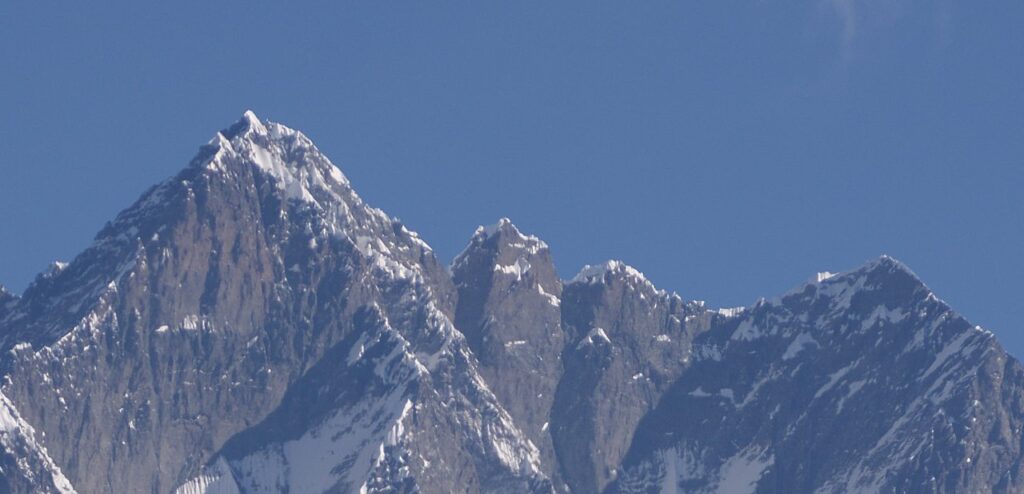
The mountain consists of four major summits: Lhotse Main (8,516 m), Lhotse Middle (8,414 m), Lhotse Central II (8,372 m), and Lhotse Shar (8,383 m). While Lhotse Main has become increasingly popular among experienced climbers, the secondary summits remain extremely difficult and are rarely climbed.
Early Expeditions and the First Successful Ascent
Before the successful Swiss ascent in 1956, an important attempt was made in 1955 by the International Himalayan Expedition led by Norman Dyhrenfurth. The expedition included climbers from Austria, Switzerland, and the United States and became one of the earliest international teams to explore the Everest and Lhotse region extensively.
The team reached an altitude of around 8,100 meters but was forced to retreat due to severe winds and freezing temperatures. Despite failing to summit, the expedition made significant contributions to Himalayan cartography and exploration by producing the first detailed map of the Everest region.
One year later, the Swiss expedition returned with greater preparation and determination. On May 18, 1956, Ernst Reiss and Fritz Luchsinger successfully reached the summit of the mountain, opening a new chapter in Himalayan mountaineering history.
A Mountain of Extreme Challenge
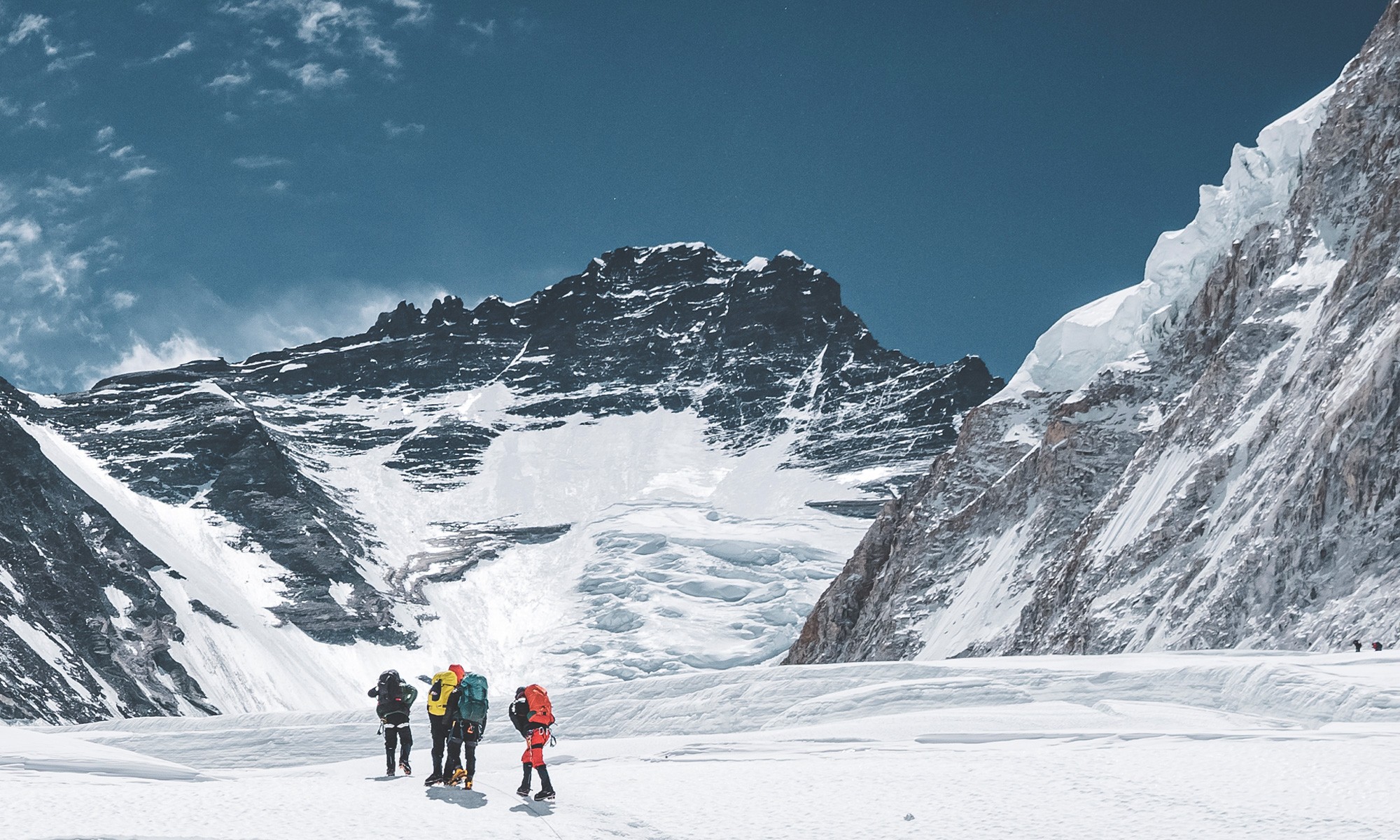
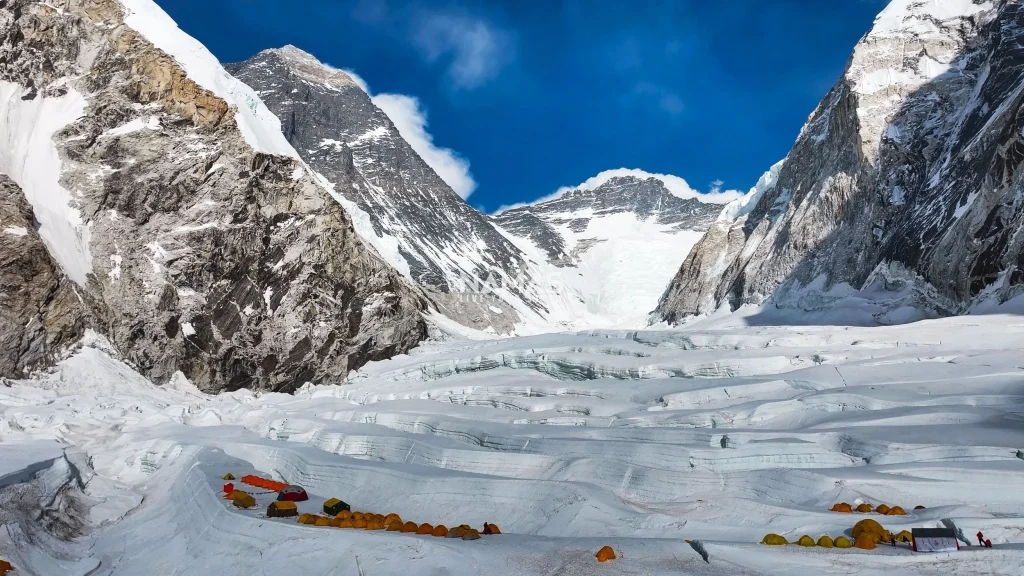
Despite sharing the same initial route as Everest through the Khumbu Icefall and Western Cwm, Lhotse presents unique technical challenges. After Camp 3, climbers diverge from the Everest route and ascend the steep Lhotse Face before entering the dangerous “Reiss Couloir,” a narrow and icy section leading to the summit.
The mountain’s steep terrain and exposure make it significantly more technical than Everest. The infamous Lhotse Couloir, a near-vertical ice gully, remains one of the most difficult sections among all Himalayan climbing routes.
Because of these dangers, the total number of climbers who have summited mountain remains relatively low compared to Everest. Up to recent climbing seasons, just over 1,000 climbers have successfully reached the summit, while fewer than 200 have done so without supplemental oxygen.
Major Milestones in the History
Over the decades, several historic achievements have shaped the legacy of the mountain. In 1970, Austrian climbers Sepp Mayerl and Rolf Walter completed the first ascent of Lhotse Shar. In 1999, Czech climber Soňa Vomáčková became the first woman to summit the mountain without supplemental oxygen.
Lhotse Middle, once considered the highest unclimbed named point on Earth, was finally summited in 2001 by a Russian expedition team consisting of Eugeny Vinogradsky, Sergei Timofeev, Alexei Bolotov, and Petr Kuznetsov. By December 2008, a total of 371 climbers had summited Lhotse, while 20 climbers had lost their lives attempting the peak. Due to avalanches, earthquakes, and other incidents, the mountain remained unclimbed during the 2014, 2015, and 2016 climbing seasons before reopening successfully in 2017.
The “Double Crown” Challenge
One of the rarest feats in Himalayan mountaineering is climbing both Lhotse and Everest within 24 hours. Known among climbers as the “Double Crown,” this achievement requires extraordinary endurance, acclimatization, and favorable weather conditions.
Because the two mountains share the same route up to the South Col, experienced mountaineers occasionally attempt the double summit challenge. One of the latest documented attempts was made by climbers Jocelyn Cayer and Ashish in May 2025.
Nepal’s Pride in Himalayan Mountaineering
For Nepal, It represents not only a mountaineering challenge but also a symbol of Himalayan heritage, tourism, and adventure leadership. Located in the heart of the Khumbu region, the mountain contributes significantly to Nepal’s global identity as the home of the world’s highest peaks and legendary climbing culture.
As the world celebrates the 70th anniversary of the first ascent in 2026, Lhotse Day stands as a tribute to the courage, endurance, and pioneering spirit of mountaineers who continue to push the limits of human exploration in the Himalayas.