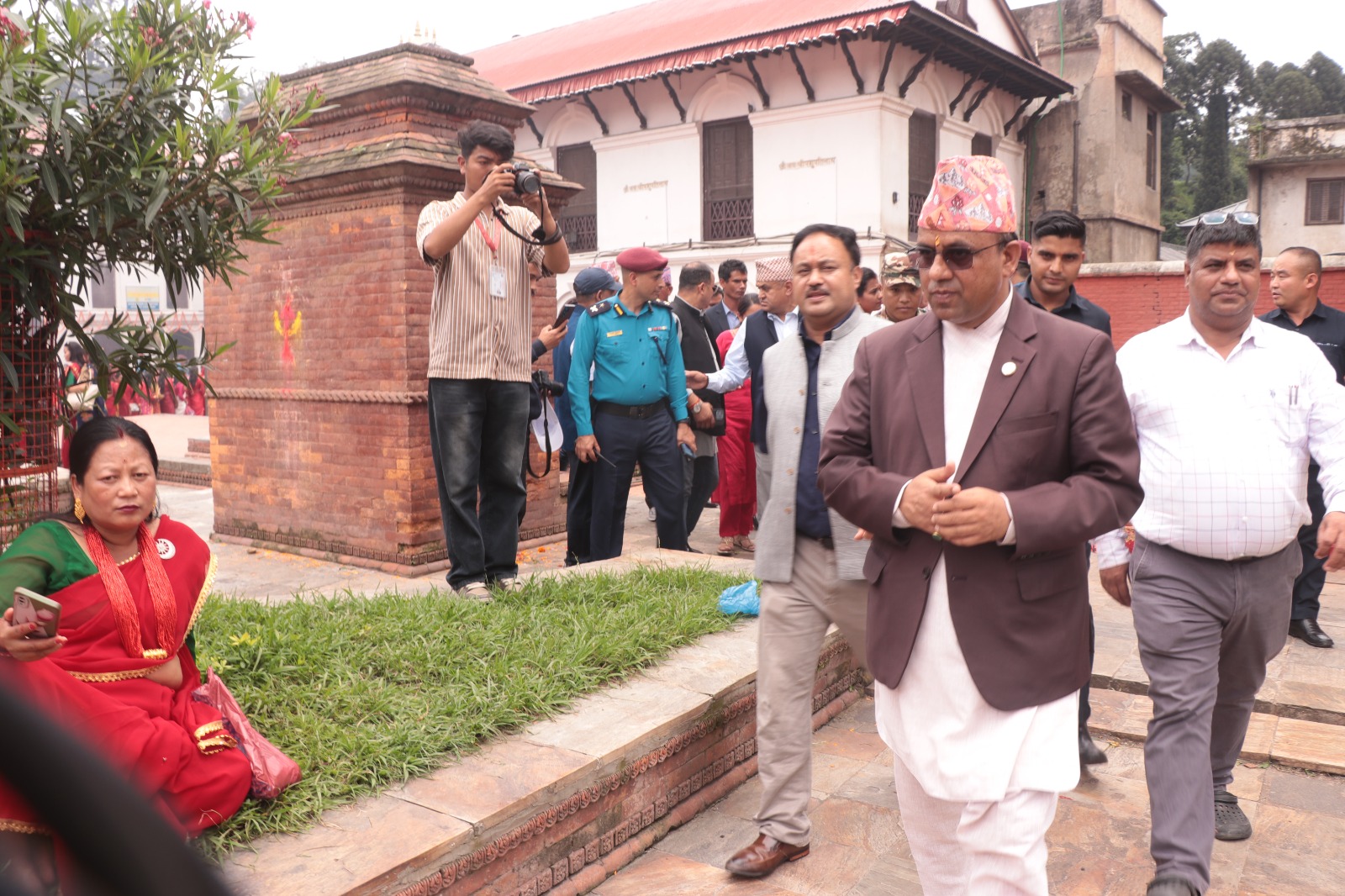
On the auspicious occasion of Haritalika Teej, one of the most significant festivals for Hindu women, Minister for Culture, Tourism, and Civil Aviation and Chairperson of the Pashupati Area Development Trust (PADT), Badri Pandey, paid a visit to the sacred Pashupatinath Temple premises. His visit aimed to observe the management, interact with devotees, and ensure a smooth and organized environment for worshippers during the festive period.
Interaction with Devotees and Observation of Arrangements
Upon arriving at the temple, Minister Pandey interacted directly with devotees who had gathered in large numbers to offer prayers to Lord Pashupatinath. He attentively listened to their feedback, concerns, and overall experiences regarding temple arrangements. Expressing satisfaction over the ongoing efforts of PADT, the minister commended the team for providing a more comfortable and accessible environment for pilgrims this year.
Directives for Efficient Worship Management
Minister Pandey instructed PADT officials to continue ensuring that all visitors, regardless of their background or origin, receive equal opportunity for a swift and systematic darshan (viewing) of the deity. He emphasized that devotees should not have to wait excessively or face inconvenience due to mismanagement. His guidance focused on streamlining entry, reducing overcrowding, and maintaining a spiritually peaceful environment during peak festival hours.
Emphasis on Peace and Security
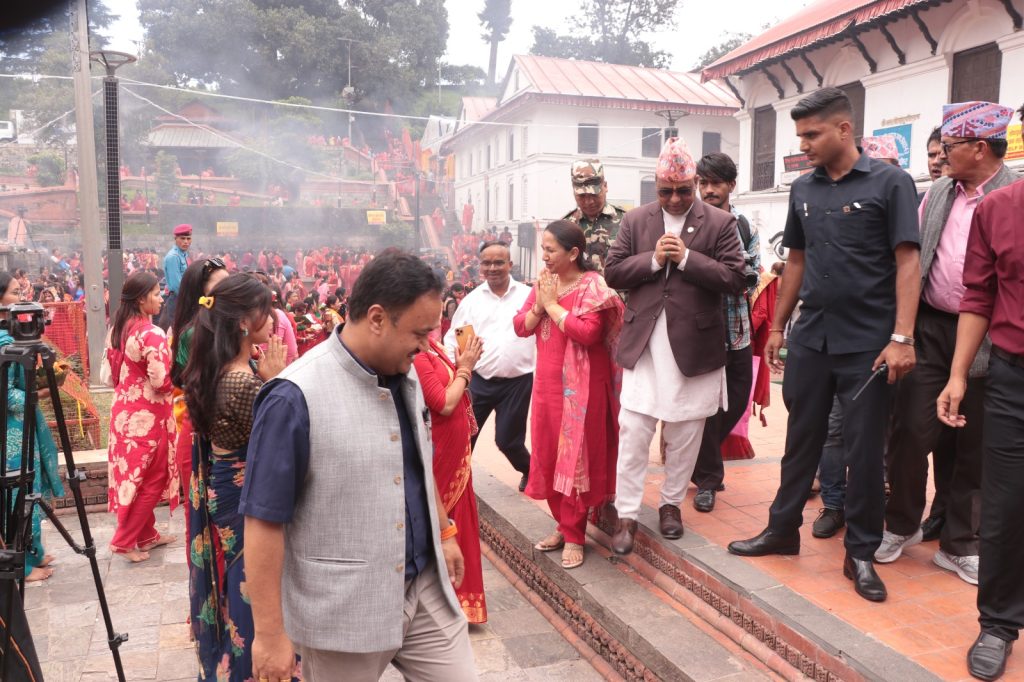
Recognizing the importance of safety during large gatherings, Minister Pandey personally met with security personnel deployed at the temple premises. He sought firsthand updates on their operations and assessed measures taken to prevent overcrowding, manage queues, and respond to emergencies. He praised their dedication and urged them to remain vigilant, particularly during high influx hours when thousands of women clad in red sarees and traditional ornaments arrive to participate in the Haritalika Teej rituals.
Devotees Appreciate Improved Management
Many devotees shared that, compared to previous years, this year’s arrangements at Pashupatinath Temple were notably better organized. They reported experiencing less congestion, shorter waiting times, and more supportive management from both PADT officials and security forces. Several women devotees, who had traveled from different districts across Nepal, expressed gratitude for the arrangements that allowed them to complete their worship without unnecessary stress or delays.
Significance of Haritalika Teej at Pashupatinath
Haritalika Teej holds immense cultural and spiritual significance among Hindu women, who observe fasting, engage in devotional singing and dancing, and offer prayers for the well-being and longevity of their husbands or for a suitable life partner. The Pashupatinath Temple, being one of the holiest shrines dedicated to Lord Shiva, attracts tens of thousands of women from across Nepal and even from India during this festival. The event transforms the temple premises into a vibrant sea of red and green attire, symbolizing devotion, prosperity, and marital bliss.
PADT’s Special Arrangements for Teej
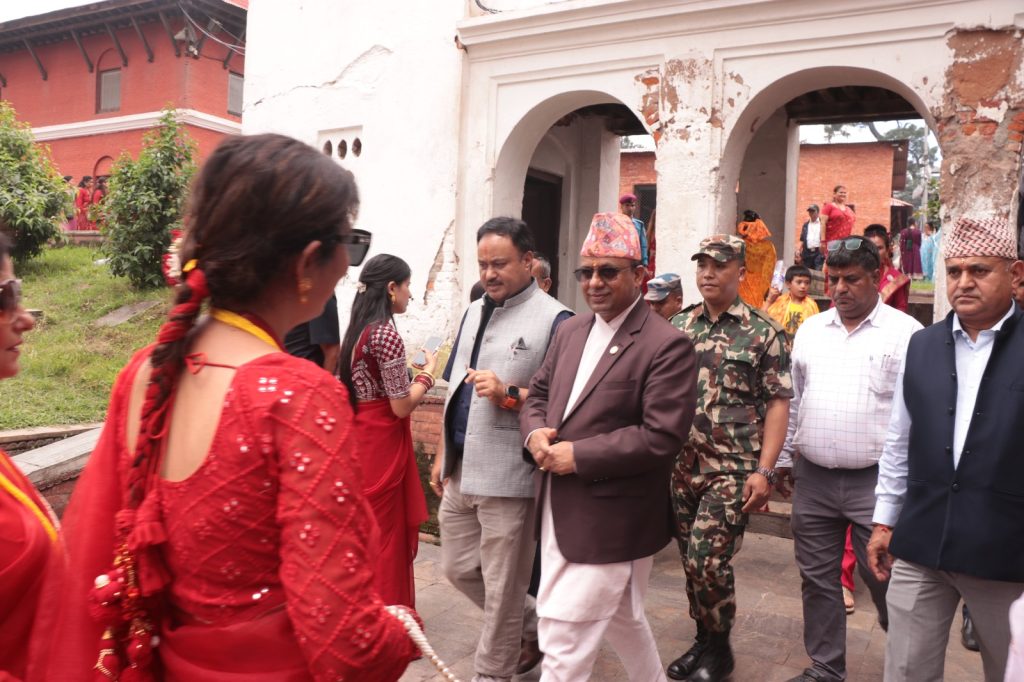
In preparation for the massive footfall, the Pashupati Area Development Trust had implemented various measures, including designated entry and exit routes, special prayer queues for women, increased sanitation facilities, and continuous public announcements to guide devotees. Volunteers and staff members were stationed at different points to assist elderly worshippers and manage the movement of the crowd. Drinking water facilities and medical support posts were also set up to address health concerns during the long fasting hours of the devotees.
Minister’s Commitment to Religious Tourism Promotion
During his visit, Minister Pandey reiterated his commitment to promoting religious tourism in Nepal by preserving and improving the infrastructure and management of sacred sites such as Pashupatinath. He stated that events like Haritalika Teej are not only spiritually enriching but also hold great potential to boost Nepal’s cultural heritage tourism. He pledged continued collaboration between the government, PADT, and local stakeholders to ensure that such festivals are celebrated in harmony, safety, and dignity.
Looking Ahead
As the Haritalika Teej celebrations continue, authorities have assured that they will maintain these high standards of service and crowd management for the remainder of the festival. The collective efforts of the PADT, security forces, and volunteers have set a positive example for future large-scale religious gatherings. The feedback from this year’s festival is expected to help in planning even better arrangements for the years to come, reinforcing Pashupatinath Temple’s reputation as a sacred, well-managed, and welcoming pilgrimage site for devotees from across the world.