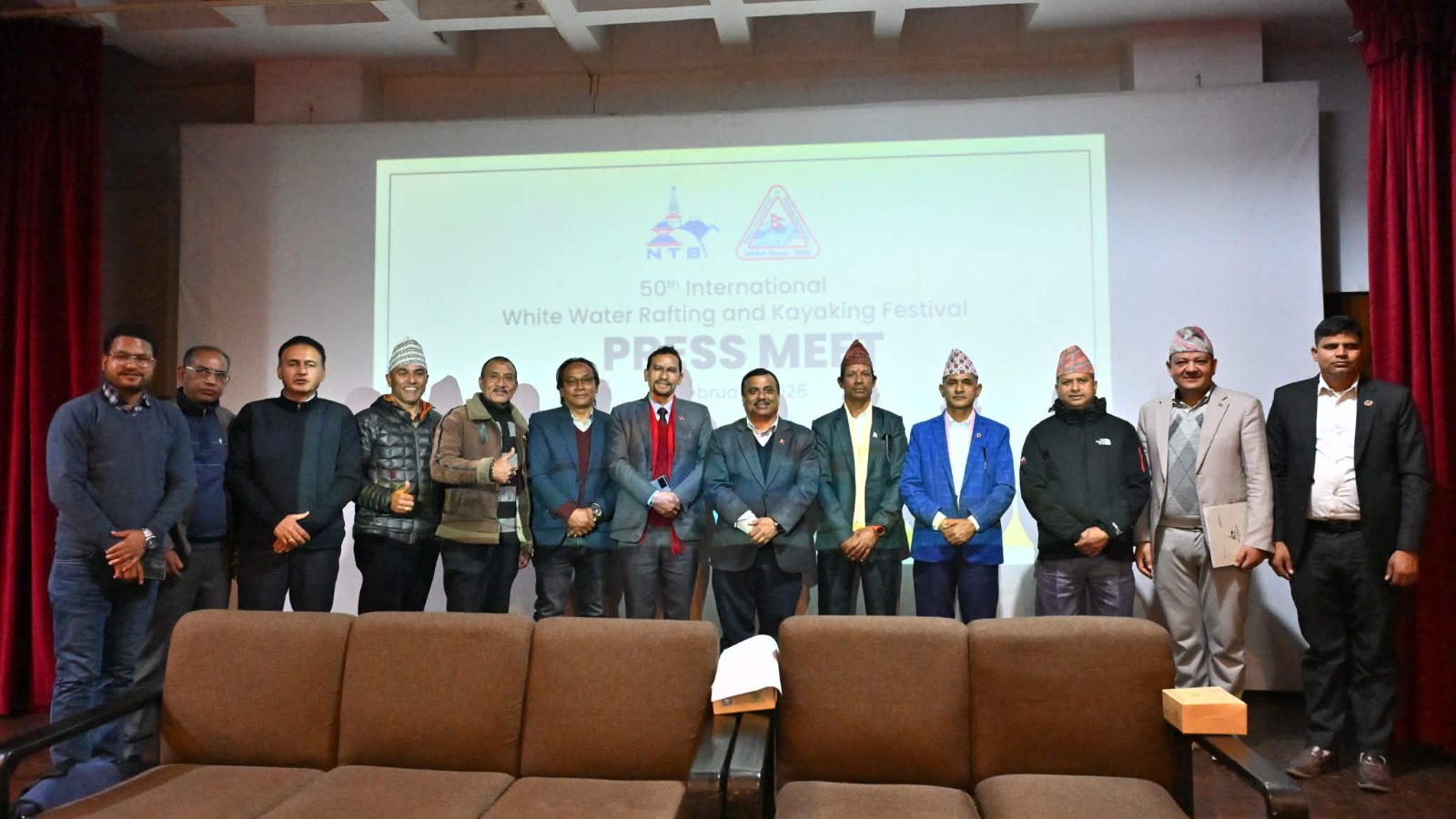
The Nepal Association of Rafting Agencies (NARA), in collaboration with the Nepal Tourism Board (NTB), has announced the organization of the 24th Himalayan Whitewater Challenge 2026 and the 50th International Whitewater Rafting and Kayaking Festival, scheduled to take place from Falgun 14–16, 2082 (February 28–30, 2026). The event aims to promote Nepal’s river-based adventure tourism while celebrating five decades of organized whitewater activities in the country.
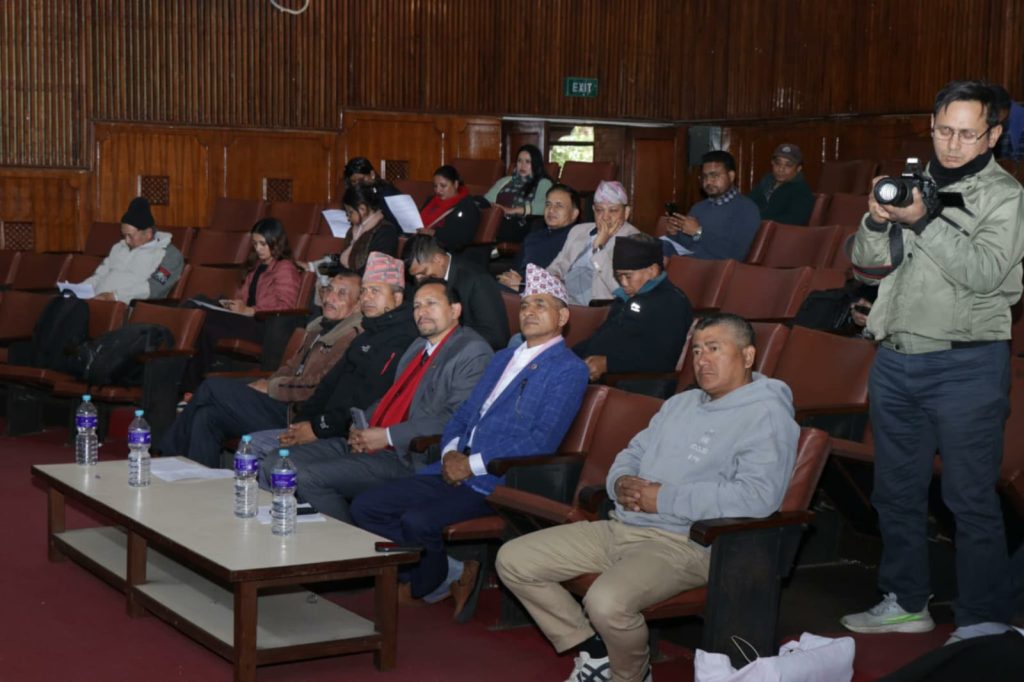
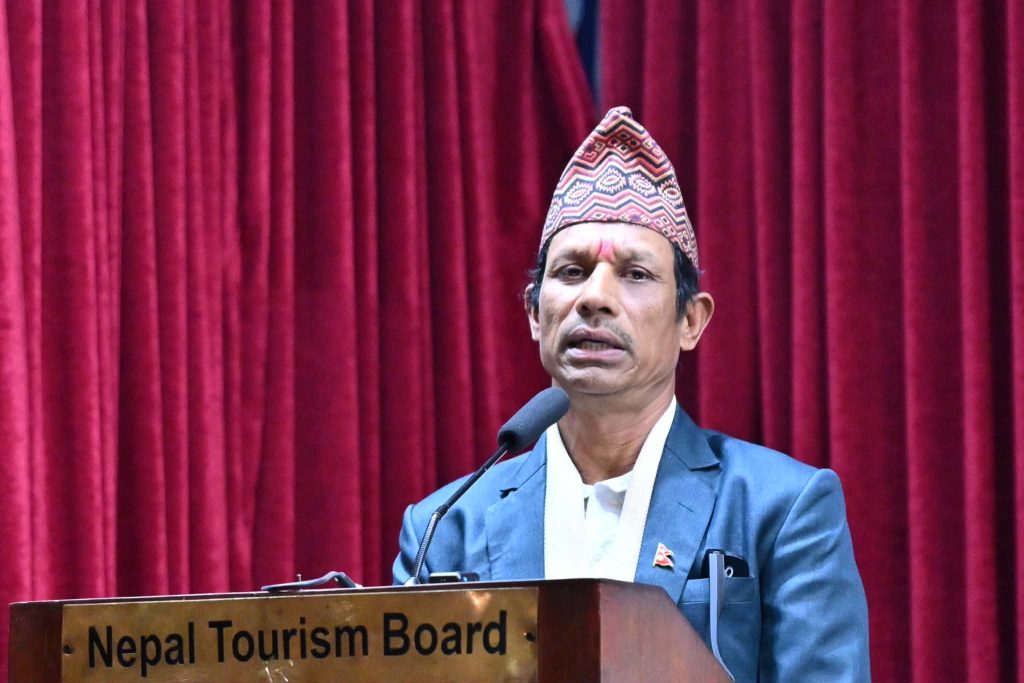
The announcement was made during a press conference held at the Nepal Tourism Board, where organizers shared details about participation, competition categories, and the broader vision of positioning Nepal as a global hub for water-based adventure sports.
Participation from National and International Athletes
According to the organizers, the three-day event will witness the participation of 30 international athletes and around 140 national competitors, highlighting the growing global interest in Nepal’s rivers for professional rafting and kayaking competitions.
The festival will feature competitions in three disciplines, two kayaking events, and one rafting event. On the first day, more than 100 kayakers will compete in a race format, followed by a knockout session on the second day. The final day will host the raft race session. Overall, organizers expect a total presence of 400 to 600 individuals, including athletes, volunteers, judges, and spectators.
Strengthening Nepal’s Image as an Adventure Tourism Destination
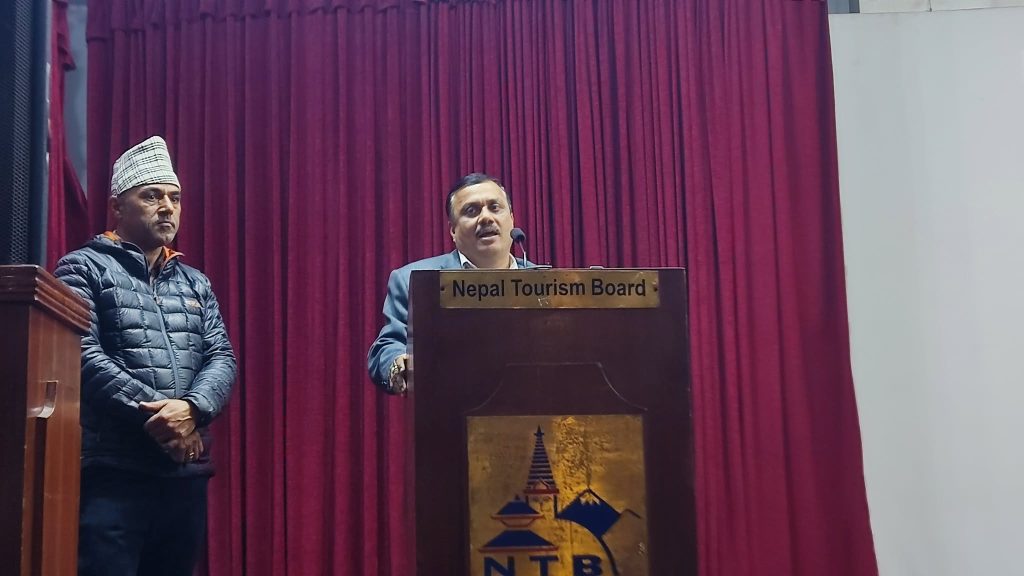
Speaking at the press conference, NTB Senior Director Hikmat Singh Ayre stated that the Tourism Board has long been associated with the whitewater series and is committed to strengthening the event by addressing past shortcomings. He emphasized that Nepal must promote not only Mount Everest and the Himalayas but also its rivers as world-class adventure destinations.
“Alongside mountains, we must also promote rafting, kayaking, and canoeing as major adventure activities in the international market,” Ayre said. “Equally important is the conservation of our rivers to sustain these tourism products.” He added that NTB plans to develop river-based adventure tourism as a distinct tourism product and facilitate its expansion across all seven provinces of Nepal.
Call for Policy Coordination to Protect Rivers for Tourism
NTB Vice-Chairperson Ram Prasad Sapkota highlighted growing challenges faced by river-based adventure activities due to hydropower development and riverbed extraction. He stressed the need for balanced policies that recognize rivers not only as energy resources but also as tourism assets.
“For adventure sports to thrive, the government must identify and allocate specific rivers suitable for tourism activities alongside hydropower development,” Sapkota said, expressing confidence that NARA would take the initiative in advocating for such measures.
Festival Marks Celebration of Nepal’s 50-Year Whitewater Legacy
NARA President Kamal Bahadur Thakuri described the upcoming festival as more than just a sporting competition, calling it a celebration of Nepal’s 50-year history of organized river journeys and whitewater tourism.
“This event is not only about competition; it is a tribute to the legacy of whitewater exploration in Nepal and an opportunity to showcase our rivers to the global adventure community,” Thakuri said.
As part of the celebrations, the organizers will also honor the founders of Himalayan River Exploration, the pioneering company credited with introducing commercial rafting in Nepal.
Historical Roots of Rafting in Nepal
Whitewater rafting in Nepal dates back to the 1960s, when international explorers first navigated the country’s powerful Himalayan rivers. A French expedition rafted the Trishuli River in 1964, followed by Sir Edmund Hillary’s team navigating the Sunkoshi River in 1965, both regarded as historic milestones in Nepal’s river exploration.
Commercial rafting formally began in 1975 through Himalayan River Exploration, laying the foundation for Nepal’s adventure tourism industry. NARA itself was established in B.S. 2046 (1989/90) to organize, regulate, and promote rafting agencies and river-based tourism activities nationwide.
Boosting Local Economies and Sustainable Tourism
Organizers believe that events like the Himalayan Whitewater Challenge contribute significantly to local economies by generating employment, supporting hospitality businesses, and encouraging sustainable use of natural resources. By attracting international athletes, media, and adventure enthusiasts, the festival is expected to strengthen Nepal’s reputation as one of the world’s premier destinations for whitewater sports.
Stakeholders also stress that sustainable river management, environmental conservation, and responsible tourism practices will be key to ensuring that Nepal’s rivers remain both economically valuable and ecologically preserved for future generations.
With its blend of sport, heritage, and tourism promotion, the 2026 edition of the Himalayan Whitewater Challenge is poised to reinforce Nepal’s standing not only as the land of towering peaks but also as a dynamic destination for world-class river adventures.