The Chepang community across Makwanpur, Chitwan, Dhading, and Gorkha is observing Nawagi, also known as Chonam, one of its most important traditional cultural and religious festivals, with rituals, ancestral worship, and community gatherings. The festival, celebrated on Bhadra 22, holds deep significance for the indigenous community as it marks the time when newly harvested crops are first offered to ancestors and the land before being consumed. The celebration also provides a distinctive glimpse into the Chepang people’s traditional way of life, spiritual beliefs, and close relationship with nature, making Nawagi an important expression of Nepal’s indigenous cultural heritage.
A Festival Rooted In Gratitude To Ancestors And The Land
Nawagi is closely connected with the Chepang tradition of offering newly harvested food to ancestors and worshipping the land before bringing the new produce into regular consumption. The community believes that new crops, fruits, and root vegetables should not be eaten until they have been presented through the traditional rituals. On Nawagi, offerings may include Ghaiya rice, Kauno millet, taro, pumpkin, vegetables, and lemons, reflecting the agricultural practices and locally produced foods that remain closely connected to Chepang culture.

The festival is therefore more than a celebration of a new harvest. It represents a time for the community to express gratitude to ancestors and nature, while continuing customs passed down through generations. According to Govindram Chepang, Central President of the Nepal Chepang Association, the festival carries the belief that consuming newly harvested crops without first offering them to ancestors could bring misfortune. The tradition gives Nawagi a strong spiritual dimension while preserving an important connection between the community, its land, and its agricultural heritage.
Traditional Rituals Keep Ancient Chepang Practices Alive
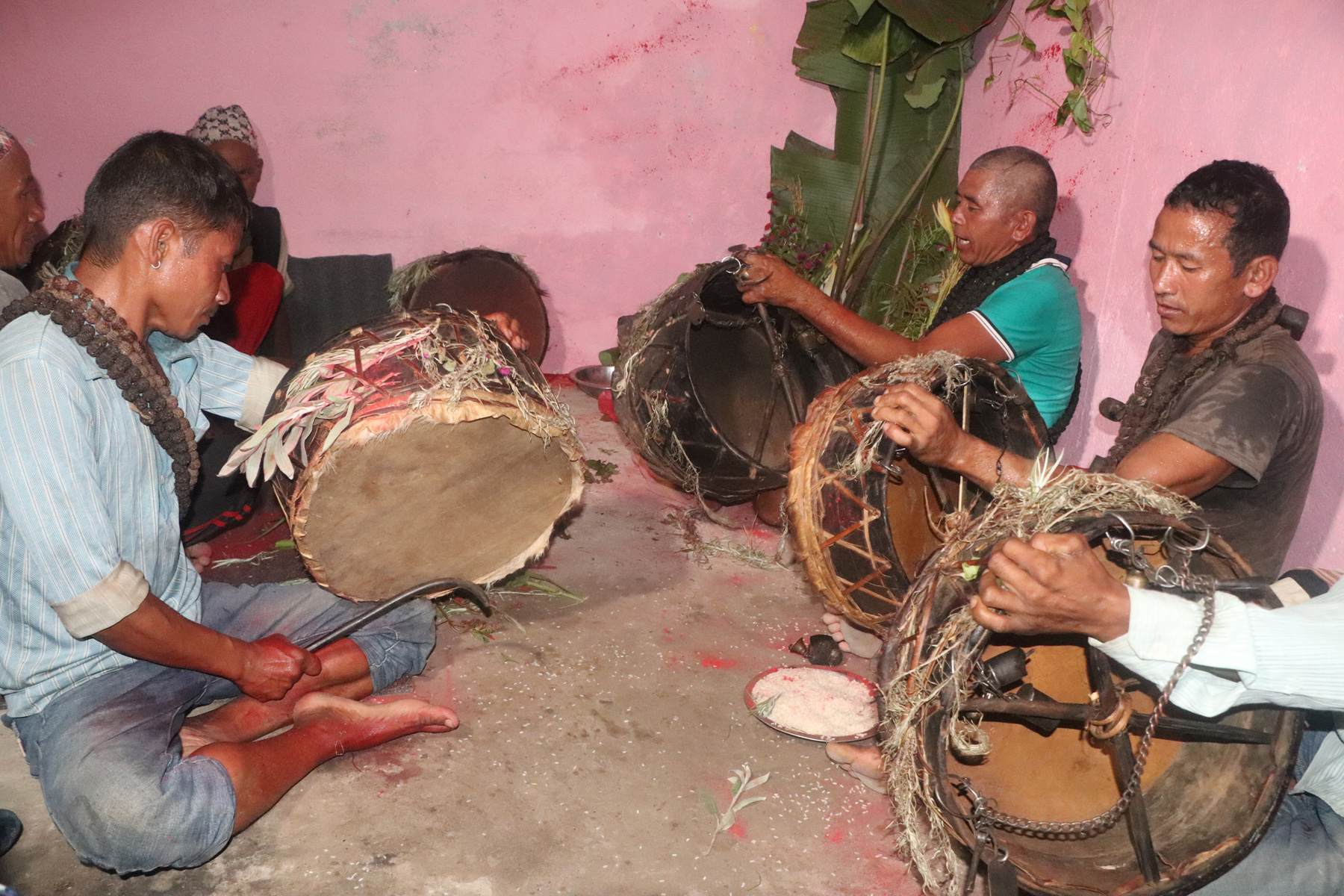
Religious ceremonies form a central part of Nawagi celebrations, with community shamans, known as Pande, carrying out traditional rituals while playing the dhyangro, a ceremonial drum. The rituals involve worship, invocation and remembrance of ancestors, while some communities also continue the traditional practice of offering a chicken as part of the ceremony. After the religious observances are completed, families, relatives and neighbours come together for communal feasts, dancing, singing, tika and the exchange of blessings, turning the festival into both a spiritual and social occasion.
The festival is known by different names within the community. While Nawagi is called “Chonam” in the Chepang language, it is also referred to as Pandei Ghyasa in some places. Depending on the clan and locality, shamans may begin the associated religious rituals from the beginning of Bhadra. Nawagi is also observed as “Warana,” a day when people traditionally refrain from going to work and remain at home with their families to participate in rituals, social gatherings, and remembrance ceremonies for relatives who have died during the year.
Bagmati Province Recognizes The Festival’s Cultural Importance
The cultural significance of Nawagi has also received official recognition from the Bagmati Province Government, which has declared a public holiday in Makwanpur, Chitwan and Dhading for the festival. The province has been providing the holiday since 2079 B.S. as part of efforts to recognize and preserve the culture and traditions of the Chepang community. The decision has given greater institutional recognition to a festival that has traditionally been observed within Chepang settlements across the region.
Nawagi celebrations are particularly prominent in the hill settlements of Makwanpur, Chitwan, Dhading and Gorkha, where the Chepang community has its principal population base. According to the 2021 national census, Nepal’s Chepang population stands at 84,364, with the majority living in these four districts. The geographical concentration of the community and the continuation of its traditional practices give the festival considerable importance in documenting and promoting Nepal’s diverse indigenous heritage.

Nawagi Offers A Distinctive Cultural Tourism Opportunity
The festival also carries potential significance for cultural and community-based tourism, as it brings together traditional rituals, indigenous food, music, social customs and an agricultural heritage that is distinct to the Chepang community. Every year on Bhadra 22, a Nawagi festival is organized on a rotating basis in one of Chitwan, Makwanpur, Dhading and Gorkha, creating an opportunity to introduce visitors to Chepang traditions while supporting greater recognition of the communities and destinations where the festival is celebrated.
Beyond its religious importance, Nawagi showcases the Chepang people’s relationship with nature, traditional lifestyle, and community solidarity. Its continuation offers visitors an opportunity to experience an indigenous cultural tradition in its community setting rather than only through formal heritage displays. With responsible tourism and community participation, such festivals can contribute to cultural preservation while creating greater visibility for lesser-known destinations in central Nepal.