The Nepali Army has launched a two-day “High-Altitude Search and Rescue” (SAR) exercise in Mustang aimed at strengthening rescue capabilities in extreme Himalayan conditions. The exercise began on Thursday in Jomsom, located in Gharapjhong Rural Municipality, under the coordination of the Indrabox Battalion of the Nepali Army. The initiative focuses on improving preparedness for emergency response in high-altitude regions prone to harsh weather, difficult terrain, and limited oxygen availability.
Focus on High-Altitude Disaster Response
According to the Nepali Army, the main objective of the training is to minimize risks associated with accidents in high Himalayan regions and to enhance efficiency in search and rescue operations. Officials stated that the exercise is particularly important due to challenges such as oxygen scarcity, extreme cold, avalanches, and geographical remoteness, which often complicate rescue missions in the mountainous terrain. The Indrabox Battalion said the simulation-based training is designed to strengthen both technical skills and operational readiness of personnel deployed in high-risk environments.

Joint Participation of Security Forces
More than 55 personnel are participating in the exercise, including troops from the Indrabox Battalion, the Army High Mountain School based in Kyesang, and a four-member team from the Bhairavi Dal Gulma of neighboring Manang district. The collaboration aims to improve coordination among security units during real-life emergencies in remote Himalayan regions.
Training to Enhance Technical Rescue Skills
Indrabox Battalion Chief Major Gauravdhwoj Khand said the exercise will help enhance the Nepali Army’s capability in high-altitude rescue operations and improve the technical expertise required for complex missions in difficult terrain.
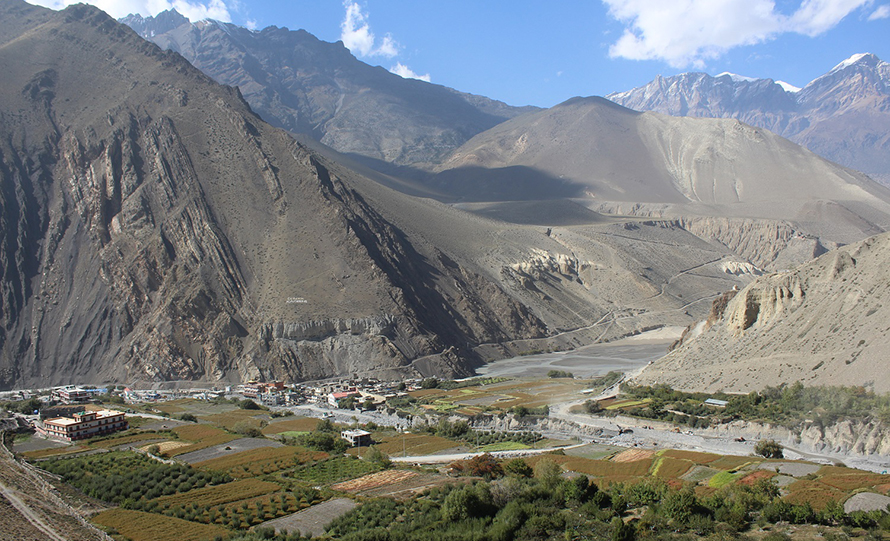
He noted that such training plays a vital role in developing specialized rescue techniques, particularly for incidents involving trekkers or climbers stranded in glaciers, mountain gorges, or avalanche-prone areas. The exercise includes simulated rescue operations such as evacuating stranded travelers from glacier zones and steep mountain ravines.
Rock Climbing and Glacier Rescue Simulations
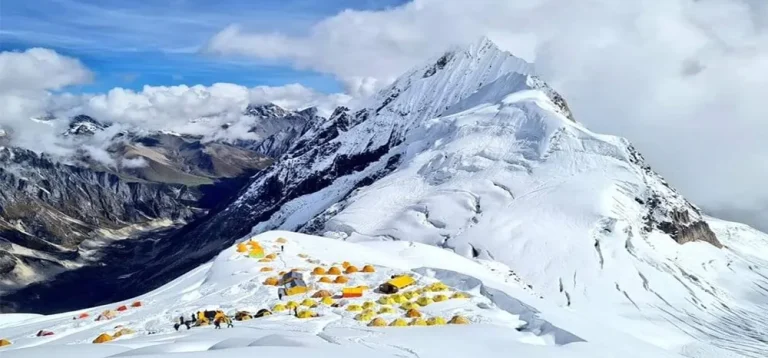
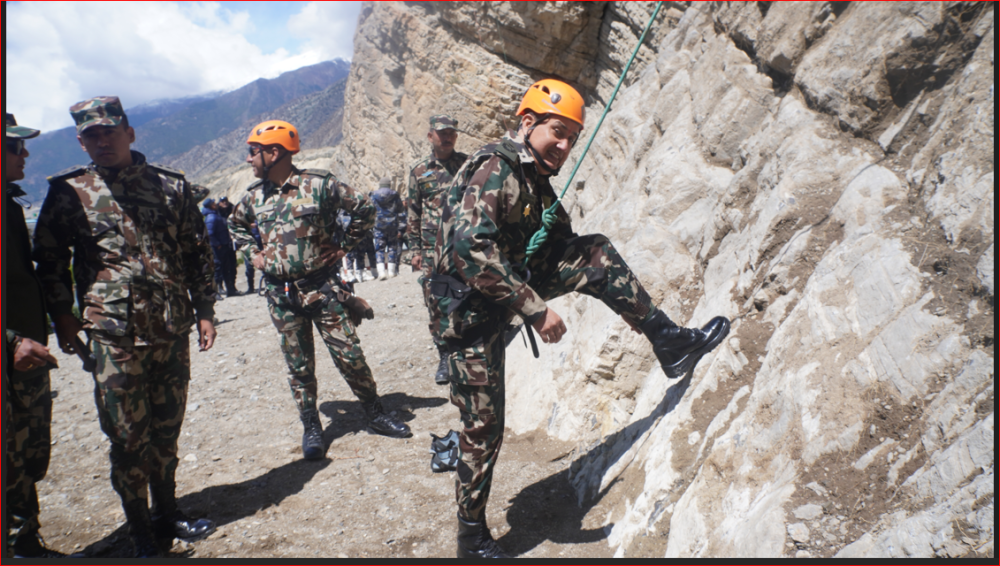
On the first day of the exercise, soldiers conducted a rock climbing simulation using ropes on a cliff near the Indrabox Battalion base, followed by a rescue operation exercise. On the second day (Friday), a major simulation exercise is scheduled in a glacier area near the Army High Mountain School in Gharapjhong–5. The site lies at an altitude of around 4,000 meters above sea level. The training will include mock rescue operations for trekkers stranded in glacial zones and snow avalanche scenarios, replicating real-life emergency conditions in high Himalayan environments.

High-Level Monitoring and Security Coordination
The exercise was observed by senior military officials, including Western Division Headquarters Commander Major General Bholanath Thapa, Brigade Commander Assistant Major General Vijay K.C., Principal of the Army High Mountain School Colonel Sushil Pyakurel, and Indrabox Battalion Commander Major Gauravdhwoj Khand.
Representatives from the Armed Police Force Nepal (APF) 33rd Company and the District Police Office Mustang were also present, highlighting inter-agency coordination in disaster response preparedness. Officials said the exercise reflects Nepal’s growing focus on strengthening high-altitude rescue capabilities, particularly as trekking and mountaineering activities continue to increase in the Himalayan region.