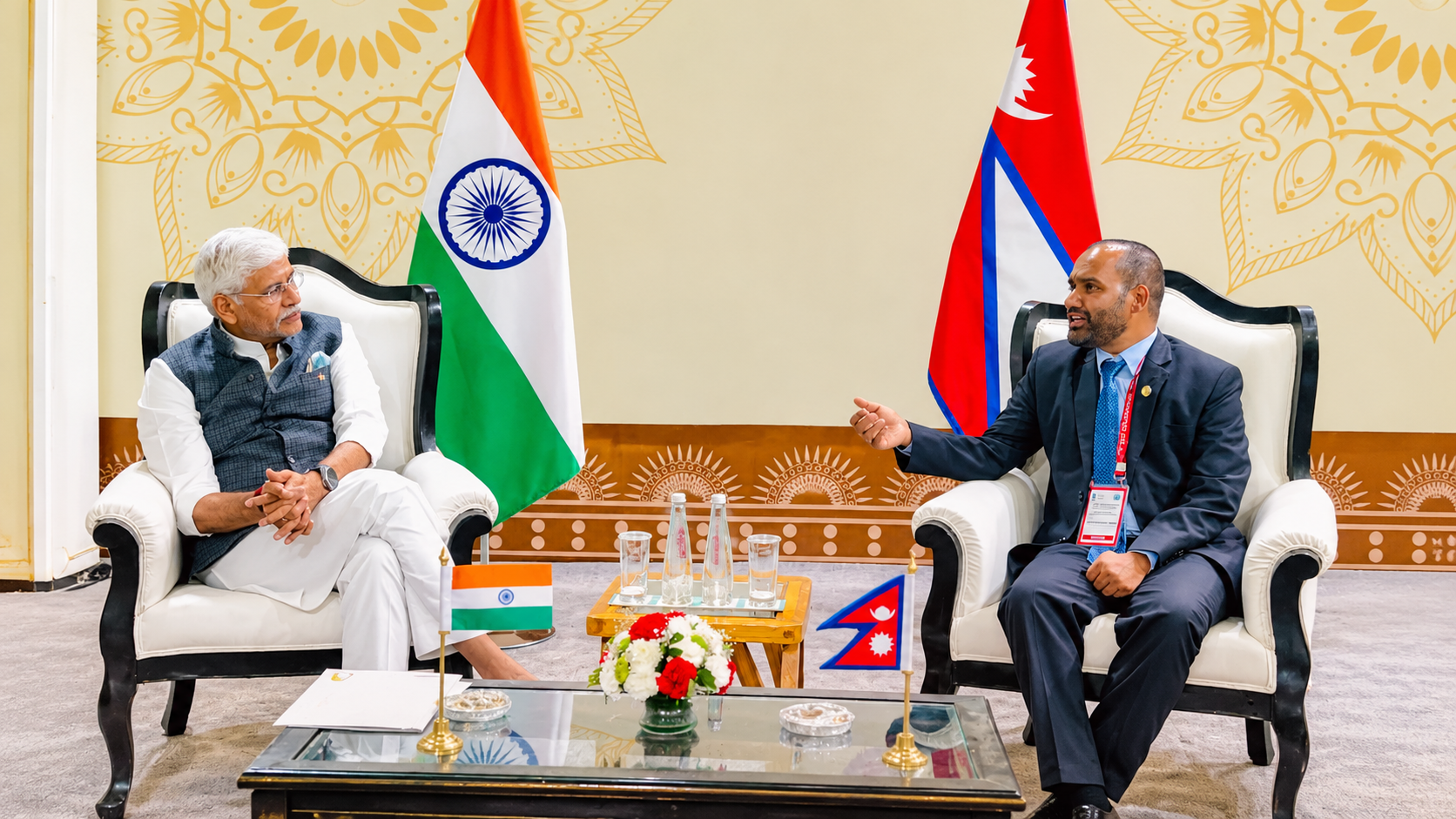
Nepal and India have discussed expanding direct air connectivity between India’s Tier-II cities and Bhairahawa and Pokhara to strengthen tourism flows, religious tourism and people-to-people relations between the two neighboring countries. The issue was discussed during a bilateral meeting between Khadak Raj Paudel (Ganess), Minister for Culture, Tourism and Civil Aviation of Nepal, and Gajendra Singh Shekhawat, Union Minister of Culture of India, on the sidelines of the First Shanghai Cooperation Organisation (SCO) Civilizational Dialogue Forum.
The meeting focused on further strengthening Nepal-India relations through improved air connectivity, enhanced cultural cooperation and greater interaction between the people of both countries. Both sides emphasized that improved connectivity between Indian cities and Nepal’s key tourism destinations could facilitate the movement of tourists, pilgrims and other travellers while creating new opportunities for tourism cooperation.
Direct Flights From Tier-II Indian Cities to Bhairahawa and Pokhara
During the meeting, both sides placed particular emphasis on the possibility of expanding direct air services between Tier-II cities in India and Bhairahawa and Pokhara. Such connectivity is expected to play an important role in diversifying tourism flows beyond the traditional routes and making travel to Nepal’s major tourism and religious destinations more convenient for Indian visitors. Bhairahawa, which serves as the gateway to Lumbini, holds significant importance for Buddhist and religious tourism, while Pokhara is one of Nepal’s major destinations for nature, adventure and leisure tourism.
Direct connections from additional Indian cities could therefore support increased tourist arrivals, pilgrimage travel and business and cultural exchanges. The initiative could also strengthen regional air connectivity and provide travellers from India with more convenient alternatives to travelling through Kathmandu.
Religious Tourism Identified as Key Area of Cooperation
The expansion of air connectivity was discussed in the context of strengthening religious tourism between Nepal and India. The two countries share deep historical, religious and civilizational links, with numerous destinations of importance to Hinduism and Buddhism located across both sides of the border. Improved connectivity to Bhairahawa could particularly facilitate travel to Lumbini, the birthplace of Lord Buddha, while enhanced connectivity to Pokhara could support visitors travelling to religious and cultural sites in western Nepal.
Greater accessibility is expected to encourage pilgrimage circuits and support the development of tourism products connecting important religious and cultural destinations in Nepal and India. The two sides viewed enhanced connectivity as an important means of bringing people closer and translating the longstanding cultural relationship between the two countries into increased tourism and visitor movement.
Cultural Cooperation to Cover Literature, Arts and Heritage
The bilateral discussions also focused extensively on strengthening cooperation in the cultural sector. Nepal and India identified opportunities for deeper collaboration in literature, visual arts, architecture, heritage conservation, cultural knowledge and traditional practices. Both sides emphasized the importance of exchanging knowledge and experiences in these areas to preserve and promote the shared cultural heritage of the two countries.
Given the longstanding civilizational relationship between Nepal and India, cultural cooperation was viewed as an important avenue for strengthening mutual understanding and promoting the common heritage shared by the people of both nations. Greater institutional cooperation between cultural organizations could further facilitate exchanges of artists, writers, researchers, architects and heritage professionals.
Joint Cultural Programmes and Exhibitions Proposed
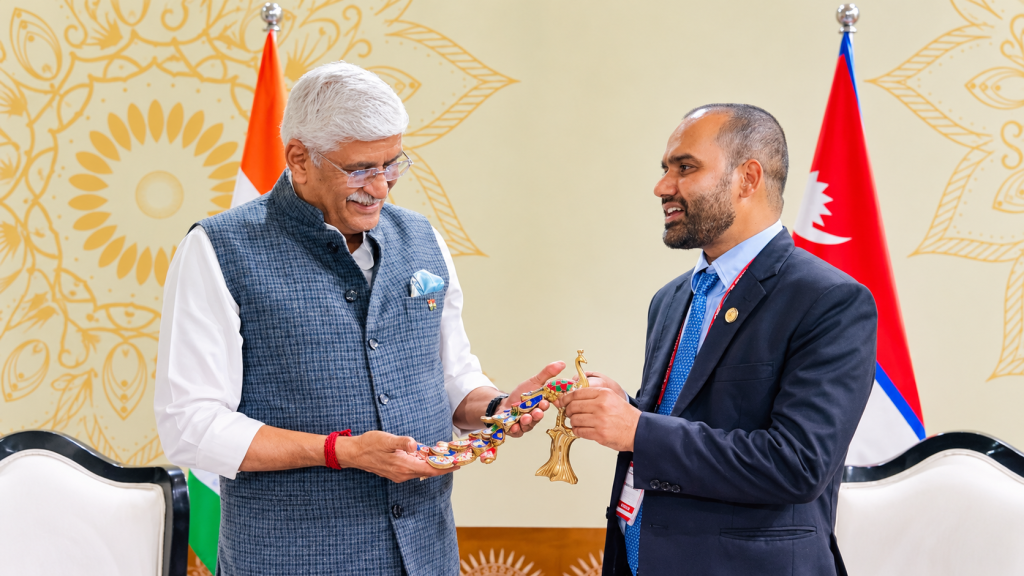
The meeting also underscored the importance of organizing joint cultural programmes, exhibitions, literary interactions and artistic collaborations as part of efforts to deepen Nepal-India cultural relations. Such initiatives could provide platforms for artists, writers and cultural institutions from both countries to showcase their respective traditions while also exploring areas of shared heritage.
Cultural exhibitions and artistic programmes could further promote Nepal’s heritage and creative industries among Indian audiences, while similar exchanges could help expand public understanding of India’s diverse cultural traditions in Nepal. The two sides also highlighted the importance of institutional partnerships to create sustained mechanisms for cultural cooperation rather than limiting exchanges to individual events.
Strengthening Longstanding Civilizational Ties
The discussions reflected the broader significance of the historical and civilizational relationship between Nepal and India. The two countries share centuries-old connections in religion, culture, literature, art, architecture, traditions and social practices. Against this backdrop, cultural cooperation was highlighted as an important component of bilateral relations alongside tourism and connectivity.
Both ministers emphasized the need to use cultural exchanges to further strengthen mutual understanding and maintain close ties between communities in the two countries. Joint initiatives in heritage conservation, cultural research and knowledge exchange could also contribute to documenting and preserving the shared elements of Nepalese and Indian civilization for future generations.
Connectivity and Culture Seen as Drivers of Stronger Bilateral Relations
The meeting also emphasized the interconnected role of tourism, culture and connectivity in strengthening Nepal-India relations. Improved air connectivity can facilitate greater tourist movement, while cultural programmes can create stronger social and institutional links between the two countries.
Increased people-to-people interaction can, in turn, contribute to greater mutual understanding and create opportunities for cooperation in tourism, education, arts and other sectors. The discussions therefore placed connectivity and cultural exchange within a broader framework of strengthening bilateral relations and bringing the people of Nepal and India closer together.
Meeting Reaffirms Shared Commitment to Deeper Nepal-India Ties
The bilateral meeting concluded with a shared emphasis on further deepening Nepal-India relations through enhanced cooperation in culture, tourism, aviation connectivity and people-to-people exchanges. The proposed expansion of direct air services from Indian Tier-II cities to Bhairahawa and Pokhara could provide a significant boost to tourism and pilgrimage travel if implemented, while increased cultural exchanges could further reinforce the countries’ longstanding civilizational ties.
The discussions during the SCO Civilizational Dialogue Forum reaffirmed the two sides’ commitment to developing stronger institutional and people-level connections and using tourism and culture as important instruments for bringing Nepal and India closer together.