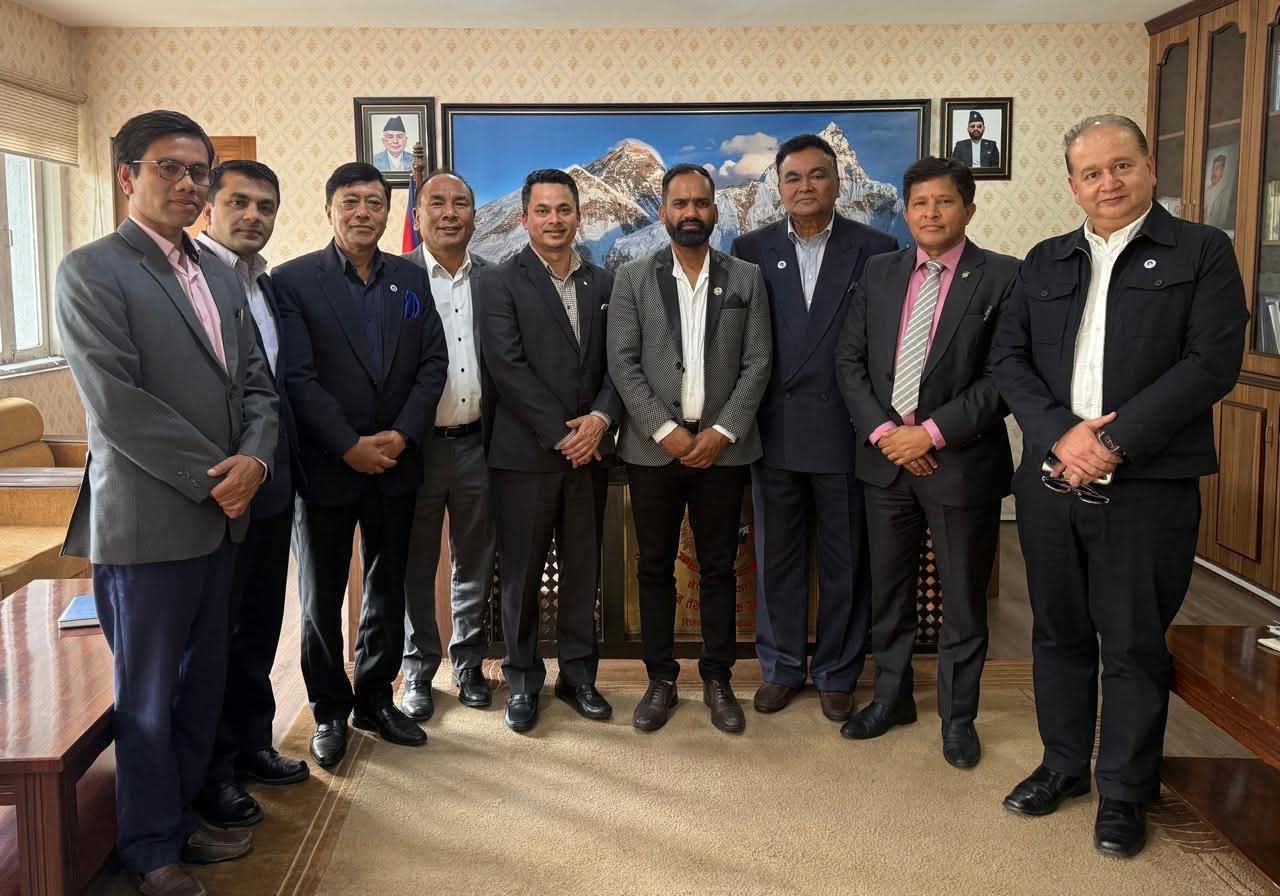
In a significant move aimed at revitalizing Nepal’s tourism industry, a high-level meeting was held in a joint effort between the government and leading private sector tourism bodies. The discussion brought together key stakeholders, including the Minister of Culture, Tourism, and Civil Aviation, Khadka Raj Paudel, and representatives from major industry associations.
Representatives from Nepal’s leading tourism organizations came together for a high-level collaborative meeting, including the Nepal Association of Tour and Travel Agents (NATTA) President Kumar Mani Thapaliya, Trekking Agencies’ Association of Nepal (TAAN) President Sagar Pandey, Hotel Association Nepal (HAN) President Binayak Shah, HAN General Secretary Sajan Shakya, HAN CEO Tekendra Mahat, and Nepal Mountaineering Association (NMA) President Phur Gelje Sherpa, along with other key stakeholders, reflecting a unified effort among the sector’s main organizations to address industry challenges and explore new opportunities.
The meeting highlighted a collective and coordinated approach, with all stakeholders working in unison to strengthen Nepal’s tourism sector. The gathering reflected a shared commitment to addressing existing challenges, enhancing collaboration, and exploring new opportunities for sustainable growth, emphasizing that the initiative was carried out through a joint effort rather than the leadership of a single individual.

Strengthening Public-Private Collaboration
The meeting served as an important platform for dialogue between the government and private sector representatives. Discussions centered on strengthening partnerships to boost tourism recovery and long-term resilience, especially in the aftermath of global disruptions that have impacted travel trends.
President of NATTA, Thapaliya, emphasized the importance of cohesive efforts, stating that collaboration between policymakers and industry stakeholders is essential to ensure Nepal remains competitive in the global tourism market. He highlighted the need for supportive policies, streamlined regulations, and strategic marketing initiatives to attract more international visitors.
Minister Paudel expressed his commitment to working closely with industry bodies to implement practical and effective solutions. He acknowledged the vital role tourism plays in Nepal’s economy and reiterated the government’s readiness to facilitate growth through policy reforms and infrastructure development.
Focus on Sustainable and Inclusive Growth
A key focus of the discussions was the promotion of sustainable tourism practices. Participants stressed the importance of balancing economic growth with environmental conservation and cultural preservation. Nepal, known for its natural beauty and rich heritage, faces increasing pressure to maintain sustainability while expanding tourism activities.
The gathering demonstrated a rare moment of unity among stakeholders who often operate in different domains within the tourism industry. By working collectively, NATTA, TAAN, HAN, and NMA aim to foster innovation, resilience, and inclusivity in tourism planning and development.
“Today’s dialogue sets the foundation for a new era of partnership between government authorities and industry representatives,” said Mr. Sagar Pandey, president of TAAN. “With coordinated efforts, we can not only revitalize the sector but also create opportunities for local communities, promote sustainable tourism practices, and enhance Nepal’s reputation internationally.”
Furthermore, the meeting underscored the importance of community-based tourism initiatives that benefit local populations. By involving local communities and promoting responsible tourism, Nepal can create a more inclusive and equitable tourism model.
Policy Support and Innovation
Another major theme of the meeting was the need for policy support to encourage innovation within the tourism sector. Industry leaders called for the introduction of modern technologies, digital marketing strategies, and improved service standards to meet evolving traveler expectations.
Minister Paudel assured stakeholders that the government would prioritize these areas and work towards creating a more business-friendly environment. He emphasized that innovation and adaptability would be key drivers in positioning Nepal as a preferred travel destination in the coming years.
A Shared Vision for the Future
The meeting concluded on a positive note, with all parties expressing optimism about the future of Nepal’s tourism sector. The collaborative spirit demonstrated during the discussions signals a strong foundation for future initiatives and partnerships.

As Nepal continues to rebuild and strengthen its tourism industry, such high-level engagements are expected to play a crucial role in shaping policies and strategies. The collective efforts of government authorities and private sector leaders are likely to pave the way for a more resilient, innovative, and sustainable tourism ecosystem. With renewed energy and a shared vision, Nepal’s tourism sector appears poised to enter a new chapter of growth and global recognition.