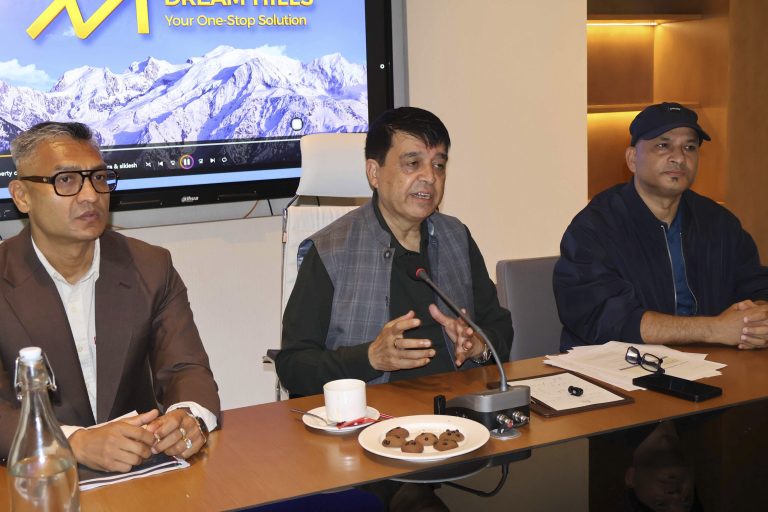
Deepak Raj Joshi, Chief Executive Officer of the Nepal Tourism Board (NTB), has stressed the importance of using modern technology to boost the development of Nepal’s tourism sector. Speaking at the inaugural session of the “Technology-Friendly Tourism and AI Training”, he highlighted that the adoption of advanced tools and artificial intelligence has become a pressing need for promoting tourism effectively in the country.
The four-day training program is jointly organized by the Trekking Agencies’ Association of Nepal (TAAN), the Nepal Tourism Board, and the Sustainable Tourism Project (STP), supported by the United Nations Development Programme (UNDP) Nepal. CEO Joshi pointed out that the recent surge in international tourist arrivals to Nepal has been closely linked to the strategic use of technology, underlining that skill development in this area is essential for the sector’s continued growth.

AI Training as a Tool for Tourism Promotion
Sagar Pandey, President of TAAN, expressed confidence that the AI training would provide significant support in professionally advancing Nepal’s tourism sector. He emphasized that equipping the younger generation with technology-friendly skills is crucial to connect them with tourism and ensure sustainable growth.
Similarly, Karma Sherpa, Senior Vice President of TAAN, noted that in today’s digital age, AI-focused training has become indispensable. He highlighted that such initiatives can play a transformative role in promoting Nepal as a modern, tech-savvy tourism destination.
Capacity Building for Trekking Businesses
Ram Chandra Sedai, CEO of TAAN, stressed that this training program would strengthen the capacity of trekking entrepreneurs and support the development of Nepal’s mountainous tourism destinations. He expressed optimism that adopting AI-driven solutions could enhance service quality, operational efficiency, and the overall tourist experience.
The training will cover various topics, including the use of AI in tourism, destination development, capacity enhancement, and tourism safety. According to the program coordinator and TAAN member Raju Gurung, the four-day sessions aim to provide practical and actionable knowledge to participants, enabling them to integrate technology into their operations effectively.
Participation and Objectives
The first phase of the training, which began today, involves 30 trekking companies. It is designed to empower local tourism operators, especially in the trekking sector, to adopt technology in areas such as marketing, customer engagement, and operational management. The sessions will also focus on promoting Nepal’s tourism destinations to the global market through innovative, tech-enabled strategies.
Ambir Bahadur Gurung, co-coordinator of the training and TAAN member, expressed confidence that such programs would help showcase Nepal’s tourism destinations internationally. He emphasized that equipping tourism professionals with digital and AI skills is a crucial step in making Nepal competitive in the global tourism market.

Towards a Technology-Enabled Tourism Sector
Officials and participants highlighted that the integration of AI and technology in tourism is not merely an option but a necessity for Nepal to sustain its growth in the post-pandemic era. The training represents a step forward in modernizing Nepal’s tourism operations, improving service standards, and enhancing the overall competitiveness of the country as a global destination.
By linking technology, innovation, and capacity building, the program aims to ensure that tourism in Nepal remains attractive, safe, and adaptive to the needs of modern travelers. Stakeholders believe that such initiatives will significantly contribute to Nepal’s vision of a technology-enabled, sustainable tourism sector.