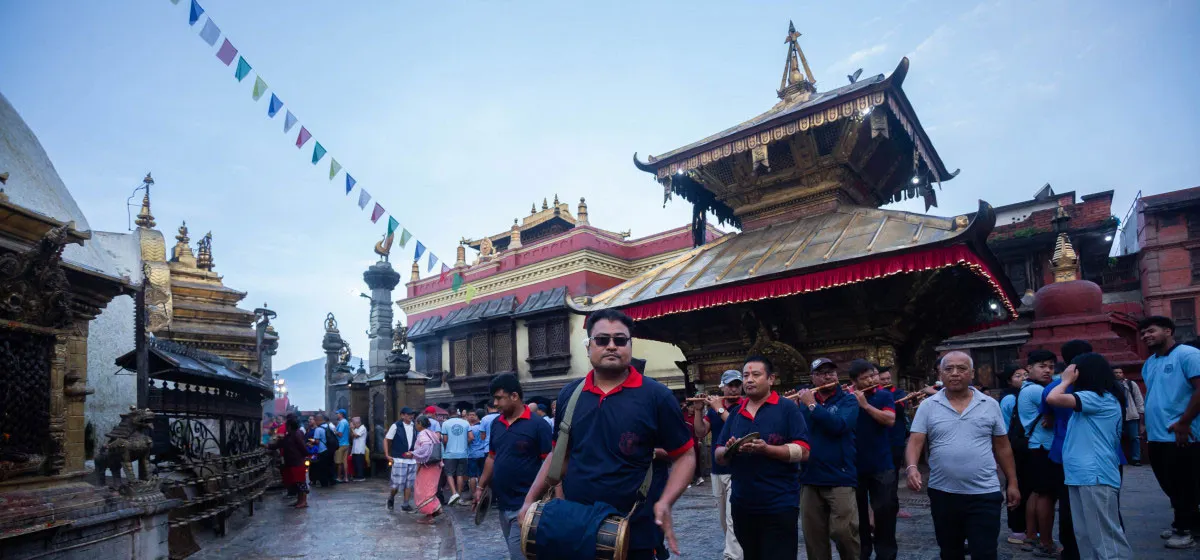
Members of the Manandhar and Shakya communities in Banepa are observing the month-long ‘Gunla’ festival, continuing a centuries-old tradition that blends Buddhist devotion with the rich musical and cultural heritage of the Newar community. During the festival, the Wankhyo Dafa Bhajan Khalah has been conducting traditional religious processions, visiting Buddhist monasteries, stupas, chaityas, bahis and other sacred sites across Banepa. Accompanied by traditional musical instruments, the group has been maintaining the customary practice of visiting religious places throughout the month.
A Month of Religious Processions
Gunla is observed for an entire month, with devotees and cultural groups beginning their activities early in the morning. Participants move through historic settlements and religious sites while playing traditional instruments and performing devotional music.

The sound of traditional instruments across Banepa’s old neighborhoods creates a distinctive festive atmosphere, while members of the Dafa group dressed in traditional attire add to the cultural character of the celebrations. Local resident Bishwaram Manandhar said the festival provides an important platform for showcasing the Newar community’s traditional art, music, instruments, Dafa culture and spirit of social unity.
Keeping Dafa and Traditional Music Alive
One of the defining features of Gunla is the continuation of Dafa-Bhajan, a traditional form of devotional music performed with indigenous musical instruments. The practice has been passed from one generation to another and remains an important part of Banepa’s cultural identity. Cultural practitioners say involving younger generations in the festival is helping preserve these traditions. Young people are encouraged to learn traditional instruments, participate in devotional singing and join religious processions, allowing cultural knowledge and practices to be transmitted to future generations.
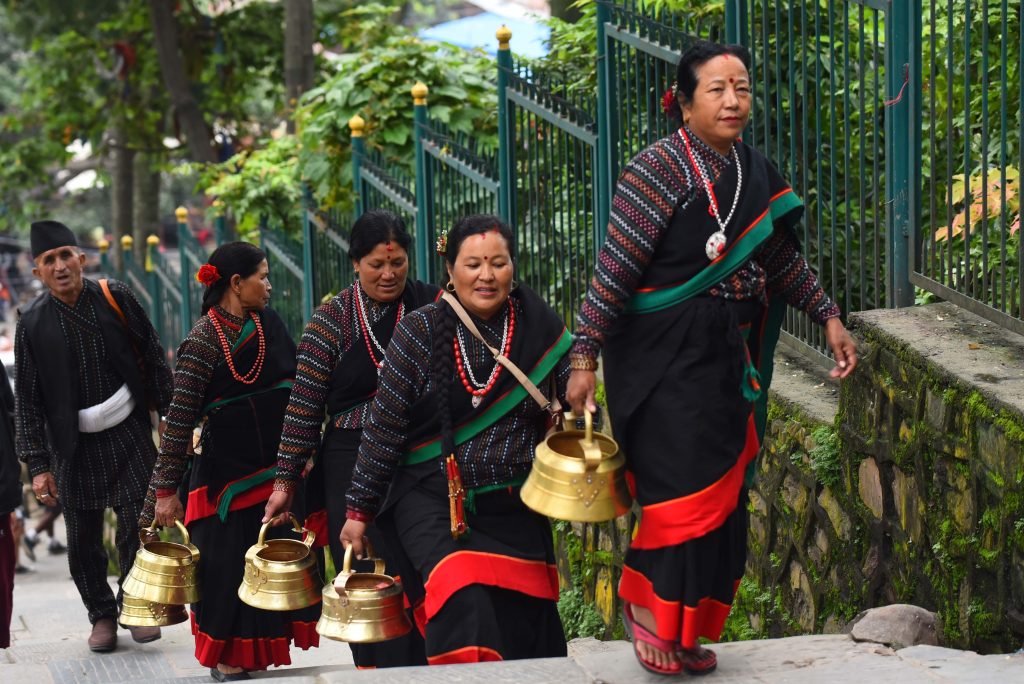
Beyond its religious significance, the Gunla festival adds to Banepa’s cultural tourism appeal by offering visitors an opportunity to experience authentic Newar traditions, traditional music, religious processions and historic heritage sites. The month-long celebration can help promote Banepa as a destination for cultural and heritage tourism, attracting visitors interested in Nepal’s living traditions.
Faith and Cultural Heritage Combined
The festival holds particular religious significance for Buddhist devotees, who visit monasteries and chaityas to pay homage to Lord Buddha. Devotees take part in prayers and worship, light lamps and join religious journeys as part of the month-long observance. Gunla therefore represents more than a religious celebration. It brings together spiritual devotion, traditional music, community participation and cultural heritage, making it closely connected with the traditional lifestyle of the Newar community.

Banepa’s Cultural Identity on Display
The cultural processions organized by Wankhyo Dafa Bhajan Khalah have also become an important way of highlighting Banepa’s distinctive heritage. Through traditional music, devotional performances and collective religious journeys, the festival brings the city’s historic cultural identity into public view. The continuation of these practices is particularly significant at a time when traditional forms of music and community-based cultural activities face the challenge of changing lifestyles.
By involving younger members of the community, the organizers are seeking to connect the new generation with their history, traditions and cultural roots. As the month-long Gunla festival continues, the streets and historic settlements of Banepa are once again resonating with traditional melodies, religious devotion and community participation keeping an important part of Newar cultural heritage alive for future generations.