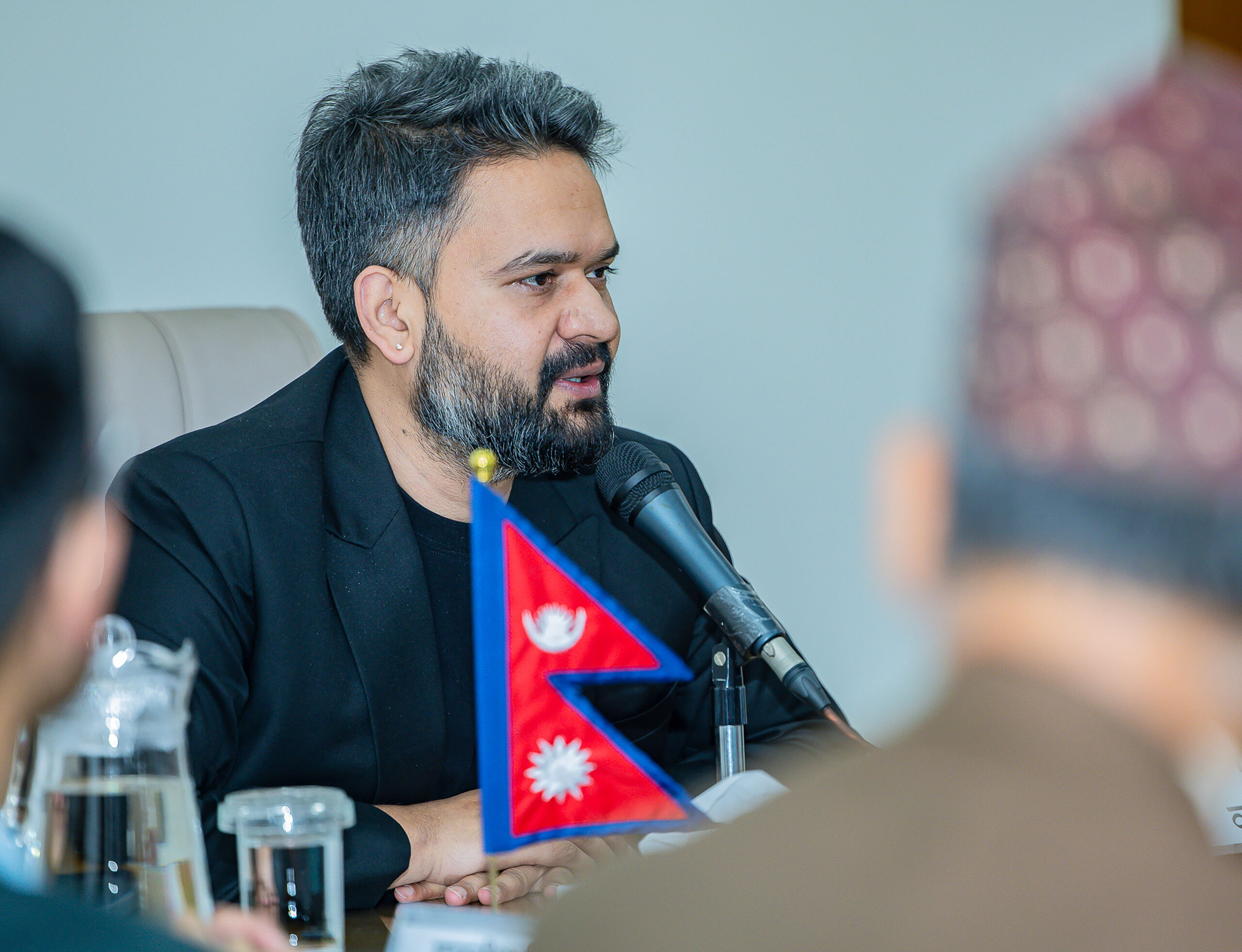
Prime Minister Balendra Shah has reaffirmed the government’s commitment to accelerating the growth of Nepal’s tourism and hospitality sector, assuring hotel entrepreneurs that the government is actively working to address long-standing challenges and create a more business-friendly environment for the industry.
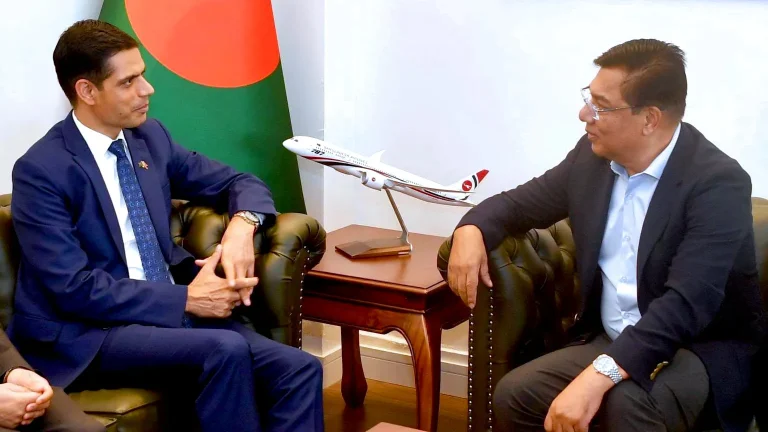
During a meeting with officials of the Hotel Association Nepal (HAN) at the Office of the Prime Minister and Council of Ministers in Singha Durbar, Prime Minister Shah emphasized that tourism remains one of the country’s most important economic sectors and called on the private sector to work closely with the government in realizing Nepal’s tourism ambitions. The discussion was attended by Minister for Culture, Tourism and Civil Aviation Khadak Raj Paudel along with senior representatives of the hotel industry.

Government Sees Private Sector as Key Partner; Prime Minister Balendra Shah
Addressing the delegation, Prime Minister Balendra Shah urged hotel entrepreneurs not to be discouraged by existing challenges, stating that the government is moving ahead with reforms and infrastructure improvements aimed at strengthening Nepal’s tourism industry. Prime Minister Balendra Shah emphasized that the private sector has been given high priority in the government’s economic agenda and described hotel entrepreneurs as indispensable partners in national development.
“The government considers the private sector a strong development partner and is working promptly to promote tourism and improve the investment environment,” the Prime Minister Balendra Shah said. Prime Minister Balendra Shah also encouraged businesses to fully comply with existing laws and fulfill their corporate responsibilities while maintaining transparency in their operations.
Call for Formalization of Small and Medium Hotels by Prime Minister Balendra Shah
The Prime Minister Balendra Shah urged small and medium-sized hotels that are operating outside the formal system to register with the Department of Tourism and become part of the country’s tax framework. Prime Minister Balendra Shah also encouraged stakeholders to explore greater collaboration through Public-Private Partnership (PPP) models, stating that joint investment and coordinated planning could significantly enhance tourism infrastructure and service delivery.
Hotel Industry Ready to Welcome Four Million Tourists
During the meeting, representatives of the Hotel Association Nepal informed the Prime Minister that Nepal’s hotel industry currently has the capacity to accommodate up to four million tourists annually. However, they noted that the country is presently receiving only around 1.2 million international visitors each year, meaning a large portion of available accommodation infrastructure remains underutilized.
HAN officials stressed that increasing tourist arrivals would generate substantial employment opportunities, stimulate local economies, and help reduce the growing trend of young Nepalis seeking employment abroad. According to the association, a thriving tourism industry has the potential to become one of Nepal’s strongest engines of sustainable economic growth.
Industry Calls for Strategic Tourism Diversification
Hotel entrepreneurs highlighted Nepal’s significant potential to diversify its tourism products beyond adventure tourism. They identified health and wellness tourism, destination weddings, and cross-border tourism as sectors with enormous growth prospects capable of attracting higher-value international visitors. To unlock these opportunities, HAN submitted several policy recommendations to the government aimed at improving Nepal’s competitiveness as a tourism destination.
Policy Reforms Sought
Among the key demands, hotel operators requested that the government extend the same electricity tariff concessions currently available to manufacturing industries to hotels, arguing that energy costs remain one of the sector’s largest operational expenses. The association also urged authorities to revise environmental regulations by increasing the threshold requiring a Brief Environmental Impact Assessment (BEIA) from hotels with 25 beds to 50 beds, describing the current provision as impractical for medium-sized hospitality businesses.
Another major concern raised was international air connectivity. The association called on the government to ensure the full commercial operation of Pokhara International Airport and Gautam Buddha International Airport in Bhairahawa, while also improving the operational efficiency and international services of Nepal Airlines. Industry leaders argued that better international connectivity is essential for attracting more foreign visitors and maximizing Nepal’s tourism potential.
Investment and Legal Reforms Proposed
HAN also requested amendments to the Foreign Investment and Technology Transfer Act, 2018, particularly the provision that limits royalty payments for trademark use under technology transfer agreements to five percent of total sales excluding taxes. According to hotel entrepreneurs, allowing royalty rates to be determined through mutual agreement would encourage greater international hotel investment, attract renowned global hospitality brands, and improve service quality across Nepal. They further called for a broader review of laws governing the hotel industry to create a more competitive investment environment.

Boosting Wedding and Medical Tourism
The association also presented recommendations to position Nepal as a leading destination for wedding tourism by simplifying customs procedures for bringing jewelry and ceremonial items required for destination weddings. In addition, they emphasized the need to strengthen medical tourism by promoting comprehensive treatment and recovery packages rather than limiting promotional efforts to one-time photo and video campaigns. They suggested integrating expert consultations, wellness experiences, and complete storytelling into Nepal’s medical tourism marketing strategy.
Industry Leaders Participate
The meeting was attended by HAN Acting Chairman Dinesh Tuladhar, General Secretary Sajan Shakya, Treasurer Yuvraj Shrestha, committee members Jayadin Shrestha and Ashlesha Karki, and Secretariat Chief Tek Bahadur Mahat. The discussion concluded with a shared commitment from both the government and the private sector to strengthen cooperation, improve tourism infrastructure, implement policy reforms, and position Nepal as a more competitive global tourism destination.