Hundreds of thousands of visitors expected along eclipse path as authorities strengthen safety measures amid extreme heat and dry conditions. Spain has introduced a nationwide safety operation as hundreds of thousands of visitors gather to witness the total solar eclipse on Wednesday, August 12. While the rare astronomical event is expected to generate a major tourism boost across northern and eastern parts of the country, authorities are simultaneously facing heightened wildfire risks caused by extreme temperatures, exceptionally dry vegetation and a large increase in visitor movement through rural areas.
The total solar eclipse will cross Spain along a route stretching from A Coruña in Galicia to Mallorca, placing the country among Europe’s most prominent destinations for observing totality. Authorities estimate that up to six million people could gather along the eclipse’s wider path, while approximately 460,000 international tourists are expected to have travelled to Spain specifically to experience the event. The unprecedented concentration of visitors has created additional challenges for emergency services, transportation networks and local authorities.

Authorities warn of heightened wildfire danger
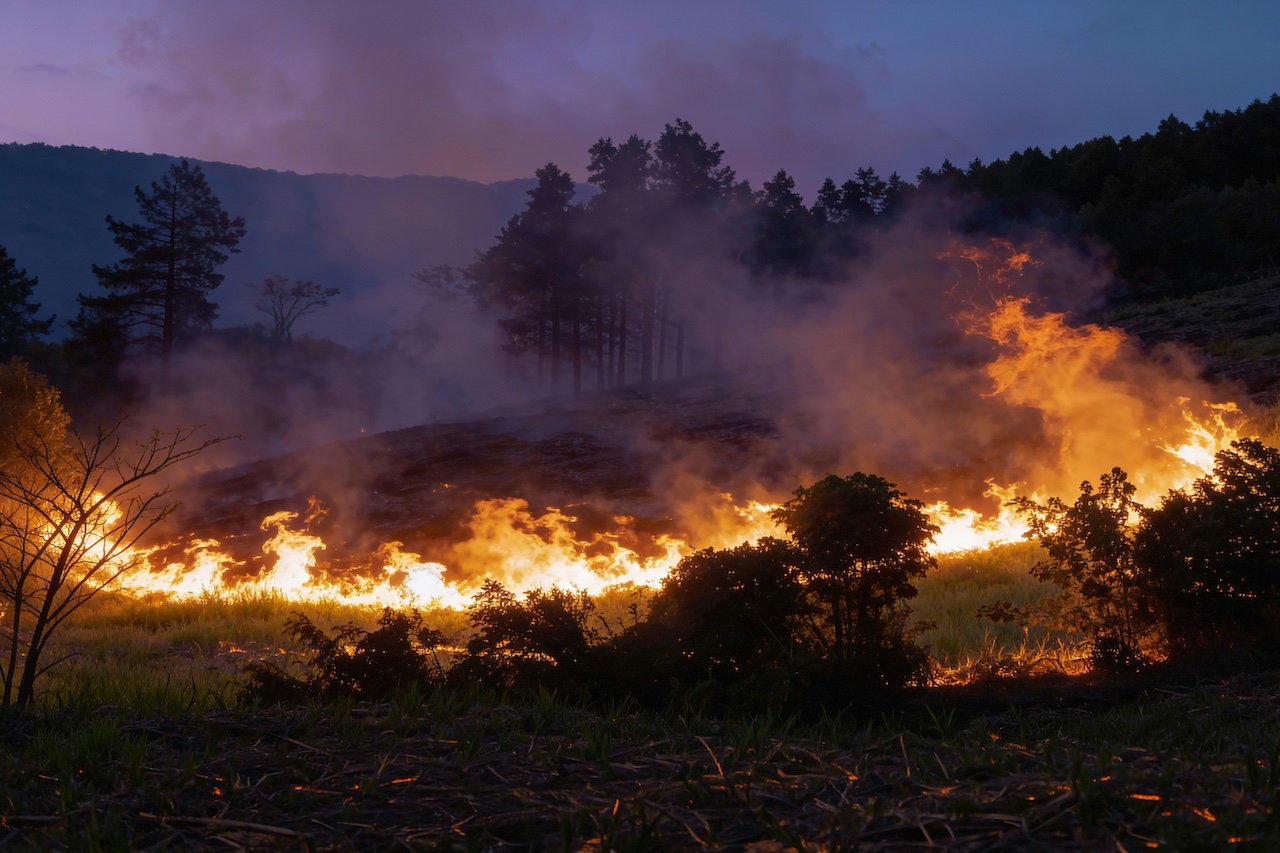
The eclipse comes at a particularly difficult time for Spain, which has experienced weeks of intense heat and destructive wildfires. Approximately 200,000 hectares of land have already been affected by fires this year, a figure reported to be around six times higher than the area burned during the same period in 2025. Recent fires have affected areas including Huelva, Segovia and Huesca, increasing concerns that the large influx of tourists could create additional ignition risks. Weather conditions have further intensified the threat.
July was mainland Spain’s joint hottest July since records began in 1961 and the country’s driest July on record, with only 4.3 millimetres of rainfall, roughly 26 percent of the month’s normal precipitation. Much of the country remains exceptionally dry, leaving vegetation highly vulnerable to ignition. Temperatures are expected to reach approximately 40°C in some areas on Wednesday, while Spain’s national weather agency, AEMET, has warned of very high or extreme forest fire danger across large parts of the Iberian Peninsula and the Balearic Islands.
Tourists urged to avoid activities that could cause fires
Spanish authorities are calling on visitors to exercise extreme caution, particularly when travelling into forests, rural landscapes and other areas containing dry vegetation. Officials have warned that even a small spark or careless action could quickly develop into a major wildfire under the prevailing conditions. Potential sources of ignition include discarded cigarettes, barbecues, fireworks and vehicles parked over dry grass. Authorities have specifically cautioned drivers that heat generated by parts underneath vehicles could ignite dry vegetation if cars are parked in vulnerable areas.
Environment Minister Sara Aagesen has urged people visiting natural areas to take maximum precautions, while Virginia Barcones, Secretary General for Civil Protection and Emergencies at Spain’s Interior Ministry, emphasized the need to restrict activities capable of producing sparks during an already severe wildfire season.
Traffic expected to create additional pressure
The enormous number of eclipse visitors is also expected to place considerable pressure on Spain’s road network. Authorities anticipate around 1.5 million additional car journeys associated with the event, raising concerns about congestion and access to rural viewing locations. Officials have advised travelers to avoid unnecessary journeys and have warned motorists not to stop on roads or hard shoulders to watch the eclipse. Apart from creating traffic hazards, vehicles stopped in inappropriate locations could block access routes required by firefighters, ambulances and other emergency services. The concern is particularly serious in rural areas, where narrow roads and heavy congestion could delay emergency responders if a wildfire or other incident occurs during the eclipse.
More than 660 official viewing locations prepared
Spain has established a large-scale security and emergency management operation to handle the anticipated crowds. More than 660 official eclipse observation points have been identified across the country, while approximately 35,000 officers are expected to participate in crowd management, traffic control and protection of vulnerable areas. A national control center in Madrid will coordinate surveillance and emergency responses during the event. Regional authorities have also introduced additional measures based on local wildfire conditions.
In Valencia, for example, natural parks have been closed and access to some rural footpaths restricted. Authorities have also suspended camping and activities involving fire in high-risk areas, while barbecues and fireworks have been prohibited. Some planned eclipse gatherings in other parts of Spain have also been cancelled because of concerns over fire danger.
Eclipse creates major tourism surge
Despite the safety concerns, the eclipse has generated an extraordinary tourism boom in communities located along the path of totality. Hotels, campsites, motorhome facilities and rural accommodation have experienced strong demand, with many properties booked well in advance. The event has also pushed up accommodation prices in several popular viewing destinations. A Coruña, Mallorca, Santiago de Compostela and Bilbao have reported particularly strong interest as travelers compete for accommodation in locations offering favorable views of totality.
The scale of demand reflects the rarity of the event. Mainland Spain has not experienced a total solar eclipse visible across the country for more than a century, making the August 12 eclipse a major opportunity for astronomy tourism and destination promotion. The eclipse’s visibility across locations including A Coruña, Bilbao, Zaragoza and the Balearic Islands has encouraged tourists to travel beyond Spain’s traditional urban and coastal destinations, bringing increased attention to smaller communities along the eclipse route.
Astrotourism attracts international attention
The eclipse is also highlighting the growing potential of astrotourism, with visitors travelling specifically to observe astronomical events in suitable destinations. The concentration of tourists in smaller towns and rural communities demonstrates how major celestial events can create economic opportunities for accommodation providers, restaurants, transport operators and other tourism businesses. The international interest has extended beyond tourists. NASA has selected the village of Villalibedo in northwestern Spain as one of its observation locations, where it has installed four high-powered telescopes near the village’s Romanesque church. The equipment will be used to livestream the eclipse to viewers around the world, further increasing Spain’s visibility as an international astronomical observation destination.
Eye protection remains another major concern
Alongside wildfire and traffic risks, authorities are also warning visitors about the dangers of observing the eclipse without appropriate eye protection. Looking directly at the Sun without certified protection can cause serious eye damage, particularly when people attempt to observe or photograph the event without suitable equipment.
Spain has already seen concerns over the quality of eclipse viewing glasses. Six brands of eclipse glasses were withdrawn after being considered unsafe by consumer organization FACUA. Visitors have therefore been advised to use properly certified solar viewing glasses rather than relying on ordinary sunglasses or unsuitable optical equipment. Photographers and tourists using smartphones or cameras have also been reminded that direct exposure to the Sun can damage equipment if appropriate filters and protection are not used.

Tourism opportunity meets environmental challenge
The eclipse represents a major opportunity for Spain’s tourism industry, particularly for rural destinations that have attracted visitors because of their position along the path of totality. Increased demand for accommodation, transport, food, local activities and other tourism services could provide an economic boost to communities that might otherwise receive fewer international visitors. However, the event also illustrates the challenges that can arise when a sudden tourism surge coincides with severe environmental conditions.
The combination of extreme heat, dry vegetation, heavy traffic and large crowds has forced authorities to balance the economic benefits of eclipse tourism with the need to protect visitors, residents and natural areas. As millions of people gather to witness the rare astronomical event, Spanish authorities are urging tourists to follow safety instructions, avoid activities that could generate sparks, use designated viewing areas and keep roads clear for emergency services. With the country already experiencing a serious wildfire season, officials hope that the extraordinary tourism interest generated by the eclipse will not contribute to further environmental damage.
Source: Martin Banks, “Solar eclipse tourism boom puts Spain on high wildfire alert,” Travel Tomorrow, August 12, 2026.