Rising above the western edge of Kathmandu Valley, Swayambhunath Stupa stands as one of Nepal’s oldest and most revered spiritual monuments. Often called the “Monkey Temple,” this ancient stupa is far more than a tourist attraction, it is a living symbol of enlightenment, wisdom, and spiritual awakening.
According to legend, the valley itself was once a vast lake. When the waters were drained by divine intervention, a lotus flower was said to have settled on a hill, which later became Swayambhunath, meaning “self-arisen.” This myth reflects the belief that the site is not man-made but naturally sacred, emerging from cosmic origins.
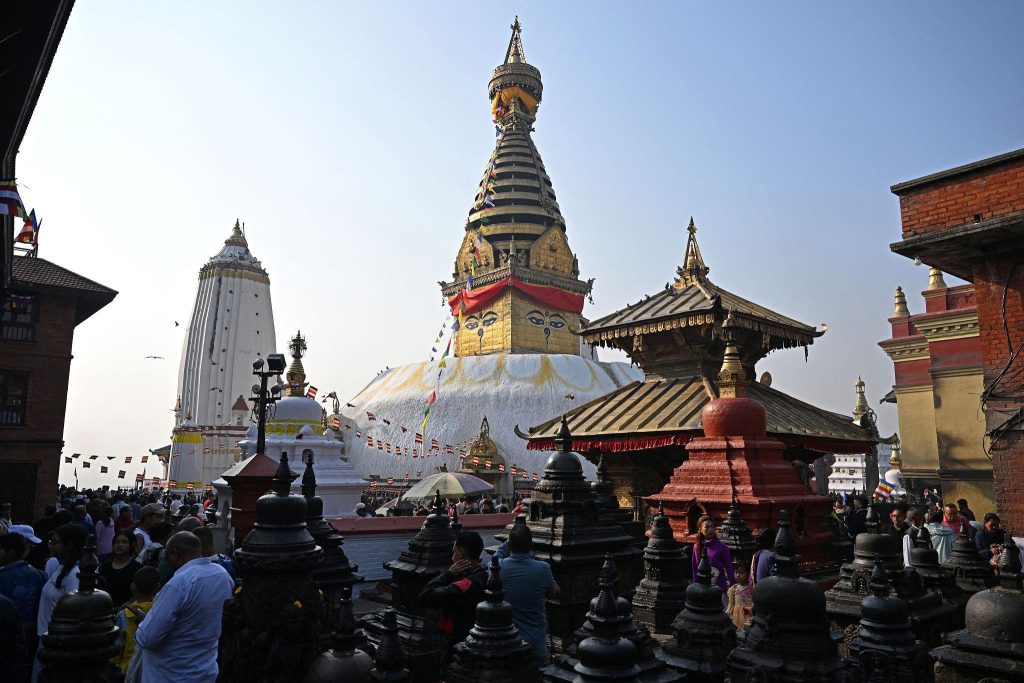
The All-Seeing Eyes of Wisdom
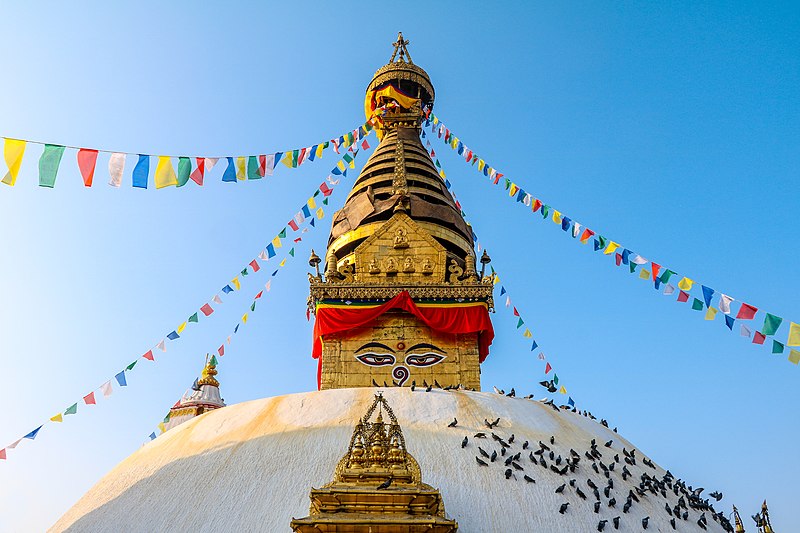
At the center of the stupa stands the iconic white dome crowned by a golden spire. Painted on all four sides are the famous eyes of Buddha, symbolizing awareness and compassion. These eyes gaze in all directions, representing the omnipresence of wisdom.
Between the eyes is a symbolic third eye, representing higher consciousness and spiritual insight. Together, these symbols remind devotees that enlightenment comes from awareness of both the inner and outer world. The stupa is surrounded by prayer wheels, shrines, and fluttering prayer flags that carry blessings across the valley. As the wind passes through them, it is believed that prayers are released into the universe.
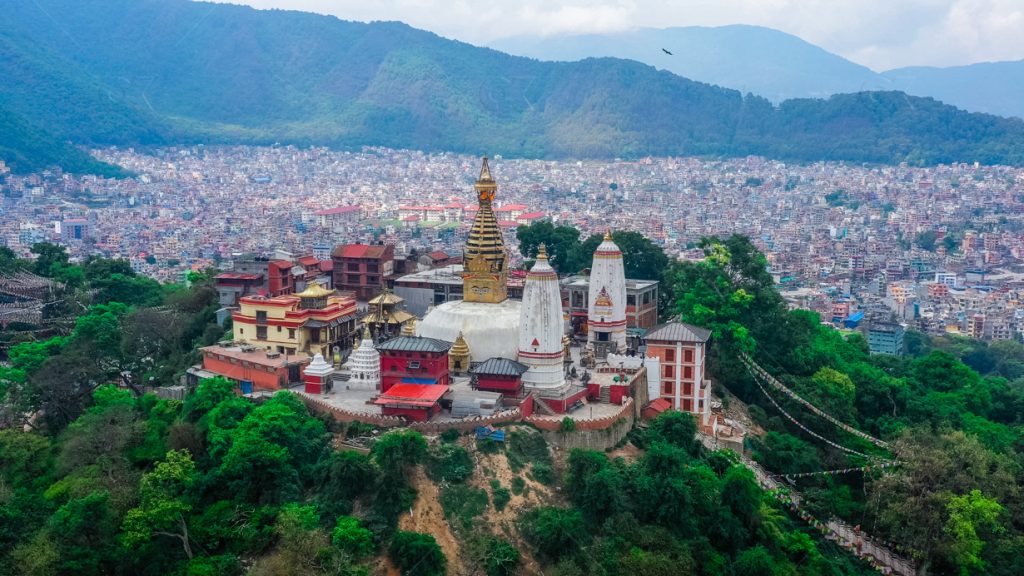
A Spiritual Ascent Through Ancient Steps
To reach Swayambhunath, visitors climb a long stone staircase that rises steeply through a forested hillside. Along the way, monkeys roam freely, adding both liveliness and unpredictability to the sacred journey. These monkeys are considered both playful inhabitants and symbolic guardians of the hill. Each step upward represents a symbolic movement toward enlightenment. Pilgrims often pause to rest, reflect, or spin prayer wheels as they ascend. By the time they reach the top, they are greeted by a panoramic view of Kathmandu Valley stretching endlessly below.
A Place Where Religions Intertwine
Swayambhunath is deeply rooted in Buddhist tradition, but it also holds strong significance for Hindus. Small shrines dedicated to Hindu deities exist within the complex, reflecting Nepal’s long history of religious coexistence. This blending of traditions is not accidental, it is a reflection of Nepal’s spiritual philosophy, where different paths are seen as leading toward the same truth. Monks chant in monasteries, pilgrims light butter lamps, and visitors walk in quiet circles around the stupa, creating a continuous rhythm of devotion.
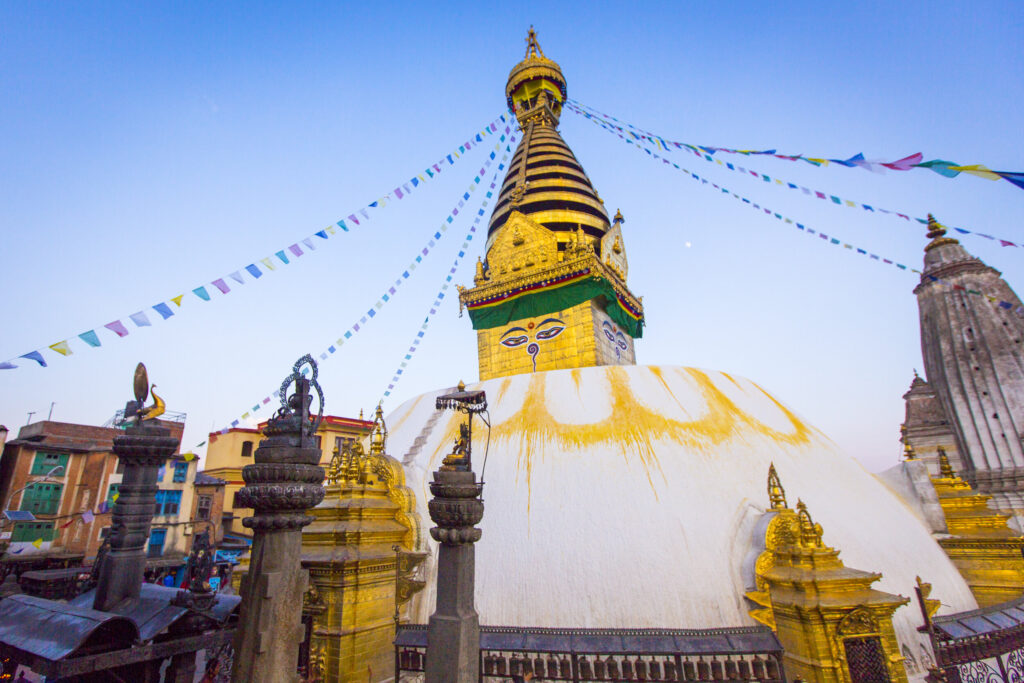
A Living Center of Meditation and Culture
Unlike static monuments, Swayambhunath is alive with daily spiritual activity. Monks study scriptures, devotees perform rituals, and travelers sit in silent meditation. The scent of incense fills the air, mixing with the sound of chanting bells and fluttering flags. At sunset, the stupa becomes especially mesmerizing. The golden light reflects off its white dome, creating an atmosphere of calm that feels almost otherworldly.
Enlightenment Above the Valley
Swayambhunath is more than a sacred site, it is a reminder that enlightenment is always within reach. Rising above the chaos of Kathmandu, it symbolizes clarity, peace, and spiritual awareness. From its ancient myths to its living rituals, Swayambhunath continues to guide seekers toward a deeper understanding of existence, standing as an eternal eye watching over the valley and the world beyond.