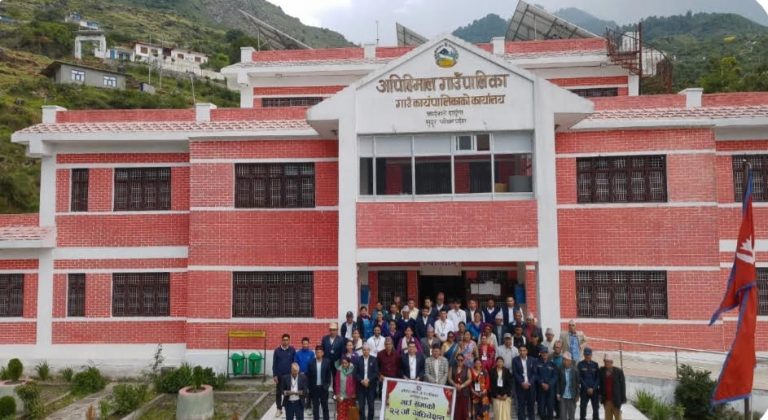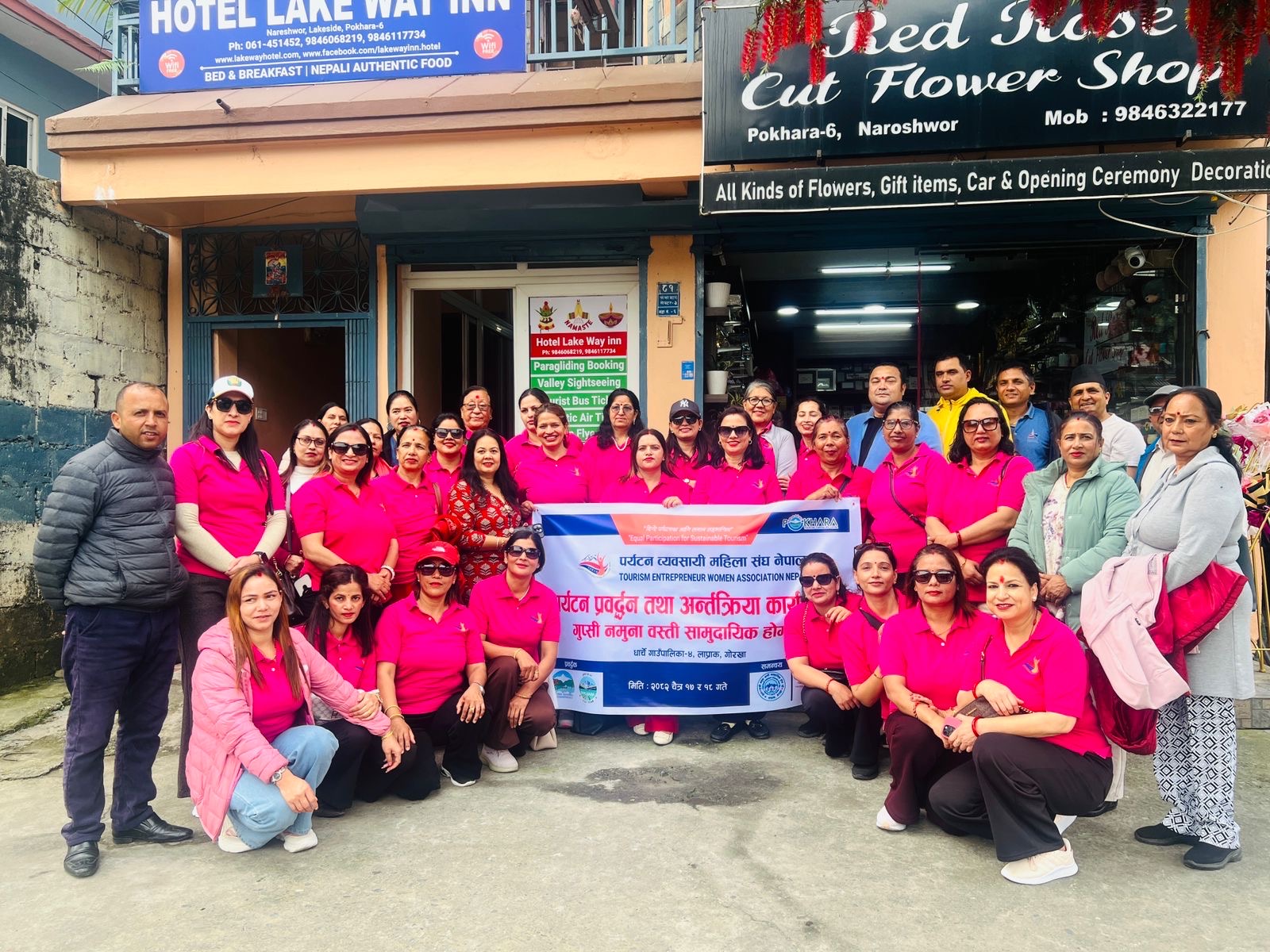
In a bid to boost domestic tourism, the Tourism Entrepreneurs Women Association Nepal (TEWAN) has launched a dedicated homestay campaign, focusing on promoting key destinations in Gandaki Province to national and international markets. The association’s team recently departed for the Laprak-Gupsi Model Community Homestay located in Ward No. 4 of Dharche Rural Municipality, Gorkha District.
The initiative aims to highlight local tourism potential, empower women entrepreneurs, and create sustainable economic opportunities in rural communities.
Forty Women Tourism Entrepreneurs Lead the Mission
The delegation, which left on Tuesday, comprises 40 women tourism entrepreneurs and media professionals. During the campaign, participants are set to engage in a series of activities including interactive sessions with homestay operators and local residents, distribution of promotional materials, and the unveiling of new domestic tourism packages.

According to Tourism Entrepreneurs Women Association Nepal (TEWAN), these activities are part of a broader effort to connect rural communities with larger tourism markets, raising awareness of lesser-known destinations while fostering direct engagement with stakeholders.
Women Empowerment at the Core
Founded under the motto “Equal Participation for Sustainable Tourism,” TEWAN has continuously worked toward women’s empowerment, tourism promotion, and entrepreneurial development. The association’s president, Shobha Nyaupane Pandey, highlighted that programs such as cultural festivals during Teej, entrepreneurship fairs, domestic and international tourism promotions, business development workshops, and personal capacity-building initiatives have been conducted regularly to support these objectives.
“Our focus is to integrate women into all aspects of tourism, from operational management to strategic marketing,” Pandey explained. “By strengthening the skills and visibility of women entrepreneurs, we aim to create long-term sustainable tourism models in Nepal.”
Targeting the ‘Pokhara Visit Year’
Aligned with the “Pokhara Visit Year” campaign, TEWAN’s general secretary, Shobha Adhikari Paudel, emphasized that the initiative specifically targets women-centric tourism promotion and interactive programs. The homestay-based activities in Laprak aim to position Pokhara as the tourism capital while simultaneously promoting other prominent destinations across Gandaki Province.
Paudel noted, “By spotlighting model homestays and rural tourism hubs, we can attract more domestic visitors while encouraging sustainable practices and local community involvement.”
Strengthening Rural Economy Through Tourism
According to program coordinator Vishnu Gurung, the homestay campaign is expected to significantly contribute to rural tourism development. The initiative not only helps increase visitor engagement in remote communities but also supports local economic growth and enhances women’s entrepreneurial capacity.
“This campaign is designed to create a ripple effect,” Gurung said. “Promoting rural homestays encourages community participation, generates income for local families, and strengthens women-led business initiatives.”
Key Participants of the Campaign
The traveling delegation includes TEWAN’s founding president Lucky Karki, former president Kamala Giri, vice president Anita Khadka, secretary Shanta Timilsina, treasurer Sharada Lamsal, along with other committee members and general members. Together, the team embodies TEWAN’s commitment to fostering a more inclusive and sustainable tourism ecosystem in Nepal.

The association’s initiative highlights a growing recognition of homestays as a key component of domestic tourism. By linking rural communities with larger markets and providing women with direct leadership opportunities, TEWAN is setting an example for how tourism can serve as both a cultural and economic development tool.
The homestay campaign marks a significant step in Nepal’s domestic tourism promotion, particularly in Gandaki Province, known for its scenic landscapes, cultural heritage, and adventure tourism potential. Through initiatives like this, TEWAN envisions a tourism sector where women play a central role in shaping experiences, creating employment, and enhancing local livelihoods.
By combining hands-on interaction with local hosts, targeted promotions, and innovative tourism packages, the association hopes to increase both visitation and awareness of rural tourism destinations, paving the way for a more sustainable and inclusive tourism industry in Nepal.