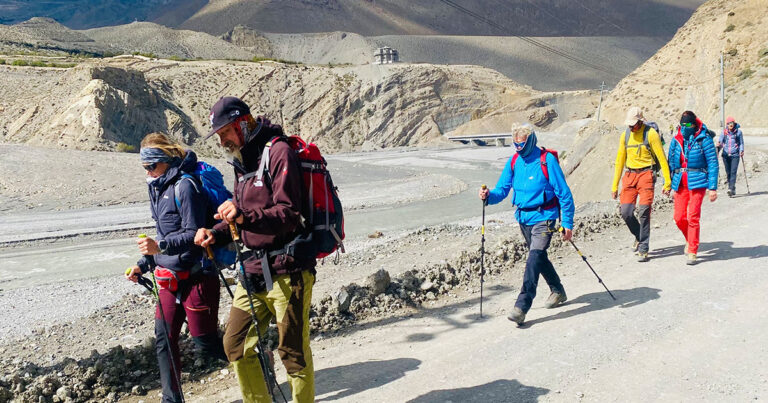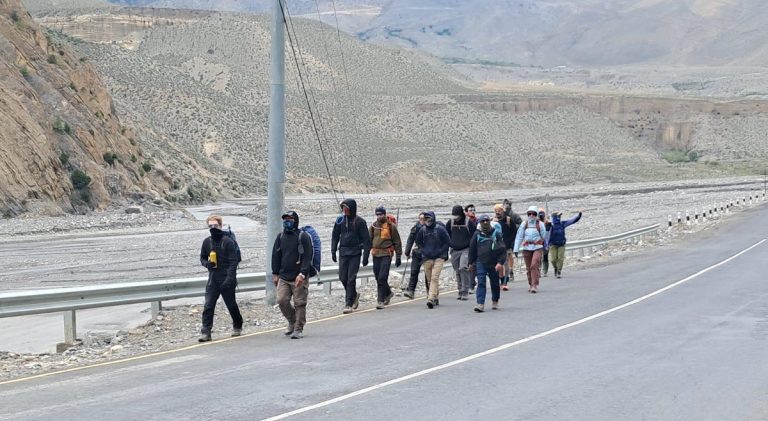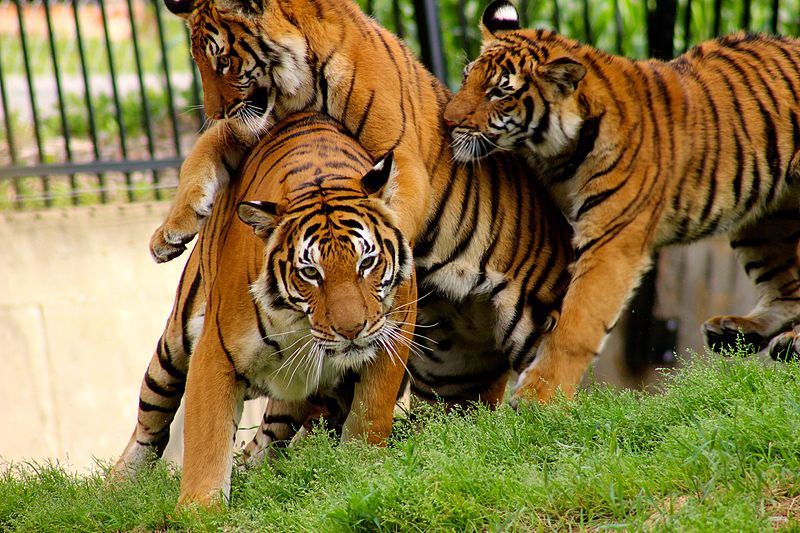
Chitwan National Park has officially commenced the tiger census today, marking the beginning of a nationwide effort to estimate tiger populations across Nepal’s key protected areas. Following a two-day intensive training program on Poush 1 and 2, a total of 150 enumerators have been deployed to various field sites to begin their work.
According to Abhinash Thapa Magar, Information Officer of Chitwan National Park, enumerators have been deployed in the Triveni, Amaltari, Kasara, and Barandabhar areas. He explained that, in the first phase, 286 grid cells have been set up within this region, each equipped with one pair of automatic camera traps to capture tiger movements.

Chitwan-Parsa Block Division and Survey Methodology
The census is being conducted by treating Chitwan and Parsa National Parks as a single block, which has been further divided into three sub-blocks. Enumerators will place camera traps for two weeks in each sub-block to ensure comprehensive coverage. In total, 958 grids have been established across the Chitwan-Parsa block, with each grid representing 2 square kilometers of territory.
“The camera traps are strategically placed in areas where tiger activity is high,” said Magar. “After collecting the camera footage, researchers will identify individual tigers based on their unique stripe patterns.”
Nationwide Tiger Monitoring
In addition to Chitwan and Parsa, tiger counts are also being carried out in Banke, Bardiya, and Shuklaphanta National Parks. The census, conducted every four years, is expected to take approximately three months to complete. The project involves park staff, technical personnel from the National Nature Conservation Fund, local volunteers, students, and conservation partners, ensuring a collaborative approach to wildlife monitoring.
To facilitate field operations, technical camps have been established within grid centers, providing enumerators with accommodation and logistical support. Each enumerator will monitor 8 to 12 camera traps daily, ensuring consistent data collection and maintenance of the equipment.
Camera Trap Technology and Individual Tiger Identification
Magar elaborated that the camera traps not only capture tiger images but also allow researchers to identify individuals based on their distinct stripe patterns, a method that has been internationally recognized for its accuracy in estimating tiger populations.
“The Chitwan-Parsa block is the first complex. The second includes Banke and Bardiya National Parks, divided into three sub-blocks, while the third encompasses Shuklaphanta National Park and Laljhadi,” he added.
Historical Context and Previous Census
During the 2022 tiger census, Nepal recorded 355 adult tigers. Chitwan had 128, Bardiya 125, Banke 25, Parsa 41, and Shuklaphanta 36. Following the completion of the tiger survey, the park authorities plan to conduct a rhino census, which was postponed last year due to budgetary constraints.
The ongoing tiger census is considered a critical step in conservation planning, providing updated data that will inform wildlife protection strategies, habitat management, and anti-poaching initiatives. Authorities emphasize that such systematic surveys not only help in wildlife management but also strengthen Nepal’s image as a global leader in biodiversity conservation.

Collaborative Conservation Effort
The involvement of local communities, volunteers, and conservation partners highlights the importance of community engagement in wildlife monitoring. By combining modern technology, such as camera traps, with local knowledge, the census aims to produce reliable and actionable data to support Nepal’s continued success in tiger conservation.
Officials reaffirm that the Chitwan National Park tiger census is a landmark initiative for the country, reinforcing Nepal’s commitment to safeguarding its rich biodiversity while ensuring that wildlife populations are monitored scientifically and sustainably.