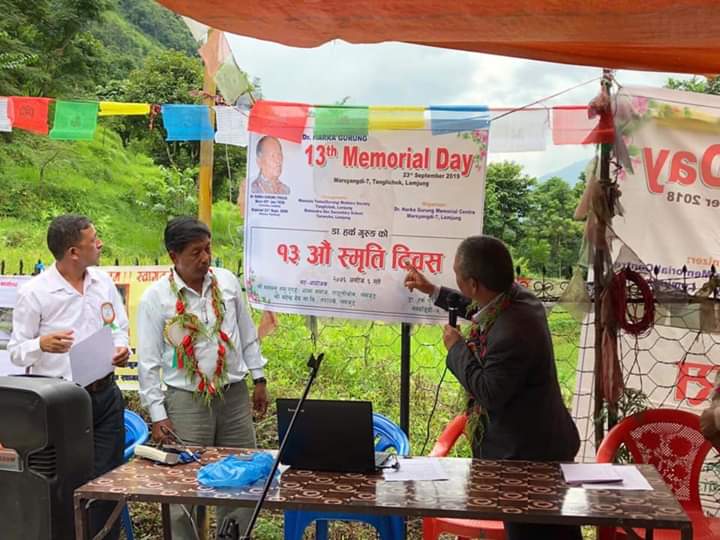
Constructed in Tanglichok, Marsyangdi Rural Municipality-7 of Lamjung district, the Dr. Harka Gurung Memorial Park is rapidly expanding as a tourist attraction. In an effort to make the area a must-visit location for tourists and geography and history scholars, the Harka Gurung Foundation built a half-body statue of Dr. Gurung at his memorial site.
The park was created around the cremation site of Dr. Gurung, who passed away tragically in a helicopter crash in Ghunsa, Taplejung on Ashoj 7, 2063 BS (September 23, 2006). The memorial park was constructed in response to Dr. Gurung’s desire to be buried in his hometown, according to Til Bahadur Gurung, the Foundation’s Chairperson and Marsyangdi-7 Ward Chair.
Since then, academic institutions and researchers have been drawn to the park. With the help of a master plan supplied by Marsyangdi Rural Municipality, construction got underway in fiscal year 2074–75 BS. According to the plan, NPR 63.1 million will be needed to finish the park.
The foundation is the owner of 2.5 ropanis of land in the park, and Dr. Gurung’s family has granted permission for the foundation to use an additional 4.5 ropanis. To reach the 15 ropanis of land needed for complete development, they intend to buy an additional 3.5 ropanis.
The park’s long-term objective is to become a major destination for both domestic and foreign tourists and a center for historical and geographical research. Born in Tanglichok, Dr. Harka Gurung was a multi-talented individual who worked as a conservationist, anthropologist, planner, painter, politician, and geographer. After attending a WWF Nepal-organized program on community handover of the Kanchenjunga Conservation Area, he and twenty-four other people perished in the 2006 helicopter crash.
The Nepali translation of his book “Vignettes of Nepal,” “Maile Dekheko Nepal,” is still widely read. In his capacity as Nepal’s Minister of Tourism, he was instrumental in the creation of master plans for tourism, particularly in the Khumbu region, and in the professionalization of the Nepal Mountaineering Association. He played a key role in the founding of Pokhara’s International Mountain Museum.
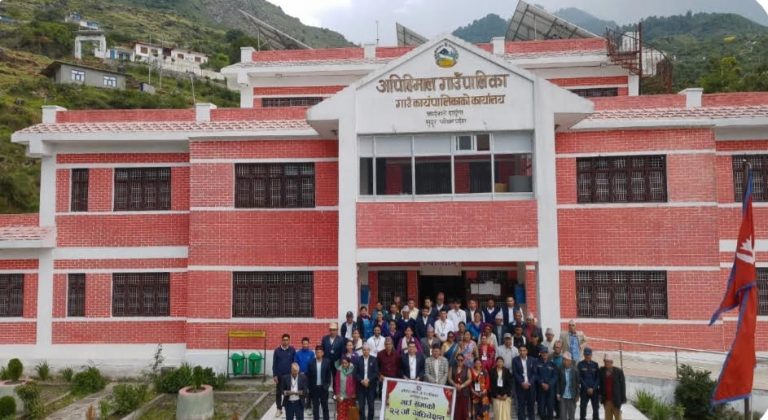
The local government is dedicated to preserving Dr. Gurung’s legacy through the park, according to Arjun Gurung, Chair of Marsyangdi Rural Municipality. He continued by saying that there are numerous tourist attractions in Lamjung, including Marsyangdi, and that the region as a whole is to be developed by conserving the heritage of people like Madhav Ghimire, Bhakti Thapa, and Harka Gurung.
A 60-person team from the Kaskeli Officers Society was among the academic groups and organizations that recently visited the park and its environs for promotional purposes. The park can develop into a major destination, conserving Dr. Gurung’s contributions for future generations, according to society chair Chandra Bahadur Subedi and secretary Mahesh Paudel.