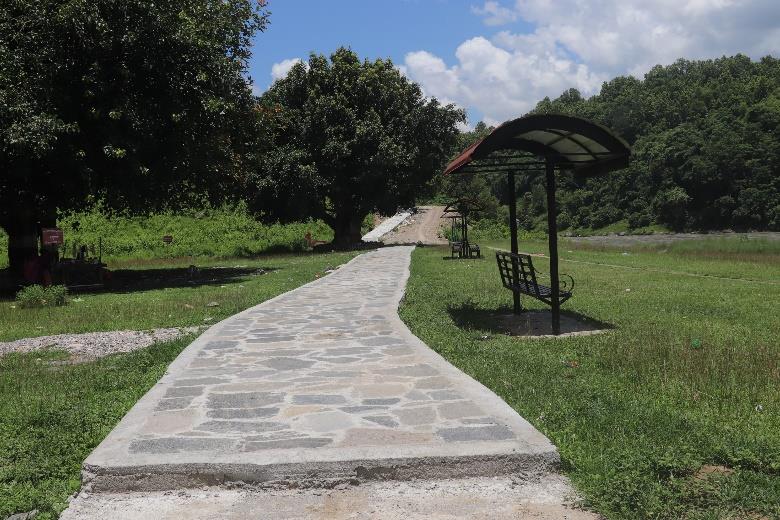
Rampur Municipality has undertaken a significant infrastructural project aimed at promoting religious tourism by constructing a pedestrian walkway along the banks of the sacred Kali Gandaki River. The municipality completed the construction of a 2,567-meter (approximately 2.5 kilometers) walkway in the fiscal year 2081/82, a move seen as instrumental in enhancing access to key religious and cultural sites while promoting local tourism and economic development.
Long-Term Vision: Connecting Ramnadi Dham to Devghat
According to Mayor Raman Bahadur Thapa, the project is part of a broader plan to construct a 34-kilometer-long pedestrian pathway stretching from Ramnadi Dham to Devghat within Rampur Municipality. The aim is to highlight and leverage the religious, cultural, and environmental importance of this sacred corridor along the Kali Gandaki River.
“This pathway will feature stone paving and interlocking bricks, blending accessibility with preservation of the river’s natural beauty,” Mayor Thapa explained. “By improving connectivity to religious sites and enhancing the scenic riverbank, the walkway will provide a much-needed boost to local tourism and the municipality’s economy.”
Technical Details and Construction Highlights
During the last fiscal year, various sections of the walkway were constructed with a two-meter-wide interlocking stone pathway to ensure durability and ease of walking for pilgrims and tourists alike. Specific progress includes:
- Keladi (Ward No. 3): 557 meters of interlock paving completed, facilitating smooth access for visitors.
- Jagdipark (Ward No. 6): 191 meters of stone pavement laid to improve local infrastructure.
- Tilakpur: 432 meters of interlock pathway constructed, linking important religious and cultural spots.
- Sundar Fun Park: 195 meters of interlocking bricks installed to enhance visitor experience.
- Bhujat area (Ward No. 8): Extensive work completed with 678 meters of stone paving and an additional 210 meters of interlock.
- Shalikram Park (Ward No. 10): 114 meters of stone pavement laid, improving the park’s accessibility.
- Narmadeshwar Temple: 190 meters of interlocking bricks installed to provide easier access to devotees.
This systematic construction work reflects a meticulous approach to integrating modern infrastructure within a religious and environmentally sensitive zone.
Facilities to Enhance Visitor Experience
In addition to the pathway, waiting lounges and resting areas have been constructed at important points such as Bhanaghat and Tatopani Ghat. These facilities aim to offer convenience and comfort to visitors, especially pilgrims who often travel long distances on foot.
The project is a joint effort coordinated between the Federal Government and Rampur Municipality, signifying multi-level government commitment to developing the region’s religious tourism potential.
Enhancing Religious Tourism along Kali Gandaki
The Kali Gandaki River holds immense religious significance, connecting important pilgrimage sites such as Ramnadi Dham, Keladi Dham, Ramghat Dham, Ridi Dham, and Devghat. The construction of this pedestrian walkway is expected to significantly enhance the accessibility and attractiveness of these spiritual destinations.
Local residents and religious leaders express strong faith that the improved walkway will encourage more visitors and pilgrims, thereby supporting the growth of religious tourism in the region. They anticipate that easier and safer access will also help protect the natural environment by managing foot traffic along designated paths, reducing environmental degradation.
Economic and Cultural Implications
Mayor Thapa highlighted that beyond religious benefits, the walkway project is poised to stimulate the local economy by increasing tourism-related activities such as hospitality, transport, and handicrafts. As more tourists visit the region, local businesses and communities stand to gain through job creation and increased revenue.
Moreover, the project is seen as a way to preserve the cultural heritage and spiritual identity of Rampur Municipality by making pilgrimage routes more accessible and sustainable for future generations.
A Model for Sustainable Tourism Development
The combination of stone and interlocking brick paving reflects a balanced approach that emphasizes durability, aesthetics, and environmental protection. This infrastructure ensures that the natural riverbank beauty remains intact while providing a safe and comfortable walkway for visitors.
By aligning infrastructure development with cultural and environmental preservation, Rampur Municipality is setting a precedent for sustainable tourism development in Nepal’s religious corridors.
Future Prospects
With the first phase completed successfully, the municipality plans to continue expanding the walkway network and further improve amenities along the route. The long-term vision involves creating a continuous, well-maintained trail that connects all major religious sites along the Kali Gandaki, making it a premier destination for religious tourism in Nepal.
The walkway project exemplifies how targeted infrastructure investments can foster religious devotion, cultural pride, and local economic growth simultaneously. As Rampur Municipality moves forward, it hopes to inspire similar initiatives across Nepal, where faith and nature converge to create unforgettable spiritual journeys.