Nestled at the foothills of the Chure range, approximately seven kilometers north of Lamki Bazaar, the Aampani Waterfall in Mohanyal Rural Municipality-7 has rapidly gained popularity as a favored destination for domestic tourists. Located within the Bargada Community Forest, the waterfall has undergone systematic development in recent years, turning it into an emerging attraction for nature lovers seeking serenity, adventure, and a quick escape from urban chaos.
From Local Getaway to Organized Tourist Destination
The Aampani area was already known among locals and nearby districts as a peaceful retreat, especially during the summer months. However, it was during the COVID-19 pandemic that the site received more widespread attention. Despite restricted mobility during the lockdowns, the area witnessed a notable surge in domestic tourists. According to Dhwoj Bahadur Shahi, Secretary of the Bargada Community Forest, “This place was already popular among nature enthusiasts, but since the construction of the waterfall infrastructure, the number of internal tourists has increased even more.”
The transformation of the area into a managed ecotourism site was made possible under the tourism promotion program of the Sudurpaschim Province government, which allocated a budget of NPR 4 million (40 lakhs) for infrastructure development. Dubal Bahadur Bohora, head of the Provincial Tourism Program Implementation Unit, noted that the waterfall was developed with the aim of promoting sustainable eco-tourism, especially given its tranquil location near the highway and the region’s rich biodiversity.
Infrastructure Brings New Life to the Forest Area
Before the construction of the waterfall, the community forest already had basic amenities like picnic spots and public toilets. However, the recent funding allowed for a significant expansion in facilities and organization. “We had made small investments earlier, but now we’ve spent NPR 4 million on structured development of the waterfall. It’s time we protect and wisely utilize this new asset,” said Bohora.
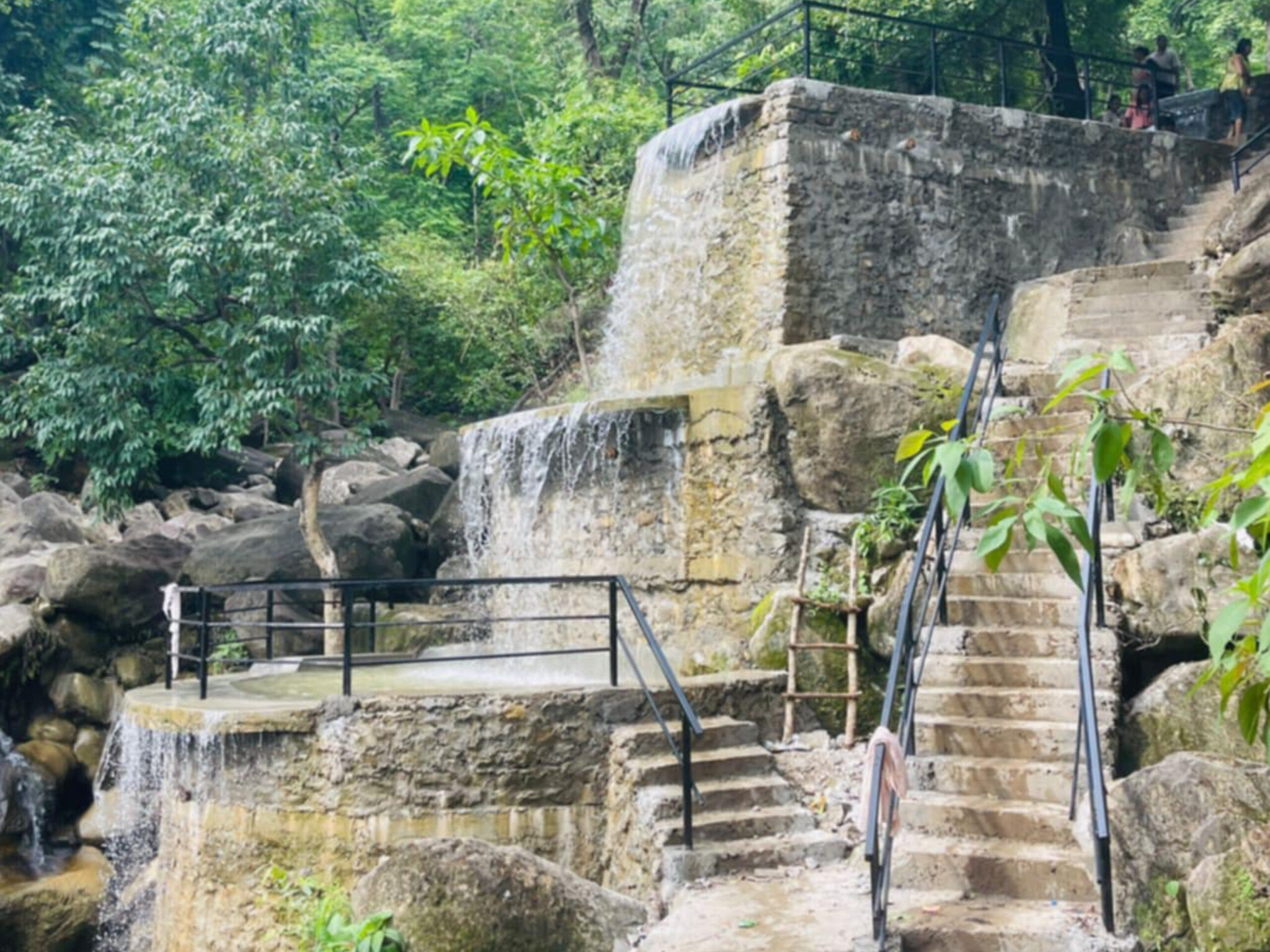
Under the leadership of Kesh Bahadur Rawal, Chairperson of the Bargada Community Forest, a dedicated committee was formed to oversee the waterfall construction project. The natural stream that flows through the forest has been enhanced with infrastructure to ensure continuous water flow to the waterfall, making it suitable for bathing and recreational activities.
Facilities such as a water storage tank, changing rooms, decorative fountains, restrooms, and designated walking trails have been constructed. All of these additions aim to provide visitors with a complete and safe nature experience. The management, security, and upkeep of the site are currently handled by the community forest.
A Growing Number of Visitors from Near and Far
With these improvements, Aampani Waterfall now sees over 500 domestic visitors on Saturdays and public holidays, while more than 100 people visit on regular weekdays. Tourists hail not only from within Kailali but also from neighboring districts such as Bardiya and Surkhet. Some visitors even come from across the border in India, reflecting the waterfall’s growing reputation.
Secretary Shahi confirmed this growth but also pointed out emerging challenges. “Sanitation has always been a concern in Aampani, and it’s becoming more serious now with the influx of visitors. Some tourists carelessly discard glass bottles, plastic wrappers, and other waste materials despite the installation of dustbins around the area,” he said with concern.
New Ticketing System for Better Management
In response to these challenges, the community forest is now planning to introduce a ticketing system to ensure cleaner management and better visitor accountability. Discussions are underway with the rural municipality and other stakeholders to determine a nominal entry fee.
“This ticketing initiative will not only generate income for conservation but also improve safety and enforce responsibility among visitors,” said Shahi. The income collected through ticket sales will go directly to the community forest’s fund, which will be used for further conservation work, new infrastructure development, and to create employment opportunities for local residents.
Community-Based Tourism Brings New Hope
The success of Aampani Waterfall stands as an example of how community-based tourism can bring economic and social benefits to rural areas. With organized management and local involvement, the site has become a beacon of hope for nearby residents looking to promote sustainable travel while preserving their natural surroundings.
For many, Aampani is more than just a waterfall, it is a symbol of grassroots development, environmental stewardship, and local entrepreneurship. Short-distance travelers and nature enthusiasts now have a refreshing and accessible destination that combines the allure of natural beauty with the comfort of basic infrastructure.
As the area continues to evolve and attract attention, locals believe that Aampani Waterfall could soon become one of the key tourism hubs in the region. With proper waste management, community collaboration, and eco-friendly policies, it holds the potential to become a model for other community-managed tourism destinations across Nepal. In the words of a local visitor, “Aampani is no longer just a hidden gem, it is now a rising star in the eco-tourism map of Sudurpaschim.”