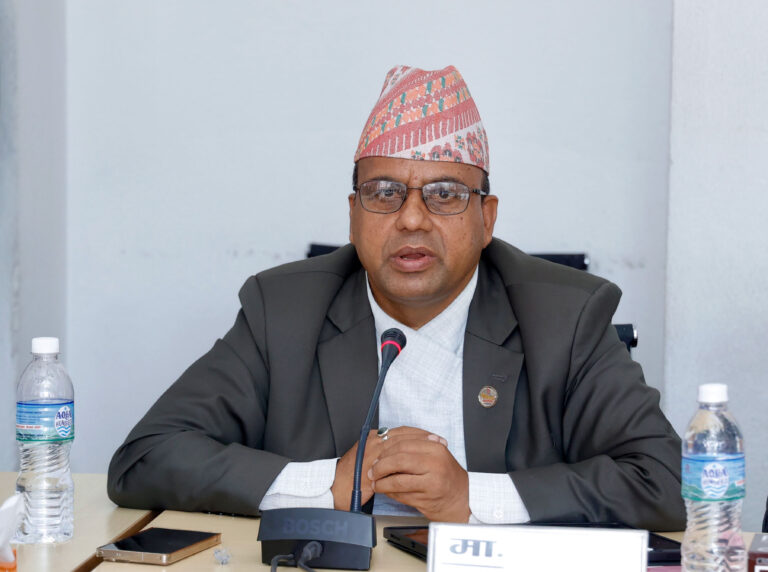
During a special event marking the 26th memorial of late singer Arun Thapa Magar, Minister for Culture, Tourism and Civil Aviation, Badri Prasad Pandey, underscored the need to recognize and develop Nepal as a living cultural museum. Speaking at the grand cultural event titled “Creator Honor and Grand Cultural Programme”, organized by the Nepal Magar Students’ Union (Central Committee), Minister Pandey emphasized that Nepal, with its rich diversity in ethnicities, languages, costumes, traditions, and rituals, is a treasure trove for cultural study and exploration.
“Nepal itself is a living museum, vibrant and unique in its cultural expressions,” he remarked. “It is our collective responsibility to safeguard and promote this rich heritage not only for national identity but also to pass it on to future generations.”
Strengthening National Identity Through Community Initiatives
The minister further stated that such community-level initiatives, like the memorial and cultural programs, are key to reinforcing the spirit of Nepalipan (Nepaliness) among people of all backgrounds. “Events like these strengthen national unity while celebrating the uniqueness of each community. They cultivate pride and a sense of shared heritage, which are fundamental to a cohesive society,” he added.
Highlighting the cultural contributions of the late singer Arun Thapa Magar, Minister Pandey noted that his legacy transcends the Magar community, touching the entire Nepali musical landscape. The event, attended by cultural enthusiasts, youth leaders, and artists, became a vibrant platform to both honor a cultural icon and showcase living traditions.
Honoring Creators and Cultural Icons
During the program, the Nepal Magar Students’ Union honored several individuals from various domains, literature, music, dance, and the arts, with the prestigious Srashta Samman (Creator Honor) award. These awards recognized those who have made remarkable contributions to preserving and promoting indigenous culture.
Union President Chandra Bahadur Thapa highlighted the organization’s long-standing efforts to enhance cultural consciousness within the Magar community. “The union is committed to preserving our cultural values, promoting indigenous art, and inspiring the younger generation to take pride in their identity,” he said. He also emphasized that the contributions of Arun Thapa Magar hold significance not just for Magars but for the entire country. “His songs carried universal themes and emotions that connected people regardless of caste or community.”
A Cultural Extravaganza
The event featured a series of cultural performances that captivated the audience. Traditional Magar dances, folk songs, and instrumental music created a lively atmosphere, celebrating the community’s rich cultural heritage. Artists from across the country participated, showcasing the diverse elements of indigenous traditions and creative expressions.
Particularly well-received was a performance by youth groups portraying the life and musical journey of Arun Thapa Magar, whose folk-inspired melodies continue to resonate with audiences today. The event also included a segment where folk instruments and crafts unique to the Magar community were displayed, giving attendees an opportunity to immerse themselves in authentic cultural practices.
Toward a National Cultural Renaissance
Minister Pandey reiterated the government’s commitment to fostering cultural preservation through collaborative initiatives. He encouraged cultural associations and youth groups to lead grassroots movements to revive fading customs, protect ancient knowledge systems, and keep indigenous languages alive.
“Our ministry is ready to support sustainable and inclusive cultural tourism based on Nepal’s rich ethnic and traditional assets,” he said. “If we can weave our cultural resources into education, tourism, and community development, we can achieve both economic and social growth.”
He further noted the need for cultural mapping of communities and suggested integrating local festivals and rituals into regional tourism promotion plans. “The cultural sector is not just about identity, it’s an untapped resource for national development,” he concluded.
Inspiring the Next Generation
As part of the memorial, a short documentary on the life and contributions of Arun Thapa Magar was also screened. It chronicled his early musical journey, rise to prominence, and his role in making indigenous melodies a vital part of Nepali mainstream music.
Participants left the event inspired and empowered, particularly the younger attendees, who witnessed firsthand the strength and beauty of their ancestral heritage. The event sent a powerful message, while legends like Thapa Magar may no longer be with us, their legacy lives on through art, memory, and community spirit.
A Call to Cultural Stewardship
The program not only honored an iconic artist but also served as a clarion call for cultural stewardship. With meaningful collaborations between government bodies and cultural organizations, Nepal can truly be nurtured as a living cultural museum, a dynamic space where every community’s traditions are recognized, respected, and revived. As Minister Pandey aptly stated, “Preserving our culture is not just about the past, it is our commitment to the future.”