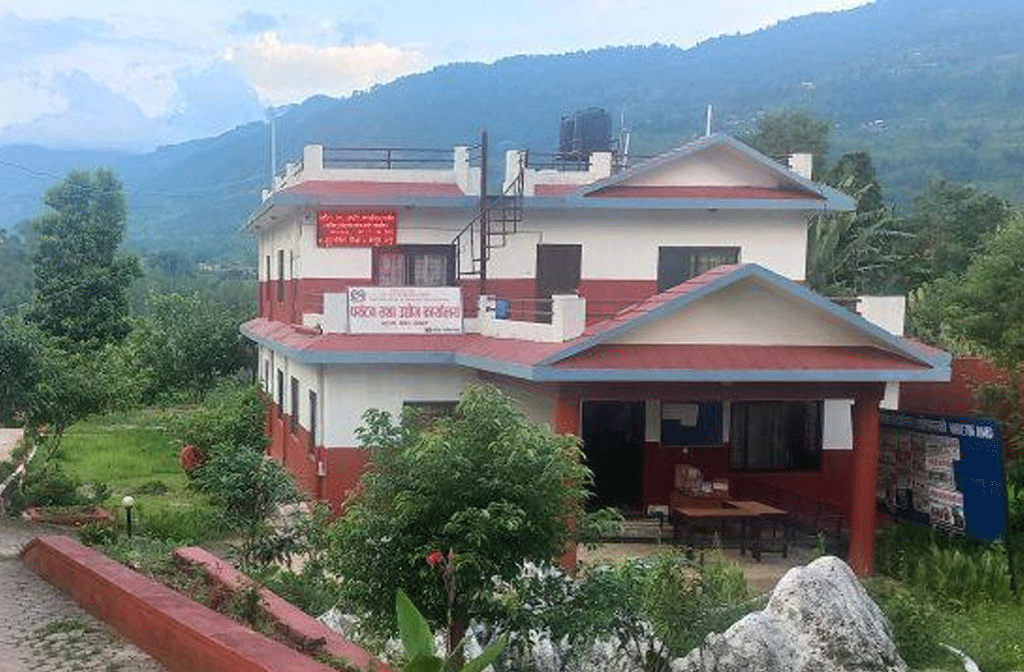
In a significant move to enhance tourism infrastructure and boost visitor appeal, the Gandaki Province Government has allocated a budget of Rs. 41.1 million for 111 tourism-related infrastructure projects across Parbat district for the fiscal year 2082/83. The budget, managed through the Tourism and Industry Office of Parbat, aims to uplift religious, historical, and natural tourist sites in all seven local units of the district.
Infrastructure Focused on Religious and Scenic Destinations
According to the Tourism and Industry Office, the funds will be invested in the development and restoration of religious and tourist attractions, aiming to increase both domestic and international tourist flow to the region. Key projects include the construction and renovation of temples, beautification works such as painting and decoration, rest stops, foot trails, community buildings, parks, gardens, and enhancements to homestay facilities.
The objective behind these investments is to add modern conveniences and aesthetic appeal to religious and scenic sites that already attract large numbers of visitors but lack adequate infrastructure. By improving these areas, the district hopes to offer a more engaging and accessible experience for pilgrims and tourists alike.
Kusma Municipality Leads with Maximum Projects
Kusma Municipality, home to the district headquarters and a popular destination for adventurous activities, has received the largest allocation, with 29 projects and a budget of Rs. 16 million. According to Puspanath Sharma, Chief of the Tourism and Industry Office, Kusma’s central location and growing tourism profile make it a key focus for infrastructure expansion.
Following Kusma, Phalebas Municipality will see 26 projects with an allocation of Rs. 14 million, and Modi Rural Municipality will implement 13 projects supported by Rs. 6.5 million. The remaining budget has been distributed as follows: Paiyu Rural Municipality (17 projects, Rs. 10 million), Mahashila Rural Municipality (Rs. 5.5 million), Jaljala Rural Municipality (5 projects, Rs. 2.5 million), and Bihadi Rural Municipality (11 projects, Rs. 5.5 million).
All 111 projects are considered short-term infrastructure undertakings and are expected to be completed within the current fiscal year, Sharma confirmed.
Adventure Tourism as a Driving Force
Over the past few years, Parbat has evolved into a hotspot for adventure tourism, with Kusma Bazaar gaining global attention due to its daring attractions. The town is home to the second-highest bungee jump in the world, an iconic swing, the world’s longest Superman-style zipline, and opportunities for rafting and canyoning in nearby areas.
The office believes that the new infrastructure additions will support the expansion of tourist movement from Kusma to surrounding rural tourist destinations, many of which are still underdeveloped but hold immense potential. Improved foot trails, rest spots, and homestays will make it easier for tourists to travel beyond the district center into less-explored locations.
Homestay Services to Benefit Directly
Currently, 61 community homestays and 2 private homestays are operating in Parbat district. With enhanced infrastructure at religious and natural sites, these homestays are expected to see increased visitor numbers. The Office believes that such investments will directly improve the quality of stay, offer authentic rural experiences, and promote local entrepreneurship in tourism.
Homestays have become a vital part of Parbat’s tourism economy, offering culturally immersive experiences to visitors. With better access roads, signage, sanitation facilities, and community spaces, their service quality is expected to improve, encouraging repeat visits and longer stays.
Lack of Data Hindering Tourism Planning
Despite the growing number of visitors, the district still lacks a dedicated Tourism Information Center, which has made it challenging to keep accurate records of tourist arrivals. According to Sharma, the absence of reliable statistics has made long-term tourism planning more difficult. Although the district sees hundreds of internal and external tourists daily during the peak season, official records remain patchy.
Accurate visitor data is essential for assessing tourism impact, identifying development gaps, and formulating future plans, Sharma emphasized. Establishing a tourism information hub remains a priority for upcoming years to support data-driven planning and better coordination among stakeholders.
Continuity of Development from Previous Fiscal Year
The momentum seen in the current fiscal year builds on the efforts made in the previous fiscal year, during which 42 tourism infrastructure projects were implemented across the district under the Gandaki Province’s funding. The significant increase in the number of projects this year reflects a more robust and ambitious push toward making Parbat a leading destination in the province.
By investing in both physical infrastructure and community-based tourism services, the local government seeks to ensure that tourism development remains inclusive, sustainable, and economically beneficial for all municipalities.