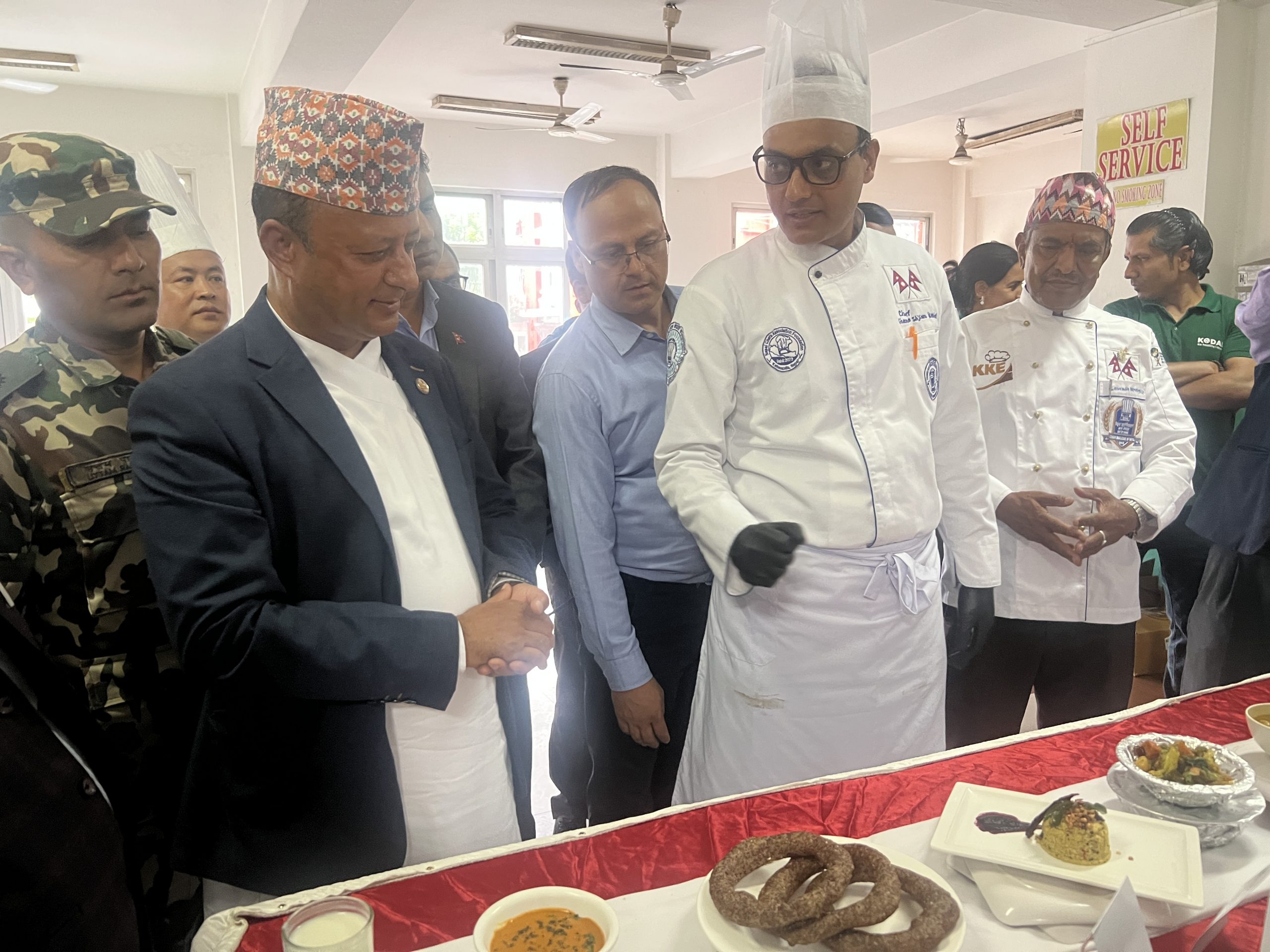
In a significant effort to promote traditional Nepali cuisine and highlight the nutritional benefits of millet, the fifth edition of the “Bhojanalipi Swad” campaign featured an exhibition of ten unique kodo-based dishes at the central canteen of Singha Durbar on Monday. The event aimed to raise awareness about kodo production and encourage its consumption, showcasing a diverse array of kodo delicacies to government officials, media personnel, and the general public.
Millet Promotion Gains Momentum at National Level
The program was inaugurated with the presence of Honorable Minister of Energy, Water Resources, and Irrigation, Dipak Khadka, who sampled the millet dishes and expressed his commitment to support farmers engaged in kodo cultivation through government incentive schemes. Speaking to journalists, Minister Khadka emphasized the need for collective coordination to increase kodo production and propagate its significance among the wider population.
“The millet dishes presented here are modernized and visually appealing. Besides their rich taste, millet-based foods are highly nutritious, and this message must reach every household. However, millet farming is often overlooked due to its labor-intensive cultivation process. Introducing modern agricultural tools and techniques could encourage farmers to engage more in millet farming and further enhance its utility,” Minister Khadka noted. He further elaborated that kodo is not just a food item but a reflection of Nepali culture, identity, and agricultural potential.
Diverse Millet Delicacies Highlighted by Renowned Chefs
The culinary exhibition was curated by internationally acclaimed chefs Ghanshyam Kandel and Durga Khadka, who skillfully prepared a range of kodo-based dishes, including traditional items such as dhindo, sel roti, kheer, momos, malpua, muffins, and cookies. Special delicacies like mohi and paan laddus were also prepared for the occasion, symbolizing the importance of millet on the occasion of National Millet Day.
Senior Chef Govinda Narasingh KC highlighted the health benefits of millet and stressed the importance of increasing its production and promoting commercialization to attract farmers toward its cultivation. He observed that kodo, once considered a food for the underprivileged, is gaining popularity in urban areas due to its health advantages, aligning well with modern lifestyles.
Chef Kandel expressed that the event was organized to revive the declining kodo production and encourage its promotion. By using agricultural produce grown by Nepali farmers, the program also aimed to raise health awareness and consciousness among consumers, underscoring the vital link between traditional foods and modern nutritional needs.
National Millet Day Spurs Renewed Interest
Devi Prasad Sapkota, coordinator of the Millet Promotion Campaign, revealed that this program was organized to celebrate National Millet Day, observed annually on Bhadra 16 (early September). The government has recently formalized this day to draw attention to kodo cultivation and its multifaceted benefits. The campaign strives to promote millet delicacies and encourage their incorporation into daily diets.
The event was jointly organized by the Nepali Food Promotion Campaign and “Bhojanalipi Swad” at the Narayani Chamena Hall inside Singha Durbar. Collaborative partners like Kodali Ventures Pvt. Ltd. and Navprabhat Dairy also played a supportive role in making the exhibition successful.
Traditional Crops, Modern Collaboration
Lakshmi Pokharel, head of Kodali Ventures, informed that their organization has long worked alongside Nepali farmers to develop production based on traditional grains such as kodo, buckwheat (fapar), foxtail millet (chino), kagu (kaguno), mung beans, and soybeans. These efforts are directed at preserving indigenous agricultural practices while simultaneously improving market potential and consumer acceptance.
By promoting these ancient grains and their value-added products, the initiative hopes to support rural livelihoods, boost farmers’ incomes, and foster food security within the country.
Conclusion: A Step Toward Revitalizing Nepali Traditional Foods
The kodo exhibition at Singha Durbar marks an important milestone in Nepal’s ongoing campaign to revive indigenous food crops that have traditionally sustained the rural population. With government backing, expert culinary input, and the participation of local agricultural enterprises, this initiative represents a promising synergy of culture, health, and economic development.
As the awareness about kodo’s health benefits grows, coupled with enhanced government support and farmer incentives, Nepal is poised to see a renaissance of these age-old grains, offering both nourishment and cultural pride to its people.